Reactions To Reactions About Steubenville

Around the middle of last month, CNN came under some social-media fire. The source of this fire came from the perception among some people that CNN had covered the Steubenville rape case inappropriately.  More precisely, the outrage focused on the notion that CNN had not demonized the two convicted male teens enough; if anything, many people seemed to feel that CNN had humanized the pair. Here’s one of the major quotes that people took issue with:

 ”It was incredibly emotional—incredibly difficult even for an outsider like me to watch what happened as these two young men that had such promising futures, star football players, very good students, literally watched as they believe their life fell apart.”

The issue, it would seem, is that many people felt that it ought not have been hard emotionally for the reporter to witness the event; if anything, she should have been angry that the teens were not sentenced more harshly. Other debates raged on in the comments sections of various articles about whether being placed on the list of registered sex offenders for the rest of their life was too harsh of a punishment for the two teens on the one hand, with those advocating the castration or death of the teens on the other extreme. I think these reactions, along with the case itself, happen to highlight some of the adaptive problems that bystanders face surrounding the moral judgments they make.

And now, since there are two degrees of separation between the tragic event and my use of it, it’s acceptable.

The first of these problems highlighted by the story is that third-party condemners (those who are not directly involved) need to pick a side in a moral dispute, and being on the wrong side of that dispute can be costly. Accordingly, third party condemners face the problem of figuring out how to coordinate their condemnation with other third parties (DeScioli & Kurzban, 2013). The problem runs deeper than choosing a side, though. As people’s reactions to the CNN story show us, even being on the “right” side of the dispute can be costly, provided one isn’t on the “right” side in the “right” way. Just to be clear, the first “right” in the previous sentence refers to being on the side with more social support; the second “right” refers to the agreement within a given side as to what the appropriate response of its members ought to be. The CNN coverage described the crime as “very serious” and the teen who was raped as “the victim”, suggesting that the reporters were certainly not of the opinion that rape is good or the boys were the real victims. The outrage was that the reporters for CNN did not appear to be appropriately outraged at the boys or offended enough on the part of the victim. CNN’s crime was not treating the teens as viciously as others would have liked.

It would seem that not condemning a behavior thoroughly enough can be interpreted by some as actually condoning that same behavior. Indeed, it was likely when the reporter for CNN said that it was emotionally difficult for her to witness the scene that she sparked the subsequent outcry against the network. This leaves us with a somewhat standard question: why should this be the case? Imagine for a moment that we’re not talking about rape anymore, but about theft. You and I both agree that stealing is wrong and deserves to be punished. However, while you think that stealing a car deserves a sentence of five years in jail and a permanent brand that says “car thief”, I think that stealing a car deserves a sentence of a year in prison and no brand. It would seem silly to conclude that, from these differences in opinion on the extent of deserved punishment, that only one of us is actually against stealing while the other is a morally condemnable “stealing-apologist”. Yet this is precisely what we see happening. Why?

A potential answer comes in more than one part. The first part of this answer is to note that, in cases of moral condemnation, the activity of certain parts of the brain associated with empathy seem to be inhibited. A neuroscience paper by Singer et al (2006) examined the responses of 16 men and 16 women in an fMRI to viewing confederates receiving painful shocks. Before the viewing took place, however, the confederates had either behaved fairly or unfairly towards the subject in a trust game. The results of the analysis found that men, but not women, showed a reduction in activation of presumably empathy-related regions of the brain when viewing the confederates receiving the painful shocks; in the case of the fair player receiving the shocks, subject’s brains showed more signs of empathy-related activation. Similarly, men, but not women, showed increases in brain regions associated with reward when the unfair player received the shocks. Post fMRI measures confirmed that men were more interested in seeking revenge against unfair players

Sure; the research could have been done without the expensive fMRI, but then we wouldn’t get pictures.
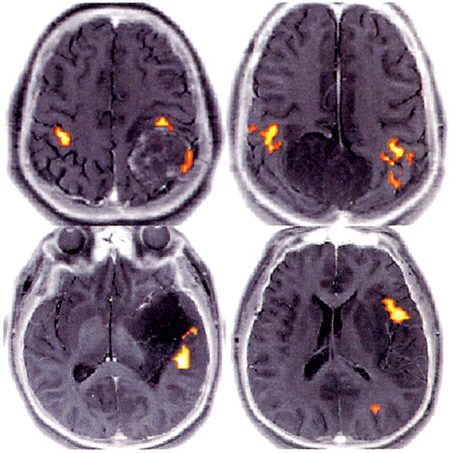
There are a few shortcomings of the Singer et al (2006) study to bear in mind as it relates to the current questions: the sample size wasn’t terribly impressive, but sample sizes in neuroscience studies seldom seem to be. The second piece to bear in mind is that these brain scans do not necessarily add much (or any) value beyond what the far cheaper survey did. At best, the brain scans were icing on the explanatory cake. Further, this study only examined cases of direct revenge, or second-party involvement; not the reactions of bystanders to the fair or unfair behavior. Nevertheless, the results hint at something interesting: the amount of empathy that people (at least men) feel towards the suffering of a perpetrator (i.e. how much they care about the consequences of the punishment to the perpetrator) might be indicative of how morally wrong they view the behavior as being, at least to some extent. One requires certain assumptions to make that leap, but it doesn’t seem too unreasonable.

The picture is not nearly that simple, however. It is at this point that the discoordination problem that DeScioli & Kurzban (2013) raised again rears its head. It is unlikely to be adaptive for condemners to completely – or partially – inhibit their empathic responses towards the perpetrator in all moral cases. While the inhibition might be adaptive in terms of avoiding the condemnation of other condemners (i.e. not being labeled a rape apologist and subsequently socially shunned), it also carries costs, chief among which is that the perpetrator often has social supporters as well. If a condemner has completely inhibited such empathic systems, they’re likely to seek greater punishments of the perpetrators which, by extension, are also punishments leveled against the perpetrator’s social allies. To put the matter more plainly, if my friend goes to jail, I’m out a friend and worse off for it. This can lead to retaliation on the part of the perpetrator’s allies: case in point, it was not long after the verdict was handed down that the rape victim received two threats from other girls who seemed to be socially aligned with one or more of the perpetrators.

This puts third parties in an unpleasant situation: no matter who they side with, they’re likely to face some condemnation, either for condemning one party too much or not condemning that party enough. Similarly, if the third party happens to be socially connected with either the perpetrator or the victim, any harms that befall that party are, by proxy, harms that befall the third parties themselves. Thus, inhibiting an empathy reaction towards a perpetrator might entail the related need to inhibit empathy towards the perpetrator’s social allies, at least to some degree. Such a need could potentially expand the costs associated with the conflicts surrounding moral condemnation and punishment, as the number of people to be punished has grown beyond the initial disputants. The fact that the coordination problem is actually a series of many different problems makes the matter of third-party coordination all the trickier to solve. In fact, it would seem that in many cases, perhaps even most cases, it is not at all clear that people actually do manage to consistently solve the coordination problem.

The whole mess makes dueling seem like a more reasonable alternative.
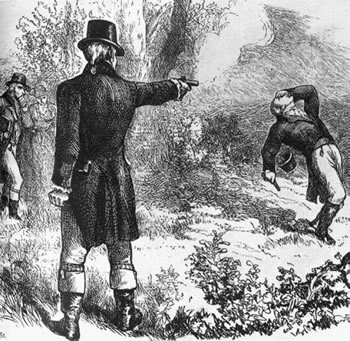
The previous analysis puts the matter as to why ostensible third parties become involved in moral disputes into a new light. Getting involved in these disputes is clearly a potentially costly endeavor, so why would an uninvolved party bother getting involved in the first place? What are the benefits to joining in the disputes of others that offset these very real costs? Part of that answer would seem to be that these third parties, as previously mentioned, are indirectly personally affected by their outcomes: my friend being condemned or harmed is bad for me to the extent that the condemnation or harm prevents them from delivering me benefits they previous did or potentially might.  Further still, if a friend of a friend has been affected in some way it is still potentially detrimental to me. The extent of that detriment would, of course, decrease as social distance between the parties increased; my best friend’s friend is more valuable to me than my acquaintance’s friend. A final possibility is that my not siding with one side could be taken as implicit support for the opposing side, making me the target of moral condemnation by assoication. The result of that perception of implicit support being that it can be similarly costly to me to not become involved. In other words, saying that one doesn’t care at all about the perpetrators or the victim in the Steubenville case is unlikely to earn you many friends, but it will likely still earn you plenty of condemnation.

References: DeScioli P, & Kurzban R (2013). A solution to the mysteries of morality. Psychological bulletin, 139 (2), 477-96 PMID: 22747563

Singer, T., Seymour, B., O’Doherty, J., Stephan, K., Dolan, R., & Frith, C. (2006). Empathic neural responses are modulated by the perceived fairness of others Nature, 439 (7075), 466-469 DOI: 10.1038/nature04271
Closing Gender Gaps

Given that we are living in a society that privileges men, it should come as no surprise that women tend to be relatively disadvantaged. These disadvantages faced by women can take many forms: from the gender pay gap that favors men, to the fact that men make up the majority of all our elected officials and CEOs, and even to women not outperforming men in college by a wide enough margin. Indeed, women are sometimes even disadvantaged by the ways they benefit from the system  that sees men as stronger, more agentic, and competent than women. These facts may be shocking to hear, I know, as it forces us men to confront the deeply sexist social world of benefits and privileges that we are collectively granted access to on the basis of our gender alone and nothing more. It should go without saying, but these gender gaps are clearly unwarranted and unfair and, as such, it is a moral imperative to correct them. So it’s time to check our privilege, cast any doubts aside, and take a good, hard examination at some of the most sexist institutions in our society.

“Alright; I checked my privilege. What’s step two?”

At the recent event where the Playstation 4 was previewed, I was shocked to hear that men completely dominated the talks; in fact there were no female presenters. A chilling thought, I know. It’s almost as if men were telling women that women are unfit to play video games! What might come as an even greater shock to you is that large segments of the American workforce display similar levels of what is very clearly sexism. These fields are basically boys clubs with a metaphorical “no girls allowed” sign nailed to their doors in the form of rampant sexism and misogyny; fields that are simply inhospitable environments for women. These kinds of hostile sexism against women (and, because sexism = discrimination + power, men can never be the victims of sexism; they are just victims of discrimination, which is a totally different thing) box out large numbers of women who are otherwise qualified and eager for the jobs they are denied by society. One good for instance would be the field of construction, where the workforce is almost entirely male. Faced with such a clear gender gap, one can only be left gasping, wondering what steps our government and society are taking to remedy such obvious sexism. It’s not like women are too incapable  or incompetent to build houses, after all.

Women’s worries don’t end with the field of construction, however: similar gender gaps are seen in fields like plumbing, lumberjacking, and firefighting. As we know that the sexes are born completely equivalent to one another in terms of their physical potentials and psychological interests and motivations, these gender gaps can clearly only be the result of sexist socialization. Dismantling the sexist social constructs of our culture – constructs which were clearly created by men in the first place – is required if we ever hope to see the 50/50 split between men and women who are willing and able to fix your septic tank that we’ve all been dreaming about. As it stands right now, women are disproportionately forced into careers deemed appropriate for them by the patriarchy: nursing, child care, and secretarial work, all of which involve women outnumbering men by more than four-to-one.

Now I know there are some naysayers out there who might, in their ignorance (due to their privilege if they’re male and internalized sexism if they’re female), actually believe that there might be some biological differences between men and women at the physical or psychological levels that can explain these differences. That is to say, we don’t always need to resort to sexism to explain any and all the gender differences we see. The go-to example that many of these patriarchy-apologists tend to raise is that of the difference in upper-body muscle mass between men and women. Proponents of this sex difference cling to the myth that selection has acted on men and women differently in this regard, as having more muscle mass might help men dominate their rivals in competitions relevant to successful reproduction. The implication there would seem to be that, historically, men and women did not behave identically which, as we know, must be false on the basis of it sounding sexist to me.

This is literally what that argument sounds like

What those biological-determinists clearly overlook is the fact that men are socialized to exercise their upper-body more than women; without such socialization, these differences would surely vanish. Now there’s the slightly inconvenient fact the differences in strength between men and women might remain even after attempts were made to control for exercise, but let’s not forget that such tests were carried out using WEIRD samples. Further still, it’s unlikely that researchers were able to fully control for all the relevant sexist socialization forces, as many of them are exceedingly subtle. As it should now be clear that researchers have failed to fully control for such variables, one is forced to accept the undeniable conclusion that these variables must be driving the differences in strength between men and women. There’s just no alternative explanation.

So how can we go about remedying this problem? Simply put, women need better social mentors and role models in order to counteract the toxic messages that society is putting forth. This proposal comes in two parts. The first is that we must make it mandatory for men and women to take all the same classes and participate in all the same activities, so as not to send the message that one sex ought to have a certain set of interests. Special attention needs to be paid to the aforementioned skills and careers were men and women are most divergent on the professional level. This means that it needs to be mandatory for all students to take classes in nursing, early childhood education, logging, and firefighting.

The second part of the proposal acknowledges that change needs to take place on the professional level as well, so as to minimize any implicit or subtle messages that children might receive through the media or facts about reality. This means that we need to mandate, effective immediately, that all employers ensure that each job position on their staff is compromised of equal numbers of men and women who are making precisely the same wage (as they are both clearly as qualified, motivated, and work as much as the other). The worst offender in this regard is clearly the professional sporting industry. The world of sporting is so socially-backwards that they still enforce segregation on the basis of gender, for crying out loud! Not only does such a policy effectively tell women that it’s unlikely they’ll ever grow up to be a professional football player, but it goes further, suggesting that they’re so much less a person that they can’t even compete against the men. Here’s a memo for the professional sporting leagues out there: it’s not the 1960s anymore – segregation’s illegal.

A sad display of internalized sexism and a sad day for women everywhere.

I think I speak for all of us when I say enough is enough. It’s time to make our stand and put an end to all gender disparity, whether that disparity be in America, the world at large, or even in other non-human species. In fact, especially in non-human species. For too long have sexist messages penetrated non-human minds, resulting in sexually-dimorphic ornaments or behaviors. In some cases, the sexism has been so bad that males end up about twice as large the females; truly disturbing examples of the power of the patriarchy. We need to ensure that these non-human species have positive role models to look up to, and understand that their sexist behavior has larger social ramifications for other forms of life. Once we stop accepting this kind of behavior in other species, we might finally be able to stop accepting it in our own.

Belief In “Belief In A Just World” Theory

I have a new theory that goes something like this: social psychologists have a need to believe in their own hypotheses – a belief in the truth of their hypotheses (or BTH for short). When evidence turns up that is “threatening” the truth of these beliefs, psychologists try to defend their hypotheses and restore their belief in their veracity. This can be achieved either through psychologists reinterpreting contradictory evidence into confirmatory evidence, or through the psychologists modifying their hypotheses but insisting that the new hypothesis was the one they really believed in the whole time. While some evolutionary theorists might try to explain these perceptual shifts in terms of some adaptive function (such as, say, maintaining social status amongst one’s peers, trying to obtain grant money, or make oneself an attractive job candidate, rather than just trying to “be correct”), they have done little in terms of considering whether BTH plays a role in the often-silly ways that social psychologists tend to behave.

Pictured: The co-authors on my new BTH paper.

Now I know some of you out there might have some qualms with my BTH theory. Some of you might point out, for instance, that BTH theory merely describes a pattern of results and then tries to explain those results in a circular fashion: specifically, the fact the psychologists seem to hold to incorrect beliefs is “explained” by my positing that psychologists have a desire to hold to incorrect beliefs. The evolutionary account, on the other hand, provides a real explanation that allows us to escape from that kind of circularity. Still others might point out that these two theories -  the evolutionary and the BTH theory – need not be viewed as competing with one another: on the proximate level they both make the same predictions. The only difference is that one of these theories provides an ultimate explanation for these proximate predictions. The more astute among my readers might even take some issue with those who raise this second point, however, noting that, while both theories could plausibly account for the same proximate findings, my BTH theory is massively underspecified: it doesn’t predict the contexts in which we ought to expect psychologists’ behavior to vary, so it’s not immediately clear how BTH generates its predictions. Perhaps, like many social-psychological theories, BTH generates its predictions through researcher intuitions, personal experiences, or perhaps it simply predicts results on the basis of what other people researching BTH have found.

So BTH theory sounds like an incomplete explanation at it’s very best, unlikely to do much to further our understanding of the phenomenon in question. I would also add that the hypothetical BTH theory has quite a lot in common with belief in a just world theory, or BJW for short. BJW theory begins by asserting that people have a need to believe in a just world; a belief complicated by the fact that the world is frequently not just or fair (whatever just and fair are supposed to mean here, anyway. I think it’s supposed to mean that “good” things are supposed to happen to “good” people and “bad” things are supposed to happen to “bad” people, but that just pushes the definition problem back a step than really dealing with it). As the world seems to frequently not agree with the biases of our just world beliefs, people do the sensible thing and try to “restore balance” by manipulating their perceptions of these “threatening” facts. So, to recap, people are supposed to have some need to believe something wrong, and will do so by manipulating otherwise accurate information. Sure; there are costs to being wrong, and BJW theory doesn’t really explain the adaptive value to being wrong in this case, but, to be fair, BJW theory doesn’t really explain anything, so at least it’s consistent in that regard.

Incorrectly believing that BJW theory helps use explain things, Callan et al (2007) sought to expand the BJW line of research into the realm of physical attractiveness. More precisely, Callan et al (2007) felt that a BJW might help us understand the “beauty is good” stereotype. Somewhat ironically, the authors note that, yes, evolutionary-minded researchers have suggested at least one very plausible reason why people might be more inclined towards physically attractive individuals (I think there happen to be more than one, but one is listed), but then make no attempt to demonstrate how their favored BJW theory is distinguished from or fits within this evolutionary theory. In any case, they did seek to show something neat: that harm directed towards more attractive women might be viewed as more unjust and more deserving of punishment than harm directed towards less attractive women. This was predicted on the supposition that, since people view beauty as a “good” thing, beautiful people will be viewed as having done good things to, in some sense, deserve their beauty.

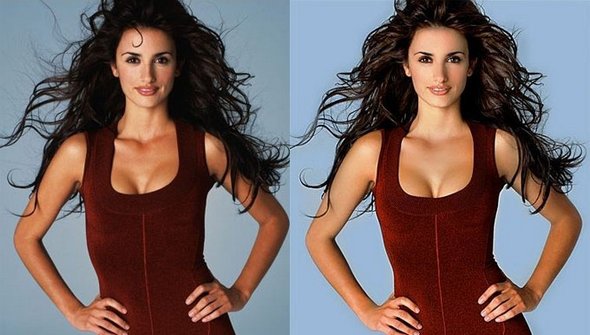
Like having someone put in all that time with Photoshop.

In the first study, 48 subjects read a fake news story about a woman who died due to poor maintenance of the apartment that she lived in accompanied with either a highly-attractive or unattractive photo of a woman from HotorNot.com. The woman was subsequently described as being “kind, generous, about to graduate from university, a youth center volunteer, and excited about her future”, making her sound like a “good” person. As predicted, people perceived the attractive woman as a better person than the unattractive one, there to have been more injustice in case where the attractive woman was harmed, and felt more punitive towards the people who failed to maintain the apartment. The results here are nice and precisely what the previously-mentioned evolutionary theory would have predicted but, unfortunately, they lack a number of important groups. For instance, there was no group in place to compare an attractive but “bad” person against an unattractive but “good” person, nor is there any control group to compare the results against. Still, it’s a promising first step.

As their second step, the authors had 36 subjects read another story about a woman who was hurt in a house fire, along with a picture of her. In one version of the story, the woman is described as having escaped any serious harm, whereas in the second version the woman was described as having suffered a great deal of harm. Later, subjects were asked to identify the picture of the woman in the story from an array of seven digitally-altered versions of the picture that were either more or less attractive than the original (the original one wasn’t in the display). The authors found that people viewed the greater harm as being more unjust than the minimal harm, as expected. They also tended to pick a less-attractive version of the woman’s picture when the woman experienced greater harm. Finally, people evaluated the woman in the greater-harm condition more positively.

Do these findings support the BJW theory? It’s pretty hard to say for one major reason: it’s unclear as to what counts as evidence for or against BJW theory. In the greater-harm condition, subjects picked a less-attractive picture which, in light of the BJW idea, would seem to suggest the following: that the harm was “bad” and, since “bad” things happen to “bad” people, the woman must have been a “bad” person who didn’t deserve to be attractive. Of course, this is somewhat inconsistent with the idea that the harm itself was viewed as “more unjust” than the minimal harm condition. If the harm was “unjust”, then that would imply that a “bad” thing was happening to a “good” person who should, in turn, deserve to be attractive. So that seems complicated. Further, if the woman was viewed as “bad” and thus less deserving of attractiveness, it’s unclear why people would evaluate her character more positively. This returns to a point I made earlier: the BJW theory seems to derive massively under-specified predictions. With enough creativity, it seems that many possible patterns of data could be viewed as entirely consistent with the theory.

Just like how  with enough creativity, my co-authors on the BTH theory manage to all car-pool together.

Needless to say, as my BTH theory would predict, the authors conclude that their results supported and built upon BJW theory, despite the evidence being ambiguous in that regard. From my reading of their theory, it’s still not at all clear what pattern of results would be inconsistent with BJW theory, much less is it clear as to how the predictions were being derived from this theory in the first place. I find it a bit discouraging that the authors were least aware of the evolutionary ultimate level of analysis, but failed to make any use of it. Then again, perhaps the evolutionary analysis was viewed as too “threatening” to their belief in BJW theory, leading them to downplay the former. I think the evidence is ambiguous enough to reach that conclusion, in any case.

References: Callan, M., Powell, N., & Ellard, J. (2007). The Consequences of Victim Physical Attractiveness on Reactions to Injustice: The Role of Observers’ Belief in a Just World Social Justice Research, 20 (4), 433-456 DOI: 10.1007/s11211-007-0053-9

A New Theory For Homosexuality: A Lot Like The Old Ones

Homosexuality – male homosexuality in particular – poses a real evolutionary mystery that researchers have been trying to solve for at least the past two decades without much success. Though many explanations have been put forth to try and find the hidden fitness benefits that might allow male homosexuality to persist in the substantial minority of the population that it does despite the substantial fitness costs to the sexual preference, all the adaptive explanations have been left wanting. Decades of failed research has not seemed to have deterred new hypothesizing, though. For better or worse, I find the tenacity of the adaptive hypotheses for homosexuality to be fascinating: it is as if people cannot accept, or even consider the possibility, that homosexuality might not carry any reproductive benefits, hidden, indirectly, or otherwise. Were other key adaptations (that are not sexual orientation) to fail to develop in an adaptive fashion early in life – such as vision or hearing – I don’t think many people would be trying to find the hidden reproductive benefits or functions to being blind or deaf. The causes, certainly, but not the benefits.

“But what if being blind caused him to invest more in kin…?”

On the subject, there’s a new paper out in Evolution and Human Behavior (Barthes, Godelle, & Raymond, 2013: H/T to Dan) that, again, asks whether there might be some hidden fitness benefit associated with male homosexuality. In this case, the focus of the benefits are the female sisters of male homosexuals. The theory goes like this: after the advent of agriculture, social classes began to take root as large quantities of resources could now be generated and defended. Women could thus gain some reproductive advantage were they able to pair with men of higher social status who had these resources; a preference for doing so is known as hypergyny. However, only a small proportion of these pairings occur across social classes: women of higher social classes tended to marry men of higher social classes, and likewise for the lower classes. Accordingly, any trait that could help women mate upwards in the social ladder would have been selected for, even if it came at some expense to male reproductive fitness.

So, in this theory, male homosexual preference is a byproduct of females being able to better pursue their hypergynous inclinations. The male reproductive disadvantage from developing a homosexual preference would be more than offset by the presumed increases to female fertility and/or attractiveness to higher-status males. One distinct advantage that the authors feel this theory has is its ability to explain why male homosexual preference seems to be exclusively human (the one notable exception might be rams, a species with a history of co-residence with humans). Since male homosexuality only came to be after the advent of agriculture, long-term pair bonds, and the establishment of social classes, which other species tend to not have, this helps explain why we don’t see sexually-antagonistic male homosexuality in other species. It’s a neat idea, but neatness alone doesn’t win the day in the world of science, so let’s move on to consider what data they bring to bear on this hypothesis.

The first piece of “evidence” they present in support of this hypothesis is a mathematical model attempting to demonstrate the conditions under which such a genotype could come to exist. I’ve previously made my stance on the usefulness of such models rather explicit, but I’ll restate it here in a sentence: these models are philosophical intuitions written in the form of math, rather than English (or the language of your choice), and can be used to demonstrate literally anything. Since the models are only as good as their match to reality, my concern is, justifiably, on the extent of that match rather than the model itself. The evidence presented in terms of said match is an examination of the anthropological record of 48 societies to find out where the presence of homosexuality has been recorded, where it seems to be absent, and where it might exist. Further, these societies were also assessed in terms of how socially stratified they were, and these results were compared to the presence of male homosexual preference. The results showed that increasing social stratification was correlated with a increases in finding the presence of male homosexual preference.

Does the income disparity in America see a little…gay…to you?

When it comes to the social stratification hypothesis, should you not believe the hype, or does it bring the noise? We can begin by noting that the empirical support here is extremely weak. The paper doesn’t test to see whether more social stratification leads to more homosexuality; it merely examines whether societies that are socially stratified are more likely to have homosexual preference present or absent. Such a correlation is unlikely to be very informative, much less establish any kind of causation. Second, the paper didn’t bother to examine whether the female relatives of male homosexuals tended to actually be any more likely to marry up, or be more fertile, or be more attractive, which seems like necessary components of this model. Positing design features in a trait and then not bothering to see if those design features are present seems like poor research design. Those two points are, however, only the two things the authors talked about and didn’t test: there are also points the authors fail to mention, which I think have a strong bearing on their hypothesis.

The first of these points is that the paper makes no mention of the genetic data showing that monozygotic male twins are only concordant for a homosexual orientation around 30% of the time. This means that though the authors suggest some genes might make it more likely that a male develops a homosexual orientation, they fail to specify precisely which factors are important for developing one and why some twins fail to end up with the same orientation. So that leaves no mention of the genetic data, no mention of a developmental story, and no good test of the paper’s main contentions. I’m not sure to what extent this lack of any good empirical tests is the result of the paper’s reliance on a mathematical model, but I will note that, in my personal experience, there seems to a correlation between generating these models and poorly supporting them empirically.

There is, however, one final point I would like to mention that the authors don’t seem to really make any mention of. Part of their model requires that females have a preference for hypergyny but, in order for this preference to exist, it requires differences in social status to exist. After all, you can’t select mates on a non-existent criteria. If the authors are postulating, which they seem to be, that such a mate criteria didn’t exist in force before the advent of agriculture, it begs the question as to where this female mate preference for higher status men came from in the first place. This would require one of two things for the model: first, either that agriculture arose, followed by the female mate preference, followed by male homosexual preference, which is an awful lot to ask of 10,000 years.

Alternatively, one could argue, that differences in male status and its effect on female fitness likely predated agriculture and, further, that this preference might have been exaggerated to some degree and in some places in relative recent time periods. This would imply, in terms of the social stratification model, that the selection pressures responsible for generating the conditions for homosexuality were already in existence beforehand, so homosexuality is likely older than agriculture. If that is the case, then evolution would have had much more time to strip out the deleterious effects of any sexually antagonism. So, really, neither answer to this last concern bodes well for the model.

At least they had a mathematical model, which really saved things…

As I initially stated, I find the emphasis that people place on finding an adaptive explanation for homosexuality to be a bit curious. I would like to add that I also find the emphasis that some people are willing to place on mathematical models curious as well. There are a not insignificant percentage of academics who seem to find mathematical models to be impressive despite many cases, like this one, where they don’t seem to add much to the discussion. I get the impression that if these models were written in English, rather than math, people would be far less swayed by them, as it would make clear precisely how much many of them appear to just assume or ignore. Once the assumptions are stripped away, all this paper seems to add is a correlation between social stratification and the mere existence of homosexuality. Then again, it seems to persuade the reviewers to publish it, so maybe there’s something I’m missing…

References: Barthes, J., Godelle, B., & Raymond, M. (2013). Human social stratification and hypergyny: toward an understanding of male homosexual preference Evolution and Human Behavior DOI: 10.1016/j.evolhumbehav.2013.01.001

Tropes Against Video Games

Back in mid-May of last year, Anita Sarkeesian launched a Kickstarter project to help fund her video series on portrayals of women in video games called “Tropes vs. Women in Video Games”. Her initial goal was set at $6000 for a planned goal of making 5 videos (or so I can gather from the Kickstarter page), meaning that she wanted approximately $1200 per video. Her project ended up being funded at close to $160,000 and her intent grew to creating 12 videos. This means that, currently, she has successfully netted a little over $13,000 per video she intends to eventually release; an impressive feat. Her first video was released a few days ago (a few months late, relative to her stated delivery, but here nonetheless) and, hot-button topic that her project was, I felt inclined to watch it and see what $13,000 a video buys in terms of research quality, methodology, and explanatory power. From my impression of Anita’s first video, were I to work under the assumption that she was making a reasonable amount of money for her time, effort, and conclusions in this project, I think I could be so bold as to suggest that I’m wildly underpaid for what I do in terms of research and writing.

I may not be as well-paid, but I make up for it in smug self-satisfaction.

Since Anita suggests that it’s important to think critically about the more problematic aspects of things (in this case, the “damsel in distress” story found in some video games), I’m sure she would agree it would be important to think critically about what she presents in her first video, so let’s do just that. The gist of the video appeared to be that, as noted, women are sometimes portrayed as being placed into peril (typically by a male character) from which a male character saves them. How common are such portrayals in video games? That’s an excellent question; perhaps Anita could have mentioned some data that bear on the point. Are these portrayals more or less common in video games, relative to other forms of media, and have they been getting more or less common over time? Those are some other excellent questions, but you won’t find any discussion of them either. Of course, this was only part 1 of the video, so maybe Anita’s saving all of her research findings for part 2. After all, it would surely seem peculiar if, after asking for several thousand dollars to make these videos that she claimed would take her a substantial amount of time and research, she ended up releasing videos stating her preexisting opinions about the matter, putting very little actual research in. Peculiar indeed.

The first set of points that I would be critical about when evaluating this video, then, is that, in the roughly 25 minutes of it, she presents almost nothing that would typically fall under the umbrella of what many people would consider research: there’s no methodology mentioned, no data presented, and there’s no discussion of how she reached the conclusions that she does. What she does present are some anecdotes and a few assertions. Here’s a good for-instance: Anita notes that the theme of “man-saving-woman” is at least several thousand years old. Despite noting this, she then goes on to suggest that, in 1933, there were two things (Popeye and King Kong, apparently) that led to this theme becoming a foundational element in video games 50 years later. Is this theme a foundational element in gaming? Maybe, but from what Anita presents in her video there’s no way to know (a) what she means by “foundational element”, (b) whether she was correct in that assessment, or (c) whether her posited causal link even exists. That is, if Popeye and King Kong never existed, would video games have come to represent this damsel in distress story line as frequently or infrequently as they do? Given that this theme is at least as old as recorded history accordingly to Anita, one could reasonably suggest that Popeye and King Kong did very little stage-setting at all.

What is notably absent from Anita’s video – on top of any mention of methodology or data – is any attempt at an explanation as for why this theme appears to be relatively ubiquitous. Lacking anything resembling a formal explanation concerning this theme’s popularity, much less any attempts at ruling out alternative explanations, Anita sticks largely to just noting that the theme exists in some unspecified proportion of games and that she doesn’t seem to like it very much. So, to recap, that’s no mention of a method, findings, or an explanation of the topic being investigated. Of course, I’m not here to just be critical of the fact that this video likely cost her backers approximately $260 per minute to make, by my estimation, and ended up with nothing of value to show for it; I also want to see if whether, in a few minutes, I can do better than Anita in discussing important questions, analyzing data, and explaining the issues.

“On your mark, get set…Hey, how come only men are racing in this picture?!”

So why might it be that it’s typically men who are portrayed as the saver of the woman, rather than the reverse? Why might it be that men are portrayed as predominately trying to save women, rather than other men? In order to answer those questions, it is helpful to first consider a third question: why is it the case that when a species of animal has one sex that displays a costly ornament – like peacocks – or one sex that engages in costly competition – like bowerbirds or rams – that this sex is most frequently the males? Here’s one candidate explanation that doesn’t work: peacocks have evolved such decorative plumes that they display for peahens in order to reduce the peahens to mere objects. The display itself serves the function of reducing peahens to powerless objects so that male peacocks can thus be empowered protagonists in their own male power fantasies. Though this explanation might sound silly on the grounds that you think that peacocks and peahens don’t think that way, there’s a better reason for discounting such an explanation: objectifying one sex to empowering the other doesn’t do anything biologically useful. As the explanation stands, it’s incomplete at best. Rather than explaining the phenomenon in question, the explanation phase is just pushed back one step to: why would peacocks benefit by objectify peahens? Where’s the reproductive payoff for a psychology that did that?

Here’s an altogether more plausible alternative explanation: peacocks have evolved this trait and display it because peahens were more inclined to mate with males that had larger, costlier, and harder-to-fake signals of phenotypic quality (Zahavi, 1975). Peahens favored such males because these costly signals served as viable reproductive guarantees of healthy offspring, and male behavior and physiology changed to suit the preferences of females so as to capitalize on the increased potential for reproduction. Peacocks behave this certain way, then, to attract mates; not to objectify or disempower them. To couch this in terms of a specific video game example Anita mentions, Mario doesn’t rush into Bowser’s castle in order to reduce Princess Peach to a helpless object; he does so because, by doing so, he’s increasing the chances he’ll have the opportunity to have or maintain a relationship with her (though whether or not this is his conscious motivating drive is a separate question).

With this explanation in mind, let’s do our best to imagine that peacocks and peahens decided to do distinctly human-like things, such as fantasizing and telling stories. What would the content of such things tend to be,? It seems that the sex of the individual in question would matter a great deal: the males might be enthralled by imagining tales of conflicts between other males with impressive ornaments, both displaying them for a desired female, and fantasize about displaying such an impressive ornament that the female who observed it couldn’t help but fall madly in love with him. Females, on the other hand, might find stories about other females deciding between their various competitors to be altogether more engaging, fantasizing about the social intricacies of deciding upon one male or another. You could think the distinction being something along the lines of the peacocks enjoying movies more along the lines of Die Hard and peahens being more inclined towards Twilight. Both stories involve a good deal of male-male competition, but the focus of the story would either center on the male or female perspective in that competition.

Let’s finally assume that this species of bird came across the technological capabilities to translate their fantasies into video games. Arguably, it’s easier to translate certain aspects of the the typical male fantasy into something resembling a video game that’s entertaining to play. While one could easily imagine a game where a peacock moves from level to level by out-competing his rivals, it’s less easy to imagine a game centered around female choice of partners (more succinctly, while Twilight might make an appealing series of books and movies, it might not make a good video game). Tying this back to Anita’s video, she seems to suggest that male video game designers are trying to tap into male power fantasies to sell more video games and, importantly, that they do this to the exclusion of women. What she did not seem to consider are two alternative explanations: (1) how easily are typically male and female fantasies turned into entertaining video games and/or (2) are the people making these games simply expressing their own preferences for what they find appealing, rather than trying to explicitly appeal to the preferences of others? Regarding that second point, imagine asking men to write a story that they were either trying to sell or not sell: would the content of these stories between the two groups differ significantly in terms of major themes, like the use of a damsel in distress? Certainly an interesting question: perhaps it’s one that Anita might have considered answering…

Or, you know, she could just take pictures in front of video games; that works too.

So we now have the beginnings of a plausible explanation for understanding the first question (why are men typically rescuing women, rather than the reverse) and have considered some alternative explanations as to why such a theme might be as common as it is across time and genres. It might not be too much, but it’s at least a start, providing us with some considerations that help us interpret the meager amount of information Anita offers.

To conclude, let’s briefly consider further why some of Anita’s beliefs about the motivations of male video game characters and designers, are, at the very least, likely in need if revision. There is another research finding that casts severe doubt on the “men view women as helpless objects in need of saving” angle that Anita seems to favor. When a mixed-sex group of 3 people was made up of 2 men and 1 woman, men were found to universally volunteer and end up in a role that caused them discomfort; what awful paternalistic sexist crap, right? Surely women could handle that discomfort just as well as the men, so men must be pushing women out of the hero role to fulfill their own power fantasies. By contrast, however, when then groups were made up of 1 man and 2 women, men ended up in this “protective” role at chance levels (McAndrew & Perilloux, 2012). So unless the hypothesis is to be amended to “men tend to view women as powerless and in need of rescue but only in the presence of other men (or, perhaps, when women are relatively scarce); oh, and also women tend feel the same way about the whole being protected by men thing”, one could conclude there’s likely some wrong with Anita’s hypothesis. If only she had done some kind of research to figure that out…

(I’d also like to note, as a bit of off-topic point, the apparent contrast between Anita’s proposed videos #4 and #9. It looks like she’s exploring the trope of women being sexy and evil in 4, and the trope of being unattractive and evil in 9, both of which are apparently unacceptable. Damned if the villainess is attractive; damned if she isn’t. But hey, only an approximate $260 per minute for this knowledge, right?)

References: McAndrew, F.T. & Perilloux, C. (2012). Is self-sacrifical competitive altruism primarily a male activity? Evolutionary Psychology, 10, 50-65

Zahavi, A. (1975). Mate selection—A selection for a handicap Journal of Theoretical Biology, 53 (1), 205-214 DOI: 10.1016/0022-5193(75)90111-3


Do People “Really” Have Priors?

As of late, I’ve been dipping my toes ever-deeper into the conceptual world of statistics. If one aspires towards understanding precisely what they’re seeing in when it comes to research in psychology, understanding statistics can go a long way. Unfortunately, the world of statistics is a contentious one and the concepts involved in many of these discussions can be easily misinterpreted, so I’ve been attempting to be as cautious as possible in figuring the mess out. Most recently, I’ve been trying to decipher whether the hype over Bayesian methods is to be believed. There are some people who seem to feel that there’s a dividing line between Bayesian and Frequentist philosophies that one must choose sides over (Dienes, 2011), while others seem to suggest that such divisions are basically pointless and the field has moved beyond them (Gelman, 2008; Kass, 2011). One of the major points which has been bothering me about the Bayesian side of things is the conceptualization of a “prior” (though I feel such priors can easily be incorporated in Frequentist analyses as well, so this question applies well to any statistician). Like many concepts in statistics, this one seems to both be useful in certain situations and able to easily lead one astray in others. Today I’d like to consider a thought experiment dealing with the latter cases.

Thankfully, thought experiments are far cheaper than real ones

First, a quick overview of what a prior is and why they can be important. Here’s an example that I discussed previously:

say that you’re doctor trying to treat an infection that has broken out among a specific population of people. You happened to know that 5% of the people in this population are actually infected and you’re trying to figure out who those people are so you can at least quarantine them. Luckily for you, you happen to have a device that can test for the presence of this infection. If you use this device to test an individual who actually has the disease, it will come back positive 95% of the time; if the individual does not have the disease, it will come back positive 5% of the time. Given that an individual has tested positive for the disease, what is the probability that they actually have it? The answer, unintuitive to most, is 50%.

In this example, your prior (bolded) is the percent of people who have the disease. The prior is, roughly, what beliefs or uncertainties you come to your data with. Bayesian analysis requires one to explicitly state one’s prior beliefs, regardless of what those priors are, as they will eventually play a role in determining your conclusions. Like in the example above, priors can be exceptionally useful when they’re known values.

In the world of research it’s not always (or even generally) the case that priors are objectively known: in fact, they’re basically what we’re trying to figure out in the first place. More specifically, people are actually trying to derive posteriors (prior beliefs that have been revised by the data), but one man’s posteriors are another man’s priors, and the line between the two is more or less artificial. In the previous example, we took the 5% prevalence in the population is taken as a given; if you didn’t know that value and only had the results of your 95% effective test, figuring out how many of your positives were likely false-positive and, conversely, how many of your negatives were likely false-negatives, would be impossible values to accurately estimate (except if you got lucky). If the prevalence of the disease in the population is very low, you’ll have many false-positives; if the prevalence is very high, you’ll likely have many false-negatives. Accordingly, what prior beliefs you bring to your results will have a substantial effect on how they’re interpreted.

This is a fairly common point discussed when it comes to Bayesian analysis: the  frequent subjectivity of priors. Your belief about whether a disease is common or not doesn’t change the actual prevalence of it; just how you will eventually look at your data. This means that researchers with the same data can reach radically different conclusions on the basis on different priors. So, if one is given free-reign over which priors they want to use, this could allow confirmation bias to run wild and a lot of disagreeable data to be all but disregarded. As this is a fairly common point in the debate over Bayesian statistics, there’s already been a lot of ink (virtual and actual) spilled over it, so I don’t want to continue on with it.

There is, however, another issue concerning priors that, to the best of my knowledge, has not been thoroughly addressed. That question is to what extent we can consider people to have prior beliefs in the first place? Clearly, we feel that some things are more likely than others: I think it’s more likely that I won’t win the lottery than I will. No doubt you could immediately provide a list of things you think are more or less probable than others with ease. That these feelings can be so intuitive and automatically generated helps to mask an underlying problem with them: strictly speaking, it seems we ought to either not update our priors at all or not say that we “really” have any. A shocking assertion, no doubt, (and maybe a bit hyperbolic) but I want to explore it and see where it takes us.

Whether it’s to a new world or to our deaths, I’ll still be famous for it.

We can begin to explore this intuition with another thought experiment involving flipping a coin, which will be our stand-in for a random-outcome generator. Now this coin is slightly biased in a way that results in 60% of the flips coming up heads and the remaining 40% coming up tails. The first researcher has his entire belief centered 100% on the coin being 60% biased towards heads and, since there is no belief left to assign, thinks that all other states of bias are impossible. Rather than having a distribution of beliefs, this researcher has a single point. This first researcher will never update his belief about the bias of the coin no matter what outcomes he observed; he’s certain the coin is biased in a particular way. Because he just so happens to be right about the bias he can’t get any better and this is lack of updating his priors is a good thing (if you’re looking to make accurate predictions, that is).

Now let’s consider a second researcher. This researcher comes to the coin with a different set of priors: he thinks that the coin is likely fair, say 50% certain, and then distributes the rest of his belief equally between two additional potential values of the coin not being fair (say 25% sure that the coin is 60% biased towards heads and 25% sure that the coin is similarly biased towards tails). The precise distribution of these beliefs doesn’t matter terribly; it could come in the form of two or an infinite number of points. All that matters is that, because this researcher’s belief is distributed in such a way that it doesn’t lie on a single point, they are capable of being updated by the data from the coin flips. Researcher two, like a good Bayesian, will then update his priors to posteriors on the basis of the observed flips, then turn those posteriors into new priors and continues on updating for as long as he’s getting new data.

On the surface, then, the major difference between the two is that researcher one refuses to update his priors and researcher two is willing to do so. This implies something rather interesting about the latter researcher: researcher two has some degree of uncertainty about his priors. After all, if he was already sure he had the right priors, he wouldn’t update, since he would think he could do not better in terms of predictive accuracy. If researcher two is uncertain about his priors, then, shouldn’t that degree of uncertainty similarly be reflected somehow?

For instance, one could say that researcher two is 90% certain that he got the correct priors and 10% certain that he did not. That would represent his priors about his priors. He would presumably need to have some prior belief about the distribution he initial chose, as he was selecting from an infinite number of other possible distributions. His prior about his priors, however, must have its own set of priors as well. One can quickly see that this leads to an infinite regress: at some point, researcher two will basically have to admit complete uncertainty about his priors (or at least uncertainty about how they ought to be updated, as how one updates their priors depends upon the priors one is using, and there are an infinite number of possible distributions of priors), or admit complete certainty in them. If researcher two ends up admitting to complete uncertainty, this will give him a flat set of priors that ought to be updated very little (he will be able to rule out 100% biased towards heads or tails, contingent on observing either a heads or tails, but not much beyond that). On the other hand, if researcher two ends up stating one of his priors with 100% certainty, the rest of the priors ought to collapse on each other to 100% as well, resulting in an unwillingness to update.

Then again, math has never been specialty. I’m about 70% sure it isn’t, and about 30% sure of that estimate…

It is not immediately apparent how we can reconcile these two stances with each other. On the one hand, researcher one has a prior that cannot be updated; on the other, researcher two has a potentially infinite number of priors with almost no idea how to update them. While we certainly could say that researcher one has a prior, he would have no need for Bayesian analysis. Given that people seem to have prior beliefs about things (like how likely some candidate is to win an election), and these beliefs seem to be updated from time to time (once most of the votes have been tallied), this suggests that something about the above analysis might be wrong. It’s just difficult to place precisely what that thing is.

One way of ducking the dilemma might be to suggest that, at any given point in time, people are 100% certain of their priors, but what point they’re certain about change over time. Such a stance, however, suggests that priors aren’t updated so much as priors just change, and I’m not sure that such semantics can save us here. Another suggestion that was offered to me is that we could just forget the whole thing as priors themselves don’t need to themselves have priors. A prior is a belief distribution about probability and probability is not a “real” thing (that is the biased coin doesn’t come up 60% and 40% tails per flip; the result will either be a heads or a tails). For what it’s worth, I don’t think such a suggestion helps us out. It would essentially seem to be saying that, out of the infinite number of beliefs one could start with, any subset of those beliefs is as good as any other, even if they lead to mutually-exclusive or contradictory results and we can’t think about why some of them are better than others. Though my prior on people having priors might have been high, my posteriors about them aren’t looking so hot at the moment.

References: Dienes, Z. (2011). Bayesian Versus Orthodox Statistics: Which Side Are You On? Perspectives on Psychological Science, 6 (3), 274-290 DOI: 10.1177/1745691611406920

Gelman, A. (2008). Rejoinder. Bayesian Analysis, 3, 467-478.

Kass, R. (2011). Statistical inference: The big picture. Statistical Science, 26, 1-9.

How Much Does Amanda Palmer Trust Her Fans?

A new TED talk was put out today (though it won’t be today anymore by the time you read this) by Amanda Palmer entitled, “The Art of Asking”, which you can watch here. If the comments on the YouTube page of the talk are to be believed, it truly was an inspiring affair. Professional cynic that I am, the talk didn’t do much to inspire me; at least not in the way that Amanda probably intended it to. Now, for those of who you don’t know her, Amanda is (primarily, I think) famous for her music in The Dresden Dolls. One of the main thrusts of her talk centers around the question she poses towards the end: how do we let people pay for music, rather than how do we get people to pay for music. Part of Amanda’s answer to this question was to allow people to download her music on her website and let them pay whatever price they wanted for the download. So, if someone downloaded Amanda’s music from her site, they had the option of paying $0, $1, $5, $10, $15, $20, or $100 for it. Amanda further suggests that she views this as a sort of “trust” in her fans, presumably because she had given people the option of paying nothing, which is the option most economists would consider the “rational” one. While her talk is delivered with a strong emotional tone and the message is ostensibly positive, Amanda is still a human, so my guess is that there’s more to her trust than meets the eye.

And more than meets the shaved-off eyebrows as well

Admittedly, I don’t know much about Amanda beyond what I just heard. Though I am familiar with her music to some degree, I’ve never followed her personal life at all. Here’s what I do know: a quick browsing of her website shows me that while she will indeed allow people to choose their own price for her music and download it, she doesn’t seem to have that same policy towards shirts, CDs, vinyl, posters, art books, or the shipping and handling required to send any of them out. Something (the tour section of her website) also tells me the venues she plays at – which I’m imagining represent a substantial proportion of her income – don’t allow anyone to come in to see the show and pay whatever they feel like for tickets. It would seem that telling people, rather than asking them, to pay is the norm; not her exception. This raises the inevitably question: to what extent does the choose-your-own-price option reflect a genuine leap of faith, and how much of her TED talk is actually cheap talk?

Cheap talk is just what it sounds like: it’s a signal that is easy to produce. Like all signals, it functions to attempt and persuade another individual to change their behavior. Cheap talk, however, is of very questionable value precisely because it’s so easy to manufacture. For instance, let’s say that a man tries to convince a woman at a bar to have sex with him. He tells her that he’s fabulously wealthy, will remain faithful to her throughout his life, and see to it that she wants for nothing if she agrees. Tempting offer no doubt, but what’s guaranteeing that any of the information that the man is sending is true? It costs the man almost nothing to say the words, and once the two have sex, he’s free to go back on his word without penalty. However, if that same offer is made after a month of courtship where the man has paid for multiple dates, consistently dressed in expensive clothes, and accompanies the offer with a diamond ring, wedding ceremony, and legal contract that entitles the woman to half of everything he owns, we’ve stepped out the realm of cheap talk into costly signals. Because of those high costs, the signal is much harder to fake, so its honesty can be better guaranteed.

Now Amanda would like us to think that her choose-your-own-price option represents a costly signal of trust towards her fans. Indeed, she may well consciously believe that it is one, just as most people consciously believe they’re better than average at things that the majority of other people or less likely to have bad things happen to them. Since her personal, potentially self-serving feelings about the whole thing don’t necessarily reflect reality, this brings us back to the “how costly is her gesture?” question. As the internet stands right now, whether a musician provides the option for free downloading on their own website or not, the option likely exists somewhere. It took me all of three seconds to find a list of websites where I could have downloaded Amanda’s album for free anyway. In other words, if someone wanted to download her album without paying, they likely could have. This suggests that her pay-nothing option isn’t as trusting as it initially comes across. Not only is she not creating that option where it didn’t exist before, but, in all likelihood, it would exist regardless of whether she wanted it to or not. Counting this as “trust” is a bit like my saying that I “trust” gravity to do what it does; I don’t really have a choice in the matter.

Physics has yet to disappoint

On top of that preexisting problem of music downloads already being available, there’s another: to the best of my knowledge, the costs to letting someone download her album are minimal. While one could argue about how much money she would lose on account of people not paying, I’m talking more about the physical costs of sending the information to someone’s computer. Since there really is no cost there – and because the option to download for free would exist with or without Amanda’s seal of approval – Amanda is essentially undertaking zero risk in providing her ostensibly-trusting option. It requires no investment and no need for desire. Without that risk, assessing the credibility of the signal becomes very difficult, as was the case with the sex example above. How trusting would Amanda be when there are some actual risks involved? When she has the ability to create that trusting option, will she? This is where Amanda’s other merchandise comes to the rescue.

Things like shirts, posters, and physical copies of CDs cost actual money to produce, and the option to get these things for free doesn’t already exist. Nothing is stopping Amanda from paying out of pocket to have these items made and allowing her fans to pay whatever they want for them (from $0 a shirt a $100, for instance), yet this isn’t what she does. Once actual risk enters the picture – once Amanda needs to make a real initial investment – her trust sees to dry up in a hurry. Apparently, she doesn’t trust her fans enough to adequately compensate her on a shirt and the shipping cost when she has the option to. One could argue, I suppose, that a handful of amoral people could, in principle, ruin her financially by ordering dozens or hundreds of shirts from her for free online, and that same risk isn’t posed by the downloading of a CD. That would be a fair point, except there are multiple ways around it: the requirement of a credit card for the purchase (whatever the purchase price ended up being), a limit on the number of free or cheap items, or the option available to pay whatever you want for the merchandise, but only at live concerts. Admittedly, I don’t know if she does the last one; I just suspect she doesn’t offer it as default option.

Forgetting about the merchandise, we could also discuss ticket prices to the shows as well. A quick browsing of the links for tickets on her tour schedule shows tickets that can range from $15 to $60. Now of course ticket prices aren’t being set by Amanda herself, but, then again, venues aren’t set in stone either. Presumably Amanda could, if she wanted to, only schedule herself to play at venues where ticket prices could be determined (at least largely) by the willingness of the people who show up to pay. I’m sure there are plenty of venues – though not necessarily traditional ones – that would at least consider such an offer. Rather than take this approach, however, Amanda’s “art of asking” seems to involve first demanding people pay full price for tickets and merchandise and, in addition, asking them to then pay more, whether that more came in the form of additional money placed into a hat she passes around the crowd, giving her food, places to stay, practice space, or other items of interest.

“How can we let people pay $7 for a cup of coffee and then let them pay us even more?”

Now none of this is to say that Amanda is a bad person. As I said, I don’t know nearly enough about her to make that judgment one way or the other. This is merely to point out that the “trust” Amanda has in her fans certainly has its limits – many of them – as pretty much anyone’s does. That’s just the point though; there doesn’t seem to be anything particularly special going on here. Despite there being nothing special about it, Amanda seems to be trying to play it off as if it’s some great exercise in trust. The impossible-to-assess pretense is the part of the talk that inspired this post. There’s also the matter of the kickstarter she mentions. Amanda asked for $100,000 on kickstarter and ended up making over a million. Now I don’t find anything particularly egregious about that; if her fans wanted to support her, nothing was stopping them. What I did find curious, though, what her analysis of how that money would be spent. It seemed that she had a legitimate need for almost the full million. While that’s fine if she does, what’s curious about that was is if she needed the full million, why didn’t she ask for, well, the full million? Why only ask for the hundred thousand that clearly would have been grossly insufficient for her plans? Something about that analysis strikes me as off as well. Then again, if a pretense of trust is easy to manufacture, so is a pretense of need.

Statisticial Issues In Psychology And What Not To Do About Them

As I’ve discussed previously, there are a number of theoretical and practical issues that plague psychological research in terms of statistical testing. On the theoretical end of things, if you collect enough subjects, you’re all but guaranteed to find some statistically significant result, no matter how small or unimportant it might be. On the practical end of things, even if a researcher is given a random set of data they can end up finding a statistically significant (though not actually significant) result more often than they don’t by exercising certain “researcher degrees of freedom”. These degrees of freedom can take many forms, from breaking the data down into different sections, such as by sex, or high, medium, and low values of the variable of interest, or peaking at the data ahead of time and using that information to decide when to stop collecting subjects, among other methods. At the heart of many of these practical issues is the idea that the more statistic tests you can run, the better your chances of finding something significant. Even if the false-positive rate for any one test is low, with enough tests, the chances of a false-positive result rises dramatically. For instance, running 20 tests with an alpha of 0.05 on random data would result in a false-positive around 64% of the time.

“Hey every body, we got one; call off the data analysis and write it up!”

In attempts to banish false-positives from the published literature, some have advocated the use of what are known as Bonferroni corrections. The logic here seems simple enough: the more tests you run, the greater the likelihood that you’ll find something by chance so, to better avoid fluke results, you raise the evidentiary bar for each statistical test you run (or, more precisely, lower your alpha level). So, if you were to run the same 20 tests on random data as before, you can maintain an experiment-wide false-positive rate of 5% (instead of 64%) by adjusting your per-experiment error-rate to approximately 0.25% (instead of 5%). The correction, then, makes each test you do more conservative as a function of the total number of tests you run. Problem solved, right? Well, no; not exactly. According to Perneger (1998), these corrections not only fail to solve the initial problem we were interested in, but also create a series of new problems that we’re better off avoiding.

Taking these two issues in order, the first is that the Bonferroni correction will only serve to keep the experiment-wide false-positive rate a constant. While it might do a fine job at that, people very rarely care about that number. That is, we don’t care about whether there is a false-positive finding; we care about whether a specific finding is a false positive, and these two values are far from the same thing. To understand why, let’s return to our researcher who was running 20 independent hypothesis tests. Let’s say that, hypothetically, out of those 20 tests, 4 come back as significant at the 0.05 level. Now we know that the probability of making at least one type 1 error (false-positives) is 64%; what we don’t know is (a) whether any of our positive results are false-positives or, assuming at least one of them is, (b) which result(s) that happens to be. The most viable solution to this problem, in my mind, is not to raise the evidentiary bar across all tests, threatening to make all the results insignificant on account of the fact that one of them might just be a fluke.

There are two major reasons for not doing this: the first is that it will dramatically boost our type 2 error rate (failing to find an effect when one actually exists) and, even though this error rate is not the one that many conservative statisticians are predominately interested in, they’re still errors all the same. Even more worryingly, though, it doesn’t seem to make much sense to deem a result significant or not contingent on what other results you were examining. Consider two experimenters: one collects data on three variables of interest from the same group of subjects while a second researcher collects data on those three variables of interest, but from three different groups. Both researchers are thus running three hypothesis tests, but they’re either running them together or separately. If the two researchers were using a Bonferroni correction contingent on the number of tests they ran per experiment, the results might be significant in the latter case but not in the former, even the two researchers got identical sets of results. This lack of consistency in terms of which results get to be counted as “real” will only add to the confusion in the psychological literature.

“My results would have been significant, if it wasn’t for those other meddling tests!”

The full scale of the last issue might not have been captured by the two researcher example, so let’s consider another, single researcher example. Here, a researcher is giving a test to a group of subjects with the same 20 variables of interest, looking for differences between men and women. Among these variables, there is one hypothesis that we’ll call a “real” hypothesis: women will be shorter than men. The other 19 variables being assessed are being used to test “fake” hypotheses: things like whether men or women have a preference for drinking out of blue cups or whether they prefer green pens. A Bonferroni correction would, essentially, treat the results of the “fake” hypotheses as being equally as likely to generate a false-positive as the “real” hypothesis. In other words, Bonferroni corrections are theory-independent. Given that some differences between groups are more likely to be real than others, applying a uniform correction to all those tests seems to miss the mark.

To build on that point, as I initially mentioned, any difference between groups, no matter how small, could be considered statistically significant if your sample size is large enough due to the way that significance is calculated; this is one of the major theoretical criticisms of null hypothesis testing. Conversely, however, any difference, no matter how large, could be considered statistically insignificant if you run enough additional irrelevant tests and apply a Bonferroni correction. Granted, in many cases that might require a vast number of additional tests, but the precise number of tests is not the point. The point is that, on a theoretical level, the correction doesn’t make much sense.

While some might claim that the Bonferroni correct guards against researchers making excessive, unwarranted claims, there are better ways of guarding against this issue. As Perneger (1998) suggests, if researchers simply describes what they did (“we ran 40 tests and 3 were significant, but just barely”), that can generally be enough to help readers figure out whether the results were likely to be the chance outcomes of a fishing expedition or not. The issue is that this potential safeguard is that it would require researchers to accurately report all their failed manipulations as well their successful ones, which, for their own good, many don’t seem to do. One guard that Perneger (1998) does not explicitly mention which can get around that reporting issue, however, is the importance of theory in interpreting the results. As most psychological literature currently stands, results are simply redescribed, rather than explained. In this world of observations equaling explanations and theory, there is little way to separate out the meaningful significant results from the meaningless ones, especially when publication bias generally hinders the failed experiments from making it into print.

What failures-to-replicate are you talking about?

So long as people continue to be impressed by statistically significant results, even when those results cannot be adequately explained or placed into some larger theoretical context, these statistical problems will persist. Applying statistical corrections will not solve, or likely even stem, the research issues in the way psychological research is current conducted. Even if such corrections were honestly and consistently applied, they would likely only change the way psychological research is conducted, with researchers turn to an altogether less-efficient means in order to compensate for the reduced power (running one hypothesis per experiment, for instance).  Rather than demanding a higher standard of evidence for fishing expeditions, one might instead focus on reducing the prevalence of these fishing expeditions in the first place.

References: Perneger TV (1998). What’s wrong with Bonferroni adjustments? BMJ (Clinical research ed.), 316 (7139), 1236-8 PMID: 9553006

“Nice Guys”, The Friend Zone, And Social Semantics

A little over a year ago, a video entitled, “Why men and women can’t be friends” was uploaded to YouTube. In the video, a man approaches various men and women and presents them with the question, “can men and women just be friends?”. While many of the woman answered in the affirmative, most of the men seemed to answer in the negative, suggesting that men would generally be interested in something more; something sexual. When asked about whether their male friends were interested in having sex them, many of the women seemed to similarly acknowledge that, yes, their male friends probably were interested, so maybe there was more lurking behind that “just friendship”. In a follow-up video, the same man asked whether it would be alright for people in relationships to hang out alone with same-sex friends. While the men seemed to be of relatively one mind (no, it would not be appropriate), women, again, initially stated that opposite-sex friends are fine. However, when confronted with the possibility of their significant other hanging out alone with a member of opposite-sex, the tune seemed to change dramatically: now men and women agreed that they would, indeed, be bothered by that state of events.

“And here I thought his sudden interest in jogging was purely platonic”

So why the discrepancy in women’s responses, but not men’s? Perhaps it’s simply due to the magic of video editing, where only certain responses were kept to make a point, but, working under the assumption that’s not happening, I think there’s something interesting going on here. Understanding what that something is will require us to dig deeper into two concepts that have been floating around for some time: “the friend zone” and “Nice guys”. The friend zone, as many of you know, refers to the context where someone wants a relationship with another, but that other doesn’t return the affection. Since the interest isn’t mutual, the party interested in the relationship settles for a friendship with the target of their affections, often with the hope that someday things will change. “Nice guys” on the other hand, are typically men who are stuck in the friend zone and, upon the eventual realization that their friendship will probably not transition into a relationship, become irritated with the person they were interested in, resulting in the friendship being called off and feelings being hurt. The friendship, after all, is not what they were after; they wanted the full relationship (or at least an occasional hook up).

“Nice guys”, in other words, are only being nice because they want to get sex, so they’re not really nice, people seem to feel; hence the quotation marks. Further, “nice guys” are frequently socially maligned, seemingly because of their (actually held or assumed to be held) attitude that women are obligated to have sex or start a relationship with them because they are nice (whether any substantial number of them consciously think this is another matter entirely). Alternatively, “nice guys” are looked down on because they view the friendship – or the friend zone – as, at best, a consolation prize to what they were actually going after or, at worst, something they couldn’t care less about having. The nerve of these people; insisting that just a friendship isn’t enough! There are some very peculiar things about the label of “nice guy”, though; things that don’t quite fit at first glance. The first of these is that the earning of the “nice guy” label appears to be contingent on the target of the affections not returning them. If whomever the “nice guy” is interested in does return the affections, there is no way to tell whether he was “nice guy” or one of those actually nice guys. In other words, you could have two identical guys enacting identical sets of behavior right up to the moment of truth: if the target returns the man’s affections, he’s a nice guy; if she doesn’t and the man doesn’t find that state of affairs satisfactory, he is now a “nice guy”; not a nice guy.

That, however, is only a surface issue. The much more substantial issue is in the label itself, which would, given its namesake, seem to imply that the problem is the nice behavior of the guys, rather than the attitude of entitlement that the label is ostensibly aimed at. This is very curious. If the entitled attitude is what is supposed to be the problem of the people this term is aimed at, why would the label focus on their otherwise nice behavior; behavior that might not differ in any substantial way from the behavior of genuine nice guys? Further, why is the label male-specific (it’s “nice guys” not “nice people”, and even when it’s a woman doing it, well, she’s just being a “nice guy” too)? With these two questions in mind, we’re now prepared to begin to tackle the initial question: why do women’s response to the friendship questions, but not men’s, seem discrepant?

“Thanks for taking me shopping; I’m so lucky to have a friend like you…”

Let’s take the questions in a partially-reversed order: the first is why the term focuses on the nice behavior. The answer here is would seem to revolve around the matter of cooperation and reciprocity more generally. In the social world, when an altruistic individual provides you with a benefit at a cost to themselves, the altruist generally expects repayment at some point down the line. It’s what’s called reciprocal altruism – or, less formally, cooperation – and forms the backbone of pretty much every successful social relationship among non-kin (Trivers, 1971). However, sometimes relationships are not quite as reciprocal in nature: one individual will continuously reap the benefits of altruism without returning them in kind. Names for those types of individuals abound, though the most common are probably exploiters or cheaters. Having a reputation as a cheater is, generally speaking, bad for business when it comes to making and maintaining friendships, so it’s helpful to maintain a good reputation amongst others.

The implications for why the “nice guy” label focuses on otherwise nice behavior should be immediately apparent: if someone is behaving nicely towards you – even if that nice behavior might be unwanted – it creates the expectation of reciprocity, both among the altruist and potentially other third parties. Failing to return the favor, then, can make one look like a social cheater. This obviously puts the recipient in a bind: while they would certainly like to enjoy the benefits of the nice individual’s behavior (free meals, social support, and so on), they don’t want to have the obligation to repay it if it’s avoidable (it’s that expectation that makes people uncomfortable about accepting gifts; not because they don’t want said gifts). So how can that obligation be effectively avoided? One way seems to be to question the altruist’s motives: if the altruist was only giving to get something else (like sex), and if that something else is viewed to be of substantially more valuable than what was initially given (also like sex tends to be), one can frame the ostensible altruist as the exploiter, the cheater, or, in this case, the “nice guy”. If a woman wants to either (a) reap the benefits of nice guys, (b) avoid the costs in not reciprocating what the nice guy wants, or (c) both, then the label of “nice guy” can be quite effective. Since there behavior wasn’t actually nice, there’s no need to reciprocate it.

Bear in mind, none of this needs to be consciously entertained. In fact, in some cases it’s better to not have conscious awareness of such things. For instance, to make that reframing (nice to “nice”) more successful, the person doing the reframing has to come off as having innocent motives themselves: if the woman in question was explicit about her desire to take advantage of men’s niceness towards her with no intentions of any repayment, she’s back to being the cheater in the situation (just as the “nice guy’s” behavior is back to just being plain old nice, if a bit naive). Understanding this point helps us answer the third question: why are women’s responses to the friendship question seemingly discrepant? Conscious awareness of these kinds of mental calculations will typically do a woman no favors, as they might “leak out” into the world, so to speak. To think of it in another way, you’ll have an easier time trying to convince people that you didn’t do something wrong if you legitimately can’t access any memories of you doing something wrong (as opposed to having access to those memories and needing to suppress them). To relate this to the answers in the videos, when a woman is receiving benefits from her male friends, keeping the knowledge that her male friends are trying to get something more from her out of mind can help her defend against the criticism of being a social cheater, as well as avoid the need to pay her male friends back. On the other hand, when it’s her boyfriend who’s now being “nice” to other women, there are benefits to her being rather aware of the underlying motives.

“I swear I was just giving her my opinion about her new bra as a friend!”

Finally, we turn to the answer to second question, the answer to which ought to be obvious by now: why is the “nice guy” term male-specific? This answer has a lot to do with the simple fact that, all else being equal, women do prefer men who invest in them, both in the short and long term, but investment plays a substantially lessened role for women in drawing and maintaining male interest (Buss, 2003). Put simply, males invest because females tend to find that investment attractive. So, to sum up, women want to receive investment and males are generally willing to provide that investment. However, male investment typically comes contingent on the possibility or reality of mating, and when that possibility is withdrawn, so too does male investment wane. The term “nice guy” might serve to both avoid the costs that come with receiving that investment but not returning it, as well as a potential shaming tactic for men who withdraw their niceness when it becomes clear that niceness will not pay off as intended. Similarly, a woman might doubt her partner’s “niceness” when it’s directed towards another. This analysis, however, only examines the female-end of things; males face a related set of problems, just from a different angle. Further, the underlying male strategy is, I assure you, not any less strategic.

References: Buss, D. (2003). The evolution of desire: Strategies of human mating. Basic Books: New York

Trivers, R. (1971). The Evolution of Reciprocal Altruism The Quarterly Review of Biology, 46 (1) DOI: 10.1086/406755

What Should We Mean When We Say “Universal”?

My last post prompted a series of spirited discussions, each of which I found interesting for slightly different reasons. Over the course of one of those discussion, a commenter over at Psychology Today (H/T to Anthro_girl) referred me to an article entitled “Darwin in mind: New opportunities for evolutionary psychology” (Bolhuis et al. 2011). I haven’t yet decided if I this will turn into a series of posts on the ideas presented in that article, but there is one point in particular I would like to focus in on for the current purposes, and it’s entirely semantic in nature: what the term “universal” ought to mean. Attempts on clearing up semantic confusion tend to be unproductive in my experience, but I think it’s important to at least give these matters a deeper consideration, as they can breed the appearance of disagreement, despite two parties saying essentially the same thing (what has been previously called “violent agreement“, and I think represents the bulk of the ideas found in the article).

“You’re absolutely right and I respect your position, which is also my own!”

The first point I would like to mention is that I find Bolhuis et al’s (2011) wording quite peculiar: they seem to, at least at some points, contrast “flexibility” with universality. It sounds as if they are trying to contrast “genetic determinism” with flexibility instead, which seems to be a fairly common mistake people make when criticizing what they think evolutionary psychology assumes. Since that point is a fairly common misunderstanding, there’s little need to go over it again here, but it does give me an opportunity to think about what it means for a trait to be universal, using their example of sexual selection. The authors suggest that as a number of environmental cues (encounter rates, cost of parental investment, etc) change, so too should we expect mating strategies to change: change the inputs to a system, change the outputs. Now nothing about that analysis strikes me as particularly incorrect, but the implication that follows it does: specifically, a universal trait ought not to show much, if any, variation. Well, OK, they don’t really imply it so much as they flat-out say it:

“Arguably, the more flexible and variable the exhibited behaviour, the less explanatory power can be attributed to evolved structure in the mind.”  

Their analysis seems to misstep in regard to why those other variables might matter in determining variation. In order for variables, like encounter rates or the likely costs of parental investment, to matter in the first place, some other psychological mechanisms need to be sensitive to those inputs; other evolved structures of the mind. If no evolved structures are sensitive to those inputs, or the structures which are sensitive to those variables aren’t hooked up to the structures that determine sexual behavior, there wouldn’t be any consistent effect of their presence or absence. Thus, finding variation in a trait, like sexual selectively, doesn’t tell you much about whether the mechanisms involved in determining said behavior are universal or not. This does, however, raise in inevitable question about universality: do we need to expect a near-perfectly consistent expression of a trait in order to call it universal?

I would think not. This gets at a distinction highlighted by Norenzayan & Heine (2005) between various types of universality, specifically the “functional” and “accessible” varieties. The functional type refers to traits that use the same underlying mechanisms and solve the same kinds of problems (so if people in all cultures use hammers to beat in nails, hammers would be functionally universal); the accessible type is the same as the functional type, only that it is used to pretty much the same degree across different cultures (all cultures would need to use their hammers approximately the same amount). In other words, then, different cultures might differ with respect to how sexually selective men tend to be relative to women, but in all people there are still the same underlying mechanisms at work and they are still used to solve the same kinds of problems, so we can still feel pretty good about calling that difference in sexual selectivity a universal. While that’s all well and good, it does create a new problem, though: how much variation counts as “a lot of it”, or at least enough of it to warrant one classification or the other?

Fairly mundane for basketball, but maybe the most exciting soccer match ever.

Two examples should help clear this up. Let’s say you’re a fairly boring kind of researcher and find yourself examining finger length cross-culturally, trying to determine if finger length is universal. You get your ruler out, figure out a way to convince thousands of people the world over to let you examine their hands in dozens of different languages, and locate a nice grant to cover all your travel costs (along with the time you won’t be spending doing other things like teaching or seeing your friends and family). After months of hard work, you’re finally able to report your findings: you have found that middle fingers are approximately 2.75 inches in length and, between cultures, that mean varies between 2.65 inches and 3.25 inches. From this, are we to conclude that middle finger length is or is not universal?

The answer to this question is by no means straight forward; it seems to be more of an “I know it when I see it” kind of judgment call. There clearly is some variation, but is there enough variation there to be meaningful? Would middle fingers be classified as a “functional” universal or an “accessible” universal (if such labels made sense in case of fingers, that is)?  While the finger might seem a bit strange as an example, it has a major benefit: it involves a trait that is rather easy to find a generally agreed upon definition and form of measurement. Let’s say that you’re interested in looking at something a more difficult to assess, like the aforementioned sexually selectively. Now all sorts of new questions will come creeping in: is your test the best way of assessing what you hope to? Is your method one that is likely to be interpreted in a consistent manner across cultures? The initial question still needs to be answered as well: how much variation is enough? If the difference in sexual selectively between men and women is twice as large in culture A, relative to culture B, does that make it a functional or an accessible universal? What is that difference was only 1.5 times the size from culture to culture, or 3 times the size? From what I could gather, there really is no hard or fast rule for determining this, so the distinction might appear to be more arbitrary than real.

While these are all worthwhile questions to consider and difficult ones to answer, let’s assume that we were able to provide answers to them, in some form and find that sexually selectively, while functionally universal, is not what we would consider an accessible universal (that is there is a significant amount, whatever that happens to be, of variance between cultures in its size). While the variance you turned up is all well and good, what precisely is that variance a product of? There are many cognitive mechanisms that play a role in determining sexual selectivity, and our finding that sexual selectively isn’t an accessible universal doesn’t answer the question as to which components that determine that trait are or are not accessible universals. Perhaps approach rate is an accessible universal, but the male/female ratio in a population is only a functional universal. This could, in particular cases, even lead us to some odd conclusions: if one of the mechanisms that helps determines sexual selectivity isn’t an accessible universal in that instance, it might well be considered an accessible universal in another where its output is used to determine some other trait. For instance, hypothetically, sex ratio might not be an accessible universal when it comes to sexual selectivity, but could be one when it comes to determining some propensity for violence. In other cases, sex ratio might be a functional or accessible universal, but only depending on what test you’re using (on a Likert scale, it might only be functionally universal; in a singles bar, it might be accessibly universal).

Riveting as I’m sure you all find this, I’ll try and wrap it up.

So, as before, attempts to clear up semantic confusion have not necessarily been successful. Then again, if matters like this were simple, it’s doubtful that these kinds of disagreement would have cropped up in the first place. Hopefully, some the issues between focusing on the outputs of mechanisms versus the mechanisms themselves have at least been highlighted. There are two final points to make about the idea of universality: first, if there was no underlying universal human nature, cross-cultural research would be all but impossible to conduct, as foreign cultures would not be able to be understood at all in the first place. Secondly, that point is demonstrated well by what I would call cross-cultural cross-fostering. More precisely, as Norenzayan & Heine (2005) note, when infants from other cultures are raised in a new one (say an Asian family immigrates to America), within two or three generations, the children of that family will be all but indistinguishable from their “new” cultural peers. Without an underlying set of universal psychological mechanisms, it’s unclear precisely how such adaptation would be possible.

So yes, while WEIRD undergraduates might not give you a complete picture of human psychology, it doesn’t mean that they offer nothing, or even very little. The differences between cultures can hide the oceans of similarity that lurk right underneath the surface. It’s important to not lose sight of the forest for a few trees.

References: Bolhuis JJ, Brown GR, Richardson RC, & Laland KN (2011). Darwin in mind: new opportunities for evolutionary psychology. PLoS biology, 9 (7) PMID: 21811401

Norenzayan, A., & Heine, S. (2005). Psychological Universals: What Are They and How Can We Know? Psychological Bulletin, 131 (5), 763-784 DOI: 10.1037/0033-2909.131.5.763