No, Really; Domain General Mechanisms Don’t Work (Either)

Let’s entertain a hypothetical situation in which your life path had led you down the road to becoming a plumber. Being a plumber, your livelihood depends on both knowing how to fix certain plumbing-related problems and having the right tools for getting the job done: these tools would include a plunger, a snake, and a pair of clothes you don’t mind not wearing again. Now let’s contrast being a plumber with being an electrician. Being an electrician also involves specific knowledge and the right tools, but those sets do not overlap well with those of the plumber (I think, anyway; I don’t know too much about either profession, but you get the idea). A plumber that shows up for their job with a soldering iron and wire-strippers is going to be seriously disadvantaged at getting that job done, just as a plunger and a snake are going to be relatively ineffective at helping you wire up the circuits in a house. The same can be said for your knowledge bases as well: knowing how to fix a clogged drain will not tell you much about how to wire a circuit, and vice versa.

Given that these two jobs make very different demands, it would be surprising indeed to find a set of tools and knowledge that worked equally well for both. If you wanted to branch out from being a plumber to also being an electrician, you would subsequently need new additional tools and training.

And/Or a very forgiving homeowner’s insurance policy…

Of course, there is not always, or even often, a 1-to-1 relationship between the intended function of a tool and the applications towards which it can be put. For example, if your job involves driving in a screw and you happen to not have a screwdriver handy, you could improvise and use, say, a knife’s blade to turn the screw as well. That a knife can be used in such a fashion, however, does not mean it would be preferable to do away with screwdrivers altogether and just carry knives instead. As anyone who has ever attempted such a stunt before can attest to, this is because knives often do not make doing the job very quick or easy; they’re generally inefficient in achieving that goal, given their design features, relative to a more functionally-specific tool. While a knife might work well as a cutting tool and less well as screwdriver, it would function even worse still if used as a hammer. What we see here is that as tools become more efficient at one type of task, they often become less efficient at others to the extent that those tasks do no overlap in terms of their demands. This is why it’s basically impossible to design a tool that simply “does useful things”; the request is massively underspecified, and the demands of one task do not often highly correlate to the demands of another. You first need narrow the request by defining what those useful things are you’re trying to do, and then figure out ways of effectively achieving your more specific goals.

It should have been apparent well before this point that my interest is not in jobs and tools per se, but rather in how these examples can be used to understand the functional design of the mind. I previously touched briefly on why it would be a mistake to assume that domain-general mechanisms would lead to plasticity in behavior. Today I hope to expand on that point and explain why we should not expect domain-general mechanisms – cognitive tools that are supposed to be jacks-of-all-trades and masters of none – to even exist. This will largely be accomplished by pointing out some of the ways that Chiappe & MacDonald (2005) err in their analysis of domain-general and domain-specific modules. While there is a lot wrong with their paper, I will only focus on certain key conceptual issues, the first of which involves the idea, again, the domain-specific mechanisms are incapable of dealing with novelty (in much the same way that a butter knife is clearly incapable of doing anything that doesn’t involve cutting and spreading butter).

Chiappe & MacDonald claim that a modular design in the mind should imply inflexibility: specifically, that organisms with modular minds should be unable to solve novel problems or solve non-novel problems in novel ways. A major problem that Chiappe & MacDonald’s account encounters is a failure to recognize that all problems organisms face are novel, strictly speaking. To clarify that point, consider a predator/prey relationship: while rabbits might be adapted for avoiding being killed by foxes, generally speaking, no rabbit alive today is adapted to avoid being killed by any contemporary fox. These predator-avoidance systems were all designed by selection pressures on past rabbit populations. Each fox that a rabbit encounters in its life is a novel fox, and each situation that fox is encountered in is a novel situation. However, since there are statistical similarities between past foxes and contemporary ones, as well as between the situations in which they’re encountered, these systems can still respond to novel stimuli effectively. This evaporates the novelty concern rather quickly; domain-specific modules can, in fact, only solve novel problems, since novel problems are the only kinds of problems that an organism will encounter. How well they will solve those problems will depend in large part on how much overlap there is between past and current scenarios.

Swing and a miss, novelty problem…

A second large problem in the account involves the lack of distinction on the part of Chiappe and MacDonald between the specificity of inputs and of functions. For example, the authors suggest that our abilities for working memory should be classified as domain-general abilities because many different kinds of information can be stored in working memory. This strikes me as a rather silly argument, as it could be used to classify all cognitive mechanisms as domain-general. Let’s return to our knife example; a knife can be used for cutting all sorts of items: it could cut bread, fabric, wood, bodies, hair, paper, and so on. From this, we could conclude that a knife is a domain-general tool, since its function can be used towards a wide-variety of problems that all involve cutting. On the other hand, as mentioned previously, a knife can efficiently do far fewer things than what it can’t do: knives are awful hammers, fire extinguishers, water purifiers, and information-storage devices. The knife has a relatively specific function which can be effectively applied to many problems that all require the same general solution – cutting (provided, of course, the materials are able to be cut by the knife itself. That I might wish to cut through a steel door does not mean my kitchen knife is up to the task). To tie this back to working memory, our cognitive systems that dabble in working memory might be efficient at holding many different sorts of information in short-term memory, but they’d be worthless at doing things like regulating breathing, perceiving the world, deciphering meaning, or almost any other task. While the system can accept a certain range of different kinds of inputs, its function remains constant and domain-specific.

Finally, there is the largest issue their model encounters. I’ll let Chiappe & MacDonald spell it out themselves:

A basic problem [with domain-general modules] is that there are no problems that the system was designed to solve. The system has no preset goals and no way to determine when goals are achieved, an example of the frame problem discussed by cognitive scientists…This is the problem of relevance – the problem of determining which problems are relevant and what actions are relevant for solving them. (p.7)

Though they mention this problem in the beginning of their paper, the authors never actually take any steps to address that series of rather large issues. No part of their account deals with how their hypothetical domain-general mechanisms generate solutions to novel problems. As far as I can tell, you could replace the processes by which their domain-general mechanisms identify problems, figure out which information is and isn’t useful in solving said problems, figure out how to use that information to solve the problems, and figure out when the problem has been solved, with the phrase “by magic” and not really affect the quality of their account much. Perhaps “replace” is the wrong word, however, as they don’t actually put forth any specifics as to how these tasks are accomplished under their perspective. The closest they seem to come is when they write things along the lines of “learning happens” or “information is combined and manipulated” or “solutions are generated”. Unfortunately for their model, leaving it at that is not good enough.

A lesson that I thought South Park taught us long time ago.
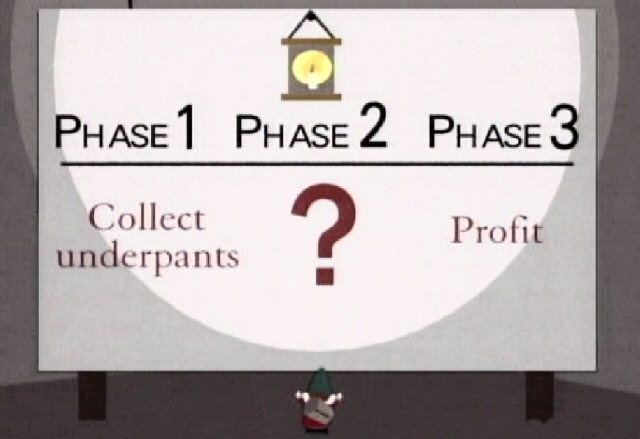
In summary, their novelty problem isn’t one, their “domain-general” systems are not general-purpose at the functional level at all, and the ever-present framing problem is ignored, rather than addressed. That does not leave much of an account left. While, as the authors suggest, being able to adaptively respond to non-recurrent features in our environment would probably be, well, adaptive, so would the ability to allow our lungs to become more “general-purpose” in the event we found ourselves having to breathe underwater. Just because such abilities would be adaptive, however, does not mean that they will exist.

As the classic quote goes, there are far more ways of being dead than there are of being alive. Similarly, there are far more ways of not generating adaptive behavior than there are of behaving adaptively. Domain-general information processors that don’t “know” what to do with the information they receive will tend to get things wrong far more often than they’ll get them right on those simple statistical grounds. Sure, domain-specific information processors won’t always get the right answer either, but the pressing question is, “compared to what?”. If that comparison is made to a general-purpose mechanism, then there wouldn’t appear to be much of a contest.

References: Chiappe, D., & MacDonald, K. (2005). The Evolution of Domain-General Mechanisms in Intelligence and Learning The Journal of General Psychology, 132 (1), 5-40 DOI: 10.3200/GENP.132.1.5-40

No, Really; Group Selection Still Doesn’t Work

Back in May, I posed a question concerning why an organism would want to be a member of group: on the one hand, an organism might want to join a group because, ultimately, that organism calculates that joining a group would likely lead to benefits for itself that the organism would not otherwise obtain; in other words, organisms would want to join a group for selfish reasons. On the other hand, an organism might want to join a group in order to deliver benefits to the entire group, not just themselves. In this latter case, the organism would be joining the group for, more or less, altruistic reasons. For reasons that escape my current understanding, there are people who continue to endorse the second reason for group-joining as plausible, despite it being anathema to everything we currently know about how evolution works.

The debate over whether adaptations for cooperation and punishment were primarily forged by selection pressures at the individual or group level has gone on for so long because, in part, much of the evidence that was brought to bear on the matter could have been viewed as being consistent with either theory – if one was creative enough in their interpretation of the results, anyway. The results of a new study by Krasnow et al (2012) should do one of two things to the group selectionists: either make them reconsider their position or make them get far more creative in their interpreting.

Though I think I have a good guess which route they’ll end up taking.

The study by Krasnow et al (2012) took the sensible route towards resolving the debate: they created contexts where the two theories make opposing predictions. If adaptations for social exchange (cooperation, defection, punishment, reputation, etc) were driven primarily by self-regarding interests (as it is the social exchange model), information about how your partner behaved towards you should be more relevant than information about how your partner behaved towards others when you’re deciding how to behave towards them. In stark contrast, a group selection model would predict that those two types of information should be of similar value when deciding how to treat others, since the function of these adaptations should be to provide group-wide gains; not selfish ones.

These contexts were created across two experiments. The first experiment was designed in order to demonstrate that people do, in fact, make use of what the authors called “third-party reputation”, defined as a partner’s reputation for behaving a certain way towards others. Subjects were brought into the lab to play a trust game with a partner who, unbeknownst to the subjects, were computer programs and not real people. In a trust game, a player can either not trust their partner, resulting in an identical mid-range payoff for both (in this case, $1.20 for both), or trust their partner. If the first player trusts, their partner can either cooperate – leading to an identical payoff for both players that’s higher than the mid-range payoff ($1.50 for both) – or defect – leading to an asymmetrical payoff favoring the defector ($1.80 and $0.90). In the event that the player trusted and their partner defected, the player was given an option to pay to punish their partner, resulting in both their payoffs sitting at a low level ($0.60 for both).

Before the subjects played this trust game, they were presented with information about their partner’s third-party reputation. This information came in the form of questions that their partner had ostensibly filled out earlier, which assessed the willingness of that partner to cheat given freedom from detection. Perhaps unsurprisingly, subjects were less willing to trust a partner who indicated they would be more likely to cheat, given a good opportunity. What this result tells us, then, is that people are perfectly capable of making use of third-party reputation information when they know nothing else about their partner. These results do not help us distinguish between group and individual-level accounts, however, as both models predict that people should act this way; that’s where the second study came in.

“Methods: We took 20 steps, turned, and fired”

The second study added in the crucial variable: first-party reputation, or your partner’s past behavior towards you. This information was provided through the results of two prisoner’s dilemma games that were visible to the subject, one which was played between a subject and their partner and the other played between the partner and a third party. This led to subjects encountering four kinds of partners: one who defected both on the subject and a third party, one who cooperated with both, and one who defected on one (either the subject or the third party) but cooperated with the other. Following this initial game, subjects again played a two-round trust game with their partners. This allowed the following question to be answered: when subjects have first-party reputation available, do they still make use of third-party reputation?

The answer could not have been a more resounding, “no”. When deciding whether they were going to trust their partner or not, the third-party reputation did not predict the outcome at all, whereas first-party reputation did, and, unsurprisingly, subjects were less willing to trust a partner who had previously defected on them. Further, a third-party reputation for cheating did not make subjects any more likely to punish their partner, though first-party reputation didn’t have much value in those predictions either. That said, the social exchange model does not predict that punishment should be enacted strictly on the grounds of being wronged; since punishment is costly it should only be used when subjects hope to recoup the costs of that punishment in subsequent exchanges. If subjects do not wish to renegotiate the terms of cooperation via punishment, they should simply opt to refrain from interacting with their partner altogether.

That precise pattern of results was borne out: when a subject were defected on and the subject then punished the defector, that same subject was also likely to cooperate in subsequent rounds with their partner. In fact, they were just as likely to cooperate with their partner as they were cases where the partner did not initially defect. It’s worth repeating that subjects did this while, apparently, ignoring how their partner had behaved towards anyone else. Subjects only seemed to punish the partner in order to persuade their partner to treat them better; they did not punish because their partner had hurt anyone else. Finally, first-party reputation, unlike third-party reputation, had an effect on whether subjects were willing to cooperate with their partner on their first move in the trust game. People were more likely to cooperate with a partner who had cooperated with them, irrespective of how that partner behaved towards anyone else.

Let’s see you work that into your group selection theory.

To sum up, despite group selection models predicting that subjects should make use of first- and third-party information equally, or at least jointly, they did not. Subjects only appeared to be interested in information about how their partner behaved towards others to the extent that such information might predict how their partner would behave towards them. However, since information about how their partner had behaved towards them is a superior cue, subjects made use of that first-party information when it was available to the exclusion of third-party reputation.

Now, one could make the argument that you shouldn’t expect to see subjects making use of information about how their partners behaved towards other parties because there is no guarantee that those other parties were members of the subject’s group. After all, according to group selection theories, altruism should only be directed at members of one’s own group specifically, so maybe these results don’t do any damage to the group selectionist camp. I would be sympathetic to that argument, but there are two big problems to be dealt with before I extend that sympathy: first, it would require that group selectionists give up all the previously ambiguous evidence they have said is consistent with their theory, since almost all of that research does not explicitly deal with a subject’s in-group either; they don’t get to recognize evidence only in cases where it’s convenient for their theory and ignore it when it’s not. The second issue is the one I raised back in May: “the group” is a concept that tends to lack distinct boundaries. Without nailing down this concept more concretely, it would be difficult to build any kind of stable theory around it. Once that concept had been developed more completely, then it would need to be shown that subjects will act altruistically towards their group (and not others) irrespective of the personal payoff for doing so; demonstrating that people act altruistically with the hopes that they will be benefited down the road from doing so is not enough.

Will this study be the final word on group selection? Sadly, probably not. On the bright side, it’s at least a step in the right direction.

References: Krasnow, M.M., Cosmides, L., Pederson, E.J., & Tooby, J. (2012). What are punishment and reputation for? PLOS ONE, 7

Altruism Is Not The Basis Of Morality

“Biologists call this behavior altruism, when we help someone else at some cost to ourselves. If you think about it, altruism is the basis of all morality. So the larger question is, Why are we moral?” – John Horgan [emphasis mine]

John Horgan, a man not known for a reputation as a beacon of understanding, recently penned the above thought that expresses what I feel to be an incorrect sentiment. Before getting to the criticism of that point, however, I would like to first commend John for his tone in this piece: it doesn’t appear as outwardly hostile towards the field of evolutionary psychology as several of his past pieces have been. Sure, there might be the odd crack about “hand-wavy speculation” and the reminder about how he doesn’t like my field, but progress is progress; baby steps, and all that.

Just try and keep those feet pointed in the right direction and you’ll do fine.

I would also like to add at the outset that Horgan states that:

“Deceit is obviously an adaptive trait, which can help us (and many other animals) advance our interest” [Emphasis mine]

I find myself interested as to why Horgan seems to feel that deceit is obviously adaptive, but violence (in at least some of its various forms) obviously isn’t. Both certainly can advance an organism’s interests, and both generally advance those interests at the expense of other organisms. Given that Horgan seems to offer nothing in the way of insight into how he arbitrates between adaptations and non-adaptations, I’ll have to chalk his process up to mere speculation. Why one seems obvious and the other does not might have something to do with Trivers accepting Horgan’s invitation to speak at his institution last December, but that might be venturing too far into that other kind of “hand-wavy speculation” Horgan says he dislikes so much. Anyway…

The claim that altruism is the basis of all morality might seem innocuous enough – the kind of thing ostensibly thoughtful people would nod their head at – but an actual examination of the two concepts will show that the sentiment only serves to muddy the waters of our understanding of morality. Perhaps that revelation could have been reached had John attempted to marshal more support for the claim beyond saying, “If you think about it” (which is totally not speculation…alright; I’ll stop), but I suppose we can’t hope for too much progress at once. So let’s begin, then, by considering the ever-quotable line from Adam Smith:

“It is not from the benevolence of the butcher, the brewer, or the baker, that we can expect our dinner, but from their regard to their own interest”

Smith is describing a scenario we’re all familiar with: when you want a good or service that someone else can provide you generally have to make it worth their while to provide it to you. This trading of benefits-at-a-cost is known as reciprocal altruism. However, when I go to the mall and give Express money so they will give me a new shirt, this exchange is generally not perceived as two distinct, altruistic acts (I endure the cost of losing money to benefit Express and Express endures the cost of losing a shirt to benefit me) that just happen to occur in close temporal proximity to one another, nor is it viewed as a particularly morally praiseworthy act. In fact, such exchanges are often viewed as two selfish acts, given that the ostensible altruism on the behavioral level is seen as a means for achieving benefits, not an end in and of itself. One could also consider the example with regards to fishing: if you sit around all day waiting for a fish to altruistically jump into your boat so you can cook it for dinner, you’ll likely be waiting a long time; better to try and trick the fish by offering it a tasty morsel on the end of a hook. You suffer a cost (the loss of the bait and your time spent sitting on a boat) and deliver a benefit to the fish (it gets a meal), whereas the fish suffers a cost (it gets eaten soon after) that benefits you, but neither you or the fish were attempting to benefit the other. 

There’s a deeper significance to that point, though: reciprocally altruistic relationships tend to break down in the event that one party fails to return benefits to the other (i.e. when the payments over time for one party actually resembles altruism). Let’s say my friend helps me move, giving up his one day off a month he has in the process. This gives me a benefit and him a cost. At some point in the future, my friend is now moving. In the event I fail to reciprocate his altruism, there are many who might well say that I behaved immorally, most notably my friend himself. This does, however, raise the inevitable question: if my friend was expecting his altruistic act to come back and benefit him in the future (as evidenced by his frustration that it did not do so), wasn’t his initial act a selfish one on precisely the same level as my shopping or fishing example above?

Pictured above: not altruism

What these examples serve to show is that, depending on how you’re conceptualizing altruism, the same act can be viewed as selfish or altruistic, which throws a wrench into the suggestion that all morality is based on altruism. One needs to really define their terms well for that statement to even mean anything worthwhile. As the examples also show, precisely how people behave towards each other (whether selfishly or altruistically) is often a topic of moral consideration, but just because altruism can be a topic of moral consideration it does not mean it’s the basis of moral judgments. To demonstrate that altruism is not the basis of our moral judgments, we can also consider a paper by DeScioli et al (2011) examining the different responses people have to moral omissions and moral commissions.

In this study, subjects were paired into groups and played a reverse dictator game. In this game, person A starts with a dollar and person B has a choice between taking 10 cents of that dollar, or 90 cents. However, if person B didn’t make a choice within 15 seconds, the entire dollar would automatically be transferred to them, with 15 cents subtracted for running out of time. So, person B could be altruistic and only take 10 cents (meaning the payoffs would be 90/10 for players A and B, respectively), be selfish and take 90 cents (10/10 payoff), or do nothing making the payoffs 0/85 (something of a mix of selfish and spite). Clearly, failing to act (an omission) was the worst payoff for all parties involved and the least “altruistic” of the options. If moral judgments use altruism as their basis, one should expect that, when given the option, third parties should punish the omissions more harshly than either of the other two conditions (or, at the very least, punish the latter two conditions equally as harshly). However, those who took the 90 cents were the ones who got punished the most; roughly 21 cents, compared to the 14 cents that those who failed to act were punished. An altruism-based account of morality would appear to have a very difficult time making sense of that finding.

Further still, an altruism-based account of morality would fail to provide a compelling explanation for the often strong moral judgments people have in reaction to acts that don’t distinctly harm or benefit anyone, such as others having a homosexual orientation or deciding not to have children. More damningly still, an altruism basis for moral judgments would have a hell of a time trying to account for why people morally support courses of action that are distinctly selfish: people don’t tend to routinely condemn others for failing to give up their organs, even non-vital ones, to save the lives of strangers, and most people would condemn a doctor for making the decision to harvest organs from one patient against that patient’s will in order to save the lives of many more people.

“The patient in 10B needs a kidney and we’re already here…”

An altruism account would similarly fail to explain why people can’t seem to agree on many moral issues in the first place. Sure, it might be altruistic for a rich person to give up some money in order to feed a poor person, but it would also be altruistic for that poor person to forgo eating in order to not impose that cost on the rich one. Saying that morality is based in altruism doesn’t seem to even provide much information about how precisely that altruism will be enacted, moral interactions will play out, or seem to lend any useful or novel predictions more generally. Then again, maybe an altruism-based account of morality can obviously deal with these objects if I just think about it

References: DeScioli, P., Christner, J., & Kurzban, R. (2011). The omission strategy Psychological Science, 22, 442-446 DOI: 10.1177/0956797611400616

Some Thoughts On Gender Bias In Academia

Gender bias can be something of a “sexy” topic for many; the kind of issue that can easily get large groups of people worked up and in the mood to express opinions full of anger, mockery, and the word “duh”. On a related note, there’s been an article going around by Moss-Rascusin et al (2012) concerning whether some science faculty members tend to be slightly biased in favor of men, relative to women, and whether said subtle biases might be responsible for some portion of some gender gaps. This paper, and some associated commentary, has brought to mind a few thoughts that I happen to find quite interesting; thoughts about bias that I would like to at least give some consideration amidst all the rest of the coverage this article has been getting.

First one to encounter life-altering discrimination… wins, I guess…

First, about the study itself: Moss-Racusin et al (2012) sent out fake undergraduate materials (which included a brief statement about future goals and a little bit of background information regarding things like letters of recommendation and GRE scores) to 127 faculty members in either biology, chemistry, or physics departments. These materials differed only in terms of the name of applications (either John or Jennifer), and the faculty members were asked to evaluate the student, falsely believing that these evaluations would be used to help the student’s career development.The results of this experiment showed that the faculty members tended to rate the student’s competence and hireability lower when it was Jennifer, relative to John. Further, these faculty members offered more mentoring advice to John as well as recommending an annual salary of $4000 less to Jennifer, on average (though that salary was still around $25,000, which isn’t too bad…). Also, the faculty members tended to report that they liked Jennifer more.

What we have here looks like a straightforward case of sex-based discrimination. While people liked the woman more, they also saw her as less competent, at least in these fields particular fields, given identical credentials (even if these credentials were rather merge in scope). Off the top of my head, I see nothing glaringly wrong with this study, so I’m fine with accepting the results; there most certainly did seem to be a bias in this context, albeit not an overtly hostile one. There are, however. a few notes worthy of consideration: first, the authors don’t really examine why this bias exists. The authors suggest (i.e. say it’s reasonable…) that this bias is due to pervasive cultural stereotypes, but as far as I can see, that’s just an assertion; they really didn’t do anything to test in order to see if that’s the case here or not. Sure, they administered the “Modern Sexism Scale*”, but I have my reservations about precisely what that scale is supposed to be measuring. Like many studies in psychology, this paper is big on presenting and restating findings (people discriminate by sex because they’re sexist) but light on explanatory power.

Another interesting piece of information worthy of consideration that comes to mind relates to a previous paper, published the same journal one year prior. Ceci & Williams (2011) documented an impressive amount of evidence that ran counter to claims of women being discriminated against in science fields in terms of having their manuscripts reviewed, being awarded grant funding, and also being interviewed and subsequently hired (at least in regards to PhDs applying for tenure-track positions at R1 institutions in the natural sciences). When discrimination was found in their analysis, it was typically fleeting in size, inconsistent in which gender it favored, and, further, it often wasn’t found at all. So, potentially, the results of the current paper, which are themselves rather modest in size, could just be a fluke, resulting from how little information about these applicants was provided (in other words, faculty members might have been falling back on sex as an important source of information, given that they lacked much else in the way of other useful information). While Moss-Racusin et al (2012) suggest that the subtle biases they found might translate into later discrimination resulting in gender gaps, it would require a fairly odd pattern of discrimination, where, on the one hand, women are discriminated against in some contexts because they’re viewed as less competent, but then are subsequently published, awarded grants, and hired at the same rate as men anyway, despite those perceptions (which could potentially be interpreted as suggesting that the standards are subsequently set lower for women).

“Our hiring committee has deemed you incompetent as a researcher; welcome aboard!”

Peculiar patterns of how and when discrimination would need to work aside, there’s another point that I found to be the most interesting of all, and it’s the one I was hoping to focus on. This point comes in the form of a comment made by Jerry Coyne over at Why Evolution Is True. Coyne apparently finds it very surprising that this bias against women in the Moss-Racusin et al (2012) paper was displayed in equal force by both male and female faculty members. Coyne later repeats his surprise in a subsequent post on the topic, so this doesn’t just appear to be a slip on the keyboard; he really was surprised. What I find so interesting about this surprise is what it would seem to imply: the default assumption is that when a woman is being discriminated against, a man ought to be the culprit.

Granted, that interpretation takes a little bit of reading between the lines, but there’s something to it, I feel. There must have been some expectation that was violated in order for there to be surprise, so if that wasn’t Coyne’s default assumption, I would be curious as to what his assumption was. I get the sense that this assumption would not be limited to Coyne, however; it seems to have come up in other areas as well, perhaps most notably in the case of the abortion issue. Abortion debates often get framed as part of “The War on Women”, with opposition to abortion being seen as the male side and support for abortion being seen as the female side. This is fairly interesting considering the fact that men and women tend to hold very similar views on abortion, with both groups opposing it roughly as often as they support it.

If I had to guess at the underlying psychology behind that read-in assumption (assuming my assessment is correct), it would go something like this: when people perceive a victim, they’re more or less required to perceive a perpetrator as well; it’s a requirement of the cognitive moral template. Whether that perpetrator actually exists or not can be beside the point, but some people are going to look like better perpetrators than others. In this specific instance, when women, as a group, are supposed to be the victims, that really only leaves non-women as potential perpetrators. This is due to two major reasons: first, men may make better perpetrators in general for a variety of reasons and, second, the parties represented in this moral template for perpetrator and victim can’t be the same party; if you want an effective moral claim, you can’t be a victim of yourself. A tendency to assume men are the culprits when women are supposed to be the victims could be further exacerbated in the event that women are also more likely to be seen as victims generally.

An observation made by Alice Cooper (1975) when he penned the line, “Only women bleed…”

The larger point is, assuming that all the effects reported in the Moss-Racusin et al (2012) study were accurately detected and consistently replicated, there are two gender biases reported here: Jennifer is rated as less competent and John is rated as less likable, both strictly on gendered grounds. However, I get the impression that only one of those biases will likely be paid much mind, as has been the case in pretty much all the reporting about the study. While people may talk about the need to remedy the bias against women, I doubt that those same people will be concerned about bridging the “likability gap” between men and women as well. It would seem that ostensible concerns for sexism can be, ironically, inadvertently sexist themselves.

*[EDIT] As an aside, it’s rather odd that the Modern Sexism Scale only concerns itself with (what it assumes is) sexism against women specifically; nothing in that scale would in anyway appear to assess sexism against men.

References: Ceci SJ, & Williams WM (2011). Understanding current causes of women’s underrepresentation in science. Proceedings of the National Academy of Sciences of the United States of America, 108 (8), 3157-62 PMID: 21300892

Moss-Racusin CA, Dovidio JF, Brescoll VL, Graham MJ, & Handelsman J (2012). Science faculty’s subtle gender biases favor male students. Proceedings of the National Academy of Sciences of the United States of America PMID: 22988126

Dinner, With A Side Of Moral Stances

One night, let’s say you’re out to dinner with your friends (assuming, of course, that you’re the type with friends). One of these friends decides to order a delightful medium-rare steak with a side of steamed carrots. By the time that the orders arrive, however, some mistake in the kitchen has led said friend to receive the salmon special instead. Now, in the event you’ve ever been out to dinner and this has happened, one of these two things probably followed: (1) your friend doesn’t react, eats the new dish as if they had ordered it, and then goes on about how they made such a good decision to order the salmon, or (2) they grab the waiter and yell a string of profanities at him until he breaks down in tears.

OK; maybe a bit of an exaggeration, but the pattern of behavior that we see in the event of a mixed-up order at a restaurant typically more closely resembles the latter pattern. Given that most people can recognize that they didn’t receive the order they actually made, what are we to make about the proposition that people seem to have trouble recognizing some moral principles they just endorsed?

“I’ll endorse what she’s endorsing…”

A new study by Hall et al (2012) examined, what they’re calling, “choice blindness”, which is, apparently, quite a lot like “change blindness”, except with decisions instead of people. In this experiment, a researcher with a survey about general moral principles or moral stances on certain specific issues approached 160 strangers who happened to be walking through the park. Once the subjects had filled out the first page of the survey and flipped the piece of  paper over the clipboard to move onto the second, an adhesive on the back of the clipboard held on to and removed the lightly-attached portion of the survey to reveal a new set of questions. The twist is that the new set of questions were the opposite set of moral stances, so if a subject said they agreed that the government shouldn’t be monitoring emails, the new question would imply that the subject felt the government should be monitoring emails.

Overall, only about a third to a half of the subjects appeared to catch that the questions had been altered, a number which is very similar to the results found for the change blindness research. Further, many of the subjects that missed the deception also went on to give verbal justifications for their ‘decisions’ that appeared to be in opposition to their initial choice on the survey. That said, only about a third of the subjects who expressed extremely polarized scores (a 1 or a 9) failed to catch the manipulation, and authors also found that those who rated themselves as more politically involved were similarly more likely to detect the change.

So what are we to make of these findings? The authors suggest their is no straight-forward interpretation, but also suggest that choice blindness disqualifies vast swaths of research from being useful, as the results suggest that people don’t have “real” opinions. Though they say they are hesitant to suggest such an interpretation, Hall et al (2012) feel those interpretations need to be taken seriously as well, so perhaps they aren’t so hesitant after all. It might almost seem ironic that Hall et al (2012) seem “blind” to the opinion they had just expressed (don’t want to suggest such alternatives, but also do want to suggest such alternatives), despite that opinion being in print, and both opinions residing within the same sentence.

“Alright, alright; I’ll get the coin…”

It would seem plausible that the authors have no solid explanation of their results because they seemed to have gone into the study without any clearly stated theory. Such is the unfortunate state of much of the research in psychology; a dead-horse issue I will continue to beat. Describing an effect as a psychological “blindness” alone does not tell us anything; it merely restates the finding, and restatements of findings without additional explanations are not terribly useful for understanding what we’re seeing.

There are a number of points to consider regarding these results, so let’s start with the obvious: these subjects were not seeking to express their opinions so much as they were approached by a stranger with a survey. It seems plausible that at least some of these subjects really weren’t paying much attention to what they were doing or not really engaged in the task at hand. I can’t say to what extent this would be a problem, but it’s at least worth keeping in mind. One possible way of remedying this might be to have subjects first not only mark their agreement with an issue on the scale, but also briefly justify that opinion. If you got subjects to then try and argue against their previously stated justifications moments later, that might be a touch more interesting.

Given that there’s no strategic context under which these morals stances are being made in this experiment, some random fluctuation in answers might be expected. In fact, lack of context might be the reason that some subjects may not have been particularly engaged in the task in the first place, as evidenced by people who had more extreme scores or who were more involved in politics being more attentive to these changes. Accordingly, another potential issue here concerns the mere expectation of consistency in responses: research has already shown that people don’t hold universally to one set of moral principles or moral stances (i.e. the results from various versions of the trolley and footbridge dilemmas, among others). Indeed, we should expect moral judgments (and justifications for those judgments) to be made strategically, not universally, for the very simple reason that universal behaviors will not always lead to useful outcomes. For instance, eating when you’re hungry is a good idea; continuing to eat at all points, even when you aren’t hungry, is generally not. What that’s all getting at is that the justification of a moral stance is a different task than the generation of a moral stance, and if memory fails to retain information about what you wrote on a survey some strange researcher just handed you when you’re trying to get through the park,  you’re perfectly capable of reasoning about why some other moral stance is acceptable.

“I could have sworn I was against gay marriage. Ah well”

Phrased in those terms (“when people don’t remember what stance they just endorsed – after being approached by a stranger that was asking them to endorse some stance they might not have given any thought to until moments prior – they’re capable of articulating supportive arguments for an opposing stance”), the results of this study are not terribly strange. People often have to reason differently about whether a moral act is acceptable or not, contingent on where they currently stand in any moral interaction. For example, deciding whether an instance of murder was morally acceptable or not will probably depend, in large part, on which side of that murder you happen to stand on: did you just kill someone you don’t like, or did someone else just kill someone you did like? An individual that stated murder is always wrong in all contexts might be at something of a disadvantage, relative to one with a bit more flexibly in their moral justifications (to the extent that those justifications will persuade others about whether to punish the act or not, of course).

One could worry about what people’s “real” opinions are, then, but it would seem that doing so fundamentally misstates the question. Saying that when something bad happens to you is wrong, and when that same something bad happens to someone you dislike is right, both represent real opinions, but they’re not universal opinions; they’re context-specific. Asking about “real” universal moral opinions would be like asking about “real” universal emotions or states (“Ah, but how happy is he really? He might be happy now, but he won’t be tomorrow, so he’s not actually happy, is he?”). Now, of course, some opinions might be more stable than others, but that will likely be the case only insomuch as the contexts surrounding those judgments doesn’t tend to change.

References: Hall, L., Johansson, P., & Strandberg, T. (2012). Lifting the veil of morality: Choice blindness and attitude reversals on a self-transforming Survey PLOS ONE

Your Mama’s So Fat…

Recently, there’s been a (free) paper going around the various psychology blogging sites by Swami & Tovee (2012) that deals with how stress appears to affect men’s ratings of women’s attractiveness by body type. The study purports to find that men, when placed in an apparently stressful situation, subsequently report finding heavier women more attractive. My take on the issue, for what it’s worth, is that the authors (and a few bloggers who have picked up the study) might have, in the excitement of talking about this result, seemed to have overlooked the fact that their explanation for it does not appear to make much sense.

On the plus side, at least they tried; “A” for…affort, I guess…

Swami & Tovee (2012) referenced what they call the “Environmental Security Hypothesis”. This hypothesis suggests that when an individual is facing some environmental stress, they will tend to prefer mates that can more successfully navigate those stressful life events. In certain contexts, then, the author’s further suggest that physical attractiveness ideals should change. So, in the case of body size, their general argument would seem to go something like this: since fat stores are a measure of caloric security and physical maturity, when their caloric security is low, men should subsequently find women with more fat more attractive because they hold a higher mate value in those contexts.This argument strikes me as distinctly bad.

Presumably there are a number of modules inside our brain that function to assess the mate value of others. We should expect these modules to being paying attention, so to speak, to traits that correlate with the reproductive potential of those potential mates. Given that the current caloric state of women is one of those traits, we certainly should expect some of men’s mating modules to assess it. That’s all well and good, but here’s where the authors lose me: when a man is assessing a woman’s reproductive potential, how does information about that man’s current state help in that assessment? My being hungry or stressed should, in principle, have little or nothing to do with whether any individual woman is fertile or capable of successfully dealing with stressful life events, or anything, really.

Now maybe if I was chronically hungry or stressed, there might be some value in selecting a mate with more fat, but only insomuch as my levels of hunger and stress are predictive of theirs. This argument would hinge on the notion that stress and hunger are shared, more or less, communally. However, even granting that chronic levels of hunger or stress for me might be predictive of the risks that others will encounter these things as well, this study was not examining chronic levels of these variables; it was examining acute levels of stress or hunger. This makes the argument seem even weaker. The mate value of others should not really change because I have a stressful day (or, in the case of this experiment, a stressful few minutes competing for a fake job and counting backwards in intervals of 13 in front of a few people).

They should only change after I make it to happy hour.

Because of that, the question then becomes: what value would information about my current state have when it comes to assessing another individual’s state? As far as I can tell, this answer amounts to “not much”. If I want to assess someone else’s state my best bet would probably be to, well, assess it directly, rather than assessing mine and assuming mine reflects theirs. Despite this, the research did show that men were assessing heavier figures as more attractive after they had been stressed, so how should we explain this?

We can start by noting that neither men’s BMI or current hunger levels correlated with their ratings of attractiveness. Since adipose tissue is supposed to be signaling caloric security, this casts some doubt on at least part of the Environmental Security Hypothesis put forth by Swami & Tovee (2012). It would also appear to contradict some previous research they present in the introduction about how men’s preferences for female body size shift with their hunger levels. Nevertheless, men in the stressed group did tend to find the heavier figures more attractive. Those same men also happened to find the figures in the normal weight category more attractive, and, even though the preference was slightly shifted, also still found women in the underweight category to be the average ideal. In other words, their ratings of attractiveness shifted up in overall magnitude about as much as they shifted towards the heavier end. While the authors focus on the latter shift, they don’t seem to pay any mind to the former, which is a rather severe oversight.

Let’s consider that finding in light of a hunger analogy. There’s no denying that preferences can shift on the basis of one’s current caloric state. How appealing I find the idea of eating an unpalatable food will change on the basis of how recently I ate and how long I’ll likely have to wait before being able to eat something else. When I’m hungry, normally unpalatable food might appear more acceptable whereas food that was initially appetizing will now be highly appetizing. How attractive food seems, in general, would shift upwards. You might also find that, provided that not all food is equally as attainable, that I shift my standards towards food that I can more easily acquire and away from food that appears more difficult to obtain. When you’re hungry, a meal of lower quality now might seem more appealing than a meal of higher quality later, provided that meal of higher quality would even be available at all. Finally, you might find that no matter how hungry I get, my preference for eating things like bark or sand remains relatively unchanged, no matter how easy or difficult they are to obtain.

It’s not so bad once you ketchup it up…

Returning to the attractiveness ratings in the current study, this is basically what the paper showed: there was little variance in whether or not men found starving or obese women attractive (they didn’t). Stressed men also shifted their ratings to the right (perhaps towards more attainable mates) and similarly shifted them up (women were generally more attractive). Taking both of these effects into account gives us a better grasp for what’s really going on.

Now maybe the title of “stressed men lower their standards” has a bit less of a positive ring to it than the authors and bloggers intended, but it’s certainly consistent with the pattern of data observed here. It would at least appear to be more consistent than the author’s explanation for the pattern of results which hinges on ecological variation in access to resources, since the overall ecology for men wasn’t changing in this study: acute stress levels were. Whether your stress level is more useful for predicting useful things about other people, or whether it’s more useful for predicting which course of action you yourself should pursue, I feel, should be clear.

References: Swami V, & Tovée MJ (2012). The Impact of Psychological Stress on Men’s Judgements of Female Body Size. PloS one, 7 (8) PMID: 22905153

Mate Choices Can Be Complex, But Are They Oedipal Complex?

Theory is arguably the most important part of research. A good theory helps researchers formulate better research questions as well as understand the results that their research projects end up producing.I’ve said this so often that expressing the idea is closer to a reflex than a thought at this point. Unfortunately, “theories” in psychology – if we can even call them theories – are frequently of poor quality, if not altogether absent from research, leading to similarly poorly formulated projects and explanations. Evolutionary theory offers an escape from this theoretically shallowness, and it’s the major reason the field appeals to me. I find myself somewhat disappointed, then, to see a new paper published in Evolutionary Psychology that appears to be, well, atheoretical.

No, I’m not mad; I’m just disappointed…

The paper was ostensibly looking at whether or not human children sexually imprint on the facial traits of their opposite sex parent, or, more specifically (for those of you that don’t know about imprinting):

Positive sexual imprinting has been defined as a sexual preference for individuals possessing the characteristics of one’s parents… It is said to be a result of acquiring sexual preferences via exposure to the parental phenotype during a sensitive period in early childhood.

The first sentence of that definition seems to me to be unnecessary. One could have preferences for characteristics that one’s parents also happen to possess without those preferences being the result of any developmental mechanism that uses parental phenotype as its input. So I’d recommend using the second part of the definition, which seems fine, as far as describing sexual imprinting on parents goes. As the definition suggests, such a mechanism would require (1) a specified developmental window during which the imprinting takes place (i.e. the preferences would not be acquired prior to or after that time, and would be relatively resistant to change afterwards) and (2)  that mechanism to be specifically focused on parental features.

So how did Marcinkowska & Rantala (2012) go about testing this hypothesis? Seventy subjects, their sexual partner, and their opposite sex parent (totaling 210 people) were each photographed from straight ahead and in profile. These subjects were also asked to report about their upbringing as a child. Next, a new group of subjects were presented with an array of pictures: on one side of the array was a picture of one of the opposite sex parents; on the other side there were four pictures, one of which was the partner of that parent’s child and three of which were controls. The new subjects were asked to rate how similar the picture of the parent was to the pictures of the people on the other side of the display.

The results showed that the group of independent raters felt that a man’s mother resembled slightly more closely his later partner than the controls did. The results also showed that the same raters did not feel that a woman’s father more closely resembled her later partner than the control did. Neither of these findings were in any way related to the self-reports that subjects had delivered about their upbringing either. If you’ve been following along so far, you might be curious as to what these results have to do with a sexual imprinting hypothesis. As far as I can tell, the answer is a resounding, “nothing”.

Discussion: Never mind

Let’s consider what these results don’t tell us: they certainly don’t speak to the matter of preferences. As Marcinkowska & Rantala (2012) note, actual mating preferences can be constrained by other factors. Everyone in the population might wish to monopolize the matings of a series of beautiful others, but if those beautiful others have different plans, that desire will not be fulfilled. Since the initial definition of imprinting specifically referenced preferences – not actual choices – the findings would have very little relevance to the matter of imprinting no matter how the data fell out. It’s worse than that, however: this study didn’t even attempt to look for any developmental window either. The authors seemed to just assume it existed without any demonstration that it actually does.

What’s particularly peculiar about this oversight is that, in the discussion, the authors note they did not look at any adoptive families. This suggests that the authors at least realized there were ways of testing to see if this developmental window even exists, but didn’t seem to bother running the required tests. A better test – one that might suggest such a developmental window exists – would be to test preferences of adoptive or step-children towards the features of their biological and adoptive/step-parents. If the imprinting hypothesis was true, you would expect that adoptive/step-children would prefer the characteristics of their adoptive/step-parents, not their biological ones. Further, this research could be run with respect to the time at which the new parent came into the picture (and the old one left). If there is a critical developmental window, you should only expect to see this effect when the new parent entered into the equation at a certain age; not before or beyond that point.

The problems don’t even end there, however. As I mentioned previously, this paper appears atheoretical in nature, in that the authors give absolutely no reason as to why one would expect to find a sexual imprinting mechanism in the first place, why it would operate in early childhood, let alone why that mechanism would be inclined to imprint on one’s close, biological kin. What the precise fitness benefits to such a mechanism would be are entirely unclear to me, though, at the very least, I could see it carrying fitness costs in that it might heighten the probability of incest taking place. Further, if this mechanism is presumably,active in all members of our species, and each person is looking to mate with someone who resembles their opposite sex parent, it would seem that such a preference might actively disincline people from having what would be otherwise adaptive matings. Lacking any theoretical explanation for any of this, the purpose of the research seems very confusing.

On the plus side, you can still add it to your resume, and we all know how important publications are.

All that said, even if research did find that people tended to be attracted to the traits of their opposite sex parent, such a finding could, in principle, be explained by sexual selection. Offspring inherent genes from their parents that both contributed to their parent’s phenotype as well as genes that contributed to their parent’s psychological preferences. If preferences were not similarly inherited, sexual selection would be impossible and ornaments like the peacock’s tail could never have come into existence. So, presuming your parents found each other at least attractive enough to get together and mate, you could expect their offspring to resemble them both physically and psychologically to some extent. When those offspring are then making their own mate choices, you might then expect them to make a similar set of choices (all else being equal, of course).

What can be said for the study is that it’s a great example of how not to do research. Don’t just assume the effect you’re looking to study exists; demonstrate that it does. Don’t assume that it works in a particular way in the event that it actually exists either. Most importantly, don’t formulate your research project in absence of a clearly stated theory that explains why such an effect would exist and, further, why it would work the way you expect it might. You should also try and rule out alternative explanations for whatever findings you’re expecting. Without good theory, the quality of your research will likely suffer, and suffer badly.

 References: Marcinkowska, U.M., & Rantala, M.J. (2012). Sexual Imprinting on Facial Traits of Opposite-Sex Parents in Humans. Evolutionary Psychology, 10, 621-630

The Salience Of Cute Experiments

In the course of proposing new research and getting input from others, I have had multiple researchers raise the same basic concern to me: the project I’m proposing might be unlikely to eventually get published because, given that I find the results I predict that I will, reviewers might feel the results are not interesting or attention-grabbing enough. While I don’t doubt that the concern is, to some degree, legitimate*, it has me wondering about whether their exists an effect that is essentially the reverse of that issue. That is, how often does bad research get published simply on the grounds that it appears to be interesting, and are reviewers willing to overlook some or all the flaws of a research project because it is, in a word, cute?

Which is why I always make sure my kitten is an author on all my papers.

The cute experiment of the day is Simons & Levin (1998). If you would like to see a firsthand example of the phenomenon this experiment is looking at before I start discussing it, I’d recommend this video of the color changing card trick. For those of you who just want to skip right to the ending, or have already seen the video, the Simons & Levin (1998) paper sought to examine “change blindness”: the frequent inability of people to detect changes in their visual field from one moment to the next. While the color changing card trick only replaced the colors of people’s shirts, tablecloths, or backdrops, the experiment conducted by Simons & Levin (1998) replaced actual people in the middle of a conversation to see if anyone would notice.The premise of this study would appear to be interesting on the grounds that many people might assume that they would notice something like the fact that they were suddenly talking to a different person then they were a moment prior, and the results of this study would seem to suggest otherwise. Sure sounds interesting when you phrase it like that.

So how did the researchers manage to pull off this stunt? The experiment began when a confederate holding a map approached a subject on campus. After approximately 10 or 15 seconds of talking, two men holding a door would pass in between the confederate and the subject. Behind this door was a second confederate who changed places with the first. The second confederate would, in turn, carry on the conversation as if nothing had happened. Of the 15 subjects approached in such a manner, only 7 reported noticing the change of confederate in the following interview. The authors mention that out of the 7 subjects that did notice the change, there seemed to be a bias in age: specifically, the subjects in the 20-30 age range (which was similar to that of the confederates) seemed to notice the change, whereas the older subjects (in the 35-65 range) did not. To explain this effect, Simons & Levin (1998) suggested that younger subjects might have been treating the confederates as their “in-group” because of their age (and accordingly paying more attention to their individual features) whereas the older subjects were treating the confederates as their “out-group”, also because of their age (and accordingly paying less attention to their features).

In order to ostensibly test their explanation, the authors ran a follow-up study. This time the same two confederates were dressed as construction workers (i.e. they wore slightly different construction hats, different outfits, and different tool belts) in order to make them appear as more of an “out-group” member to the younger subjects. The confederates then exclusively approached people in the younger age group. Lo and behold, when the door trick was pulled, this time only 4 of the 12 subjects caught on. So here we have a cute study with a counter-intuitive set of results and possible implications for all sorts of terms that end in -ism.

And the psychology community goes wild!

It seems to have gone unnoticed, however, that the interpretation of the study wasn’t particularly good. The first issue, though perhaps the smallest, is the sample size. Since these studies only ran a total of 13.5 subjects each, on average, the extent to which this difference in change blindness (approximately 15%) across groups is just due to chance is unknown. Let’s say, however, that we give the results the benefit of the doubt and assume that they would remain stable if sample size was scaled up. Even given that consideration, there are still some very serious problems remaining.

The larger problem is that the authors did not actually test their explanation. This issue comes in two parts. First, Simons and Levin (1998) proposed that subjects were using cues of group membership in determining whether or not to pay attention to an individual’s features. In their first study, this cue was assumed to be age; in the second study, this cue was assumed to now be construction worker. Of note, however, is that the same two confederates took part in both experiments, and I doubt their age changed much between the two trials. This means that if Simons and Levin (1998) were right, age only served as an indicator of group membership in first context; in the second, that cue was overridden by another – construction worker. Why that might be the case is left completely untouched by the authors, and that seems like a major oversight. The second part is that the authors didn’t test whether the assumed “in-group” would be less change blind. In order to do that they would have had to, presumably, pull the same door trick using construction workers as their subjects. Since Simons and Levin (1998) only tested an assumed out-group, they are unable to make a solid case for differences in group membership being responsible for the effect they’re talking about.

Finally, the authors seem to just assume that the subjects were paying attention in the first place. Without that assumption these results are not as counter-intuitive as they might initially seem, just as people might not be terribly impressed by a magician who insisted everyone just turned around while he did his tricks. The subjects had only known the confederates for a matter of seconds before the change took place, and during those seconds they were also focused on another task: giving directions. Further, the confederate (who is still a complete stranger at this point) is swapped out for another very similar one (both are male, both are approximately the same age, race, and height, as well as being dressed very similarly). If the same door trick was pulled with a male and female confederate, or a friend and a stranger, or people of different races, or people of different ages, and so on, one would predict you’d see much less change blindness.

My only change blindness involves being so rich I can’t see bills smaller than $20s

The real interesting questions would then seem to be what cues to people attend to, why do they attend to them, and in what order are they attended to? None of these questions are really dealt with by the paper. If the results they present are to be taken at face value, we can say the important variables are often not the color of one’s shirt, the sound of one’s voice (within reason), very slight differences in height, and modestly different hairstyles (when one isn’t wearing a hat) when dealing with complete strangers of similar gender and age, while also involved in another task.

So maybe that’s not a terribly surprising result, when phrased in such a manner. Perhaps the surprising part might even be that so many people noticed the apparently not so obvious change. Returning to the initial point, however, I don’t think many researchers would say that an experiment designed to demonstrate that people aren’t always paying attention to and remembering every single facet of their environment would be a publishable paper. Make it cute enough, however, and it can become a classic.

*Note: whether the concerns are legitimate or not, I’m going to do the project anyway.

References: Simons, D.J., & Levin, D.T. (1998). Failure to detect changes to people during a real-world interaction Psychonomic Bulletin & Review, 5, 644-649 DOI: 10.3758/BF03208840

Just A Little Off The Top

In my last post I suggested that humans likely possess a series of modules designed to assess victim characteristics when it comes to assessing their associated victimhood claims. Simply put, there are some people who make better social investments than others, and, accordingly, would tend to have their victimhood claims seen as more legitimate than those others. Specifically, I noted that men might be at something of a disadvantage when attempting to advance a victimhood claim, relative to women, as women might tend to be better targets of social investment (at least in certain contexts; I would be hesitant to assume that this is the case a prior across all contexts).

Coincidentally, I happened to come across this article (and associated Reddit post) today discussing whether or not male newborns should be circumcised. I feel the article and, more importantly, the comments discussing the article serve as an interesting (if non-scientific) case study in the weight of moral claims between genders. So let’s talk about the moral reactions of people to circumcision.

“There might have been a slight mix-up, but don’t worry; we’ll do your ears for free!”

In the debate over whether male offspring should be circumcised around the time they’re born, those in favor of circumcision seem to tend and phrase their stance in a consequentialist fashion, often claiming one or more of three* things: (1) circumcised penises are more appealing aesthetically, (2) circumcision brings with it health benefits in the form of a reduction in the risk of STI transmission, and (3) that the removal of the foreskin doesn’t really do any serious harm to the child. The function of these arguments would appear fairly self-evident: they are attempts to disengage the moral psychology of others by way of denying a victim, and without a victim the moral template cannot be completed. Those in favor of allowing circumcision, then, are generally claiming that being circumcised is a benefit, or at the very least not a cost, and you don’t get to be a victim without being perceived to have suffered a cost.

Beginning with the second point – the reduction of risk for contracting HIV – there is evidence to suggest that circumcision does nothing of the sort. Though I am unable to access the article, this paper in The Journal of Sexual Medicine reports that not only is circumcision not associated with a lower incidence of STIs in men, including HIV, but it might even be associated with a slightly higher incidence of infection (for whatever reason). The studies that claim to find the 40-60% reduction in the female-to-male transmission rate of HIV in circumcised men seem to have been conducted largely in African populations, where other issues, such as general hygiene, might be a factor. Specifically, one of the proposed reasons why uncircumcised males in these studies are more likely to become infected is that the foreskin traps fluids and pathogens, increasing bodily contact duration with them. In other words, a little soap and water after sex (along with a condom during sex, of course) could likely accomplish the same goal as circumcision in these cases, so the removal of the foreskin might be just a bit extreme of a remedy.

I’m most certainly not an expert in this field so don’t just take my word for it, but my perspective on the matter is that the results about whether circumcision decreases the transmission of HIV are mixed at best. Further, at least some of the hypothesized means through which circumcision could potentially work in this regard appear perfectly achievable through other, non-surgical means. Now that I’ve covered at least some ground on that evidentiary front, we can turn towards the more interesting, moral side. On the basis of this mixed evidence and a general lack of understanding as to how circumcision might work, the report issued by the American Academy of Pediatrics suggested that:

“…the benefits of newborn male circumcision justify access to this procedure for families who choose it” [emphasis mine].

“If you can’t be trusted to wash it properly, I’m going to cut it off”

One interesting facet of our moral judgments is that, to some extent, they are nonconsequentist. That is to say, even if an act leads to a positive consequence, it can still be considered immoral. The classic example of this concerns people’s intuitions in the trolley and footbridge dilemmas: in the former dilemma, roughly 90% of subjects say that diverting an out-of-control trolley away from five hikers and towards one hiker is morally acceptable; in the latter dilemma, a roughly equivalent percentage of subjects say that pushing another person in front of a train to save five hikers is morally impermissible (DeScioli & Kurzban, 2009). Despite the consequences of each action being identical, the moral feel of each action is radically different. Thus, to say that an action is justified strictly by referencing a cost/benefit ratio (and a rather fuzzy and potentially flawed one at that) can be to miss the point morally to some degree. That said, to some other degree it does hit the mark because, as previously mentioned, moral claims need a victim, and without costs there can be no victim.

This conflict between the nonconsequentialist and consequentialist aspect of our moral psychology appear readily visible in the reactions of people when it comes to comparing elective surgery on the genitals of boys to that of elective surgery when performed on girls. A few years back, the American Academy of Pediatrics also recommended reconsidering US law regarding whether or not doctors should be allowed to engage in a “ceremonial” female circumcision. Though not much is said about the details of the procedure explicitly, the sense the various articles discussing it give is that it is a “harmless” one, essentially amounting to a pinprick to the clitoris or clitoral hood capable of drawing a drop of blood.The AAP recommended this reconsideration in order to, hopefully, appease certain cultural groups that might otherwise take their daughters overseas to engage in a much more extreme version of the ritual where piece of the external genitalia are cut or fully removed. This recommendation by the AAP was soon reversed, following a political outcry.

It’s worth noting that, during discussions on the topic of circumcision, there are many people who get rather upset when a comparison is made between the female and male varieties, typically because the female version is more extreme. A complete removal of the clitoris is, no doubt, worse than the removal of the foreskin of the penis. When comparing a pinprick to the clitoris that does no permanent damage to a complete or partial removal of the male foreskin though, that argument would seem to lose some of its weight. Even without that consequentialist weight, however, people were still very strongly opposed the ceremonial pricking on (more or less) nonconsequentialist grounds:

“We retracted the policy because it is important that the world health community understands the AAP is totally opposed to all forms of female genital cutting, both here in the U.S. and anywhere else in the world,” said AAP President Judith S. Palfrey. [emphasis, mine]

The interesting question to me, then, is why male genital cutting isn’t currently opposed as vehemently in all forms when performed on newborn infants who cannot consent to the procedure (Wikipedia puts the percentage of newborn boys being circumcised before they leave the hospital at over 50% in the US). One could try and point, again, to the iffy data on HIV reduction, but even in the event that such data was good and no alternatives were available to reduce the spread of the virus, it would leave one unable to explain why circumcision as a practice dates back thousands of years, well before HIV was ever a concern. It would also still leave the moral question of consent very much alive: specifically, what are the acceptable bounds for parents when making decisions for their dependent offspring? A pinprick to the genitals for culture reasons apparently falls into the non-accepted category, whereas the remove of foreskin for aesthetic or cultural reasons is accepted.

He’ll appreciate all that endorsement cash when he’s grown up.

Now maybe, as some suggest, the female genital pricking would to some extent morally license the more extreme version of the practice. That would certainly be a bad outcome to the procedure, and such an argument seeks to add the consequentialist weight back into the argument. Indeed, most all the articles on the topic, along with many of the commenters, likened the pricking to its far more extreme expression elsewhere. However, I get the sense that such a justification for avoiding pricking might represent a post hoc justification for the aversion. I get that sense because I saw no evidence presented that this moral licensing outcome would actually obtain (just a concern that it would) and no indication that more people would really be OK with the procedure if the moral licensing risks could be reduced or removed. I don’t think I recall anyone saying, “I’d be alright with the clitoral pinprick if…”

Returning to the gender issue, however, why do people not raise similar concerns about male circumcision licensing other forms of harm to men? My sense is that concerns like these are not raised with nearly as much force or as frequently because, in general, people are less bothered by males being hurt, infants or otherwise, for reasons I mentioned in the last post. Even in the event that these people are just incredible swayed by the HIV data, (though why people accept or reject evidence in the first place is also an interesting topic) those potential benefits wouldn’t be realized by the boys until at least the point at which they’re sexually active, so circumcising boys when they’re newborns without any indication they even sort of consent seems premature.

So when people say male and female circumcision aren’t comparable, I feel they have more in their mind then just the consequentialist outcome. I get the sense that the emotional feel of the issues can’t be compared, in part, because one happens to men and one happens to women, and our psychology tends to treat such cases differently.

*Note: this list of three items is not intended to be comprehensive. There are also cultural or religious reasons cited for circumcision, but I won’t be considering them here, as they didn’t appear well represented in the current articles.

References: DeScioli, P., & Kurzban, R. (2009). Mysteries of Morality Cognition , 112, 281-299 DOI: 10.1016/j.cognition.2009.05.008

No, Really; What About The Men?

If you’re the kind of person who has frequented internet discussion boards, you’ll know that debates over sexism can get a bit heated. You might also have noticed that many problems men faced are not infrequently dismissed on the grounds of being relative unimportant when compared to issues women face. One common form this dismissal takes is the purposely misspelled, “what about teh poor menz?”, since everyone on the internet is automatically intellectually twelve. In fact, the whole sexism debate is often treated like a zero-sum game, where reducing sexism against one sex makes the other one worse off. We could debate whether that’s the case or not, but that’s not my goal today. Today, my goal is to ask, quite seriously, what about the men?

“Check out the male privilege on that guy”

There were two posts on Reddit that inspired this post: the first is this story of President Obama reacting to the Akin quote regarding rape. Here’s what Obama had to say:

“The views expressed were offensive,” said Obama. “Rape is rape. And the idea that we should be parsing and qualifying and slicing what types of rape we are talking about doesn’t make sense to the American people and certainly doesn’t make sense to me. So what I think these comments do underscore is why we shouldn’t have a bunch of politicians, a majority of whom are men, making health care decisions on behalf of women.” [emphasis mine]

Now, it seems to me that what we should want when it comes to our elected official writing legislation regarding our health care has nothing to do with gender per se; it should have everything to do with the policies themselves, not their proposers. For instance, imagine that Akin was a woman who uttered the same nonsensical quote about rape pregnancies: would that be an opportune time to comment about how women in general can’t be trusted to make their own health care decisions? I’d think not, yet it seemed to be a fine time to draw attention to the male gender.

Here’s the second post: the radically different prices that men and women can be charged for admission to certain venues. This is about as blatant case of sexism as you could think of. It’s also exceedingly common: bars and clubs hold “ladies nights” where women are charged less – if they’re charged at all – for entry and drinks on no basis other than gender. What you rarely, if ever, find is the reverse, where men are given a pass and women are required to pay a higher premium. Now we could argue about whether this is a good business move (whether it ends up profiting the clubs or not) but that’s not the point here. I doubt many people would accept women being charged higher tuition premiums to attend college, for instance, if it ended up causing the college to profit.

One could also argue about whether ladies nights can be said to do men real harm. Complaining about them might even be conceptualized as a first-world problem, or a whiny privileged male problem. Whether they do or not is still besides the point, which is this: it’s probable that even when a policy hurts or discriminates against men, that harm or discrimination will be taken less seriously than a comparable one directed against women. There is likely be some psychological module devoted to taking into account victim characteristics when assessing victimhood claims, and gender would appear to be a very relevant variable. In fact, I would predict that gender will be an important variable above and beyond the extent to which the sexes historically faced different costs from different acts (rape, for instance, entails the additional risk of pregnancy from a male-on-female case, but not the reverse, so we might expect people to say a woman getting raped is worse than a man being raped).

“It’s illegal to talk on your cell while driving without having my number”

Some intriguing data come to us from Mustard (2001), who examined roughly 80,000 federal sentences across different racial groups, men, and women. Doing so requires controlling for a number of relevant variables, such as offense type and severity, past criminal record, and so on, since the variable of interest is, “the extent to which an individual who is in the same district court, commits the same offense, and has the same criminal history and offense level as another person received a different sentence on the basis on race, ethnicity or gender”. Mustard (2001) found that, after controlling for these variables, some of the usual racial bias come through: sentences that were handed out to blacks and Hispanics were, on average, 5.5 and 4.5 months longer than comparable sentences handled out to whites. Seems like a run-of-the-mill case of discrimination so far, I’m sure. However, the male-female discrepancy didn’t fair any better: men, on average, also received sentences 5.5 months longer than women did. Huh; it would seem that the male-female bias is about as bad, if not worse, than racial biases in this case.

It’s potentially worth noting that these disparities could come about for two reasons: sentencing within the guidelines – just differently between genders – or departing from the sentencing guidelines. For example, both men and women could be sentenced within the appropriate guidelines, but women tend to be sentenced towards the low end of the sentencing range while men are sentenced towards the high end. Granted, bias is still bias, whether it’s due to departures or sticking to the accepted range of sentencing length, but, as it turns out, roughly 70% of the gender difference could be accounted for by departures from sentencing guidelines; specifically, women were more often given downward departures from the guidelines, relative to men. When blacks and Hispanics are granted a downward departure, it averages about 5.5 months less than departures given to whites; for women, the average departure was almost 7 months greater than for men. Further, when the option of no jail time is available, females are also more likely to be granted no time, relative to men (just as whites are to blacks).

It’s also worth noting, as Mustard (2001) does, that these disparities were only examined at the level of sentencing. It would not be much of a leap to consider the possibility that similar disparities existed in other aspects of the moral domain, such as suspicion regarding a perpetrator, the devotion of resources to certain varieties of crime, or even assessments concerning whether a crime took place at all. Further still, it doesn’t consider the everyday social, non-criminal, extent to which men may not given certain considerations that women would. If that is the case, the effects of these biases that we see in this paper are likely to be cumulative, and the extent of the differences we see at time of sentencing might only reflect a part of the overall discriminatory pattern. Simply noticing the pattern, however, does not explain it, which means it’s time to consider some potential reasons why women may be assessed more positively than men when it comes to handing out punishment.

Whether he wins or loses here, he still loses.

Perhaps the most obvious issue is one I’ve touched on previously: men could be treating women better (or avoiding punishing them harshly) in hopes of receiving sexual favors later. In this regard, women are often able to offer men something that other men simply can’t, which makes them a particularly appealing social asset. However, such an explanation is likely incomplete, as it would only be able to account for cases in which men treated women preferentially, not cases where women treated other women preferentially as well. While the current data doesn’t speak to that issue (the interaction between the sex of the judge, sex of the convict, and sentencing length was not examined), I wouldn’t doubt it plays a significant role in accounting for this bias.

Another potential explanation is that men may in fact be more likely to be dangerous, leading people, men and women alike, to assume men are more likely to be guilty, acted more intentionally, and should be punished more severely (among other things). If the former proposition is true, then such a bias would likely be useful on the whole. However, that does not imply it would be useful or accurate for any one given case, especially if other, potentially more useful, sources of information are available (such as criminal history). Gender would only be a proxy for the other variables people wish to assess, which means its use would likely lead to inaccurate assessments in many individual cases. 

Finally, one other issue returns to the point I was making last post: if women are, all things considered, better targets of social investment for other people relative to men, punishing them harshly is unlikely to lead to a good strategic outcome. Simply put, punishing women may be socially costlier than punishing men, so people might shy away from it when possible. While this is unlikely to be an exhaustive list of potential explanations for this discriminatory bias, it seems a plausible starting position. Now the only thing left to do is to get people to care about solving (and seeing) the problem in the first place.

References: Mustard, D. B. (2001). Racial, ethnic, and gender disparities in sentencing: Evidence from the U.S. federal courts. Journal of Law and Economics, 44, 285-314 DOI: 10.1086/320276