Do “Daddy Issues” Jumpstart Menstruation?

Like me, most of you probably come from the streets. On the streets, it’s common knowledge that “daddy issues” are the root cause of women developing interests in several activities. Daddy issues are believed to play a major role in becoming a stripper, developing a taste for bad boys, and getting  a series of tattoos containing butterflies, skulls, and/or quotes with at least one glaring spelling mistake. As pointed out by almost any group in the minority at one point or another, however, that knowledge is common does not imply it is also correct. For instance, I’ve recently learned that drive-bys are not a legitimate form of settling academic disagreements (or at least that’s what I’ve been told; I still think it made me the winner of that little debate). So, enterprising psychologist that I am, I’ve decided to question the following piece of folk wisdom: is father absence really a causal variable in determining a young girl’s life history strategy, specifically with regard to the onset of menstruation?

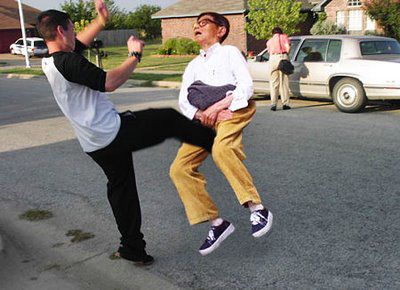
Watch carefully now; that young boy may start to menstruate at any moment… wait; which study is this?

First, a little background is order. Life history theory deals with the way an organism allocates its limited resources in an attempt to maximize its reproductive potential. Using resources to develop one trait precludes the use of those same resources for developing other traits, so there are always inherent trade-offs that organisms need to make during development. Different species have stumbled upon different answers as to how these trade-offs should be made: is it better to be small or large? Is it better to start reproducing as soon as possible or start reproducing later? Is it better to produce many offspring and invest little in each, or produce fewer offspring and invest more? These developmental and behavioral trade-offs all need to be made under a series of ecological constraints, such as the availability of resources or the likelihood of survival. For instance, it makes no sense for a convict to refuse a final cigarette before a firing squad executes him out of concerns for his health. There’s no point worrying about tomorrow if there won’t be one. On the other hand, if you have a secure future, maybe Russian roulette isn’t the best choice for a past time.

So where do family-related issues enter into the equation?  Within each species, different individuals have slightly different answers for those developmental question, and those answers are not fixed from conception. Like all traits, their expression is contingent on the interaction between genes and the environment those genes find themselves in. A human child that finds itself with severely limited access to relevant resources is thus expected to alter their developmental trajectory according to their constraints. This has been demonstrated to be the case for obvious variables like obtaining adequate nutrition: if a young girl does not have access to enough calories, her sexual maturation will be delayed, as her body would be unlikely to successfully support the required investment a child brings.

Another of these hypothesized resources is paternal investment. The suggestion put forth by some researchers (Ellis, 2004) is that a father’s presence or absence signals some useful information to daughters regarding the availability of future mating prospects. The theory that purports to explain this association states that when young girls experience a lack of paternal investment, their developmental path shifts towards one that expects future investment by male partners to be lacking and not vital to reproduction. This, in turn, results in more sexual precociousness. Basically, if dad wasn’t there for you growing up, then, according to this theory, other men probably won’t be either, so it’s better to not develop in a way that expects future investment. That father absence has been associated with a slightly earlier onset of menarche (first menstruation) in women has been taken as evidence supporting this theory.

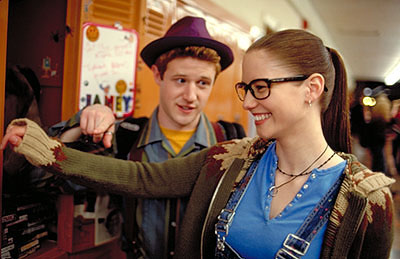
The basic concept also spun off into a show on MTV.

The major problem with this suggestion is that no causal link has been demonstrated. The only thing that has been demonstrated is that father absence tends to correlate with an earlier age of menstruation, and the degree to which the two are correlated is rather small. According to some correlations reported by Ellis (2004), it looks as if one could predict between 1 to 4% of the variance in timing of pubertal development on the basis of father absence, depending on which parts of the sample is under discussion. Further, that already small correlation does not control for a wide swath of additional variables, such as almost any variables that are found outside the home environments. This entire social world that exists outside of a child’s family has been known to have been of some (major) importance in children’s development, while the research on the home environment seems to suggest that family environments and parenting styles don’t leave lasting marks on personality (Harris, 1998).

As the idea that outside the home environments matter a lot has been around for over a decade, it would seem the only sane things for researchers to do are more nearly identical studies, looking at basically the same parenting/home variables, and finding the same, very small to no effect, then making some lukewarm claim about how it might be causation, but then again might not be. This pattern of research is about as tedious as that last sentence is long, and it plagues psychological research in my opinion. In any case, towards achieving that worthwhile goal of breaking through some metaphorical brick wall by just running into it enough times, Tither and Ellis (2008) set out to examine whether the already small correlation between daughter’s development and father presence was due to a genetic confound.

To do this, Tither and Ellis examined sister-pairs that contained both an older and younger sister. The thinking here is that it’s (relatively) controlled for on a genetic level, but younger sisters would experience more years of father absence following the break-up of a marriage, relative to the older sisters, which would in turn accelerate sexual maturation of the younger one. Skipping to the conclusions, this effect was indeed found, with younger sisters reporting earlier menarche than older sisters in father absent homes (accounting for roughly 2% of the variance). Among those father absent homes, this effect was carried predominately by fathers with a high reported degree of anti-social, dysfunctional behavior, like drug use and suicide attempts (accounting for roughly 10% of the variance within this subset). The moral seems to be that “good-enough” fathers had no real effect, but seriously awful parenting on the father’s part, if experienced at a certain time in a daughter’s life, has some predictive value.

So you may want to hold off on your drug-fueled rampages until your daughter’s about eight or nine years old.

First, let me point out the rather major problem here on a theoretical level. If the theory here is that father presence or absence sends a reliable signal to daughters about the likelihood of future male investment, then one would expect that signal to at least be relatively uniform within a family. If the same father is capable of signaling to an older daughter that future male investment is likely, and also signaling to a younger daughter that future male investment isn’t likely, then that signal would hardly be reliable enough for selection to have seized on.

Second, while I agree with Tither and Ellis that these results are consistent with a casual account, they do not demonstrate that the father’s behavior was the causal variable in any way whatsoever. For one thing, Ellis (2004) notes that this effect of father presence vs absence doesn’t seem to exist in African American samples. Are we to assume that father presence or absence has only been used as a signal by girls in certain parts of the world? Further, as the authors note, there tend to be other changes that go along with divorce and paternal psychotic behavior that will have an effect on a child’s life outside of the home. To continue and beat what should be a long dead horse, researchers may want to actually start to look at variables outside of the family to account for more variation in a girl’s development. After all, it’s not the family life that a daughter is maturing sexually for; it’s her life with non-family members that’s of importance.

References: Ellis, B.J. (2004). Timing of pubertal maturation in girls: An integrated life history approach. Psychological Bulletin, 130, 920-958

Harris, J.R. (1998). The Nurture Assumption: Why Children Turn Out The Way They Do. New York: Free Press

Tither, J.M., & Ellis, B.J. (2008). Impact of fathers on daughters’ age at menarche: A genetically and environmentally controlled sibling study. Developmental Psychology, 44, 1409-1420/


Female Orgasm: This Time, With Feeling

I’ve written about female orgasm on two prior occasions, but in those cases I used the subject more as a vehicle for understanding the opposition to evolutionary explanations rather than discussing orgasm itself. The comments section on a recent Cracked article that concludes female orgasm is a byproduct – not an adaptation – attests to the issues I had discussed. There, we see dozens of comments made by people who’s expertise consists of maybe having watched some documentary once they sort of remember. Believe it or not, as this part is shocking, these uninformed people also have very strong opinions about whether female orgasm has an evolved function. The most commonly hypothesized function for female orgasm found in the comments is that it motivates women to have sex, typically followed with a “duh”. The two assumptions embedded in that idea are (1) women who orgasm during intercourse engage in more sex than women who do not and (2) having more sex means having more children. If either of those points turn out to be false, that hypothesis wouldn’t work.

The first point may be true. According to Lloyd (2005), there is some evidence that suggests women want more sex the more frequently they orgasm. Sure, it’s correlational in nature, but we’ll not worry about that here. It’s the second point that raises some more serious issues. As women can only become pregnant during a specific point of their cycle where an egg is available, having more sex during a non-fertile period will do approximately nothing when it comes to a shot at successful conception. Further, in principle – and many times, in practice – you only need to have sex once to become pregnant; having sex beyond or before that point will not make a woman any more pregnant. The heart of the issue, then, seems to concern proper timing. Having sperm present and ready to do some fertilizing at all points may increase the odds of conception, as neither the man or the woman know the precise moment ovulation will occur. However, at some point there will be diminishing returns on the probably of increasing conception from each additional act of intercourse. It’s not a simple formula of “more sex = more babies”.

I’m going to get soooo pregnant; you have no idea!

If female orgasm evolved to motivate women to have sex with men, it does so rather inefficiently. When women masturbate, the vast majority do not do so in a manner that simulates penetrative intercourse alone, as penetration rarely provides the proper stimulation. When women do achieve orgasm with intercourse, which is often quite variable, most require additional manual stimulation of the clitoris; orgasm is not generally reached through the sex itself. In terms of providing some crucial motivation then, this accounts seems to take an odd do-it-yourself approach to reinforcement. This also raises the question of why so many women are unable to reach orgasm either frequently or at all from intercourse alone if it’s supposed to provide some crucial motivation. Under this functional account, women who did not experience orgasms with intercourse would have been selected against, yet they persist in substantial numbers. In terms of taking home the coveted label of adaptation, this account doesn’t fare so well.

There are many additional adaptive accounts of female orgasm, but I’d like to discuss only one other hypothesis here: the upsuck hypothesis. Though the account had been proposed prior to Baker and Bellis (1992), they were the first to attempt to empirically test the suggestion that female orgasm may serve a function manipulating the amount of sperm retained or ejected from copulation. To test this suggestion, Baker and Bellis found some very willing volunteers to first collect semen samples from sex using condoms in order to generate an estimate of sperm count in the ejaculate. After this period, the couples engaged in unprotected sex and collected the flowback – the secretions from the vagina following sex, including fluids from both the male and female. Sperm count was then obtained from the flowback samples to estimate how much sperm had been retained. The samples were finally assessed on scales of taste and presentation*.

Don’t worry; taste testing was carried out using a double-blind procedure to avoid bias.

The results showed that female orgasm was unrelated to sperm retention in general. However, female orgasms that occurred from one minute prior to male ejaculation to forty-five minutes following ejaculation were associated with greater estimated sperm retention. Lloyd (2005) critiqued this study on statistical grounds, but I’m not currently in a position to evaluate her claims, so I’ll ignore those for now (though I will say I’m always uncomfortable relying on median values without accompanying means). Lloyd also mentions that a later reexamination of the data found that female orgasms occurring one minute to ten minutes following male ejaculation actually did not show that effect of increased sperm retention, which would require the odd pattern of female orgasm having no effect prior to one minute before male ejaculation, then it would increase sperm retention, then decrease retention, then increase retention again. It seems more plausible that there’s an issue with the data, rather than that such a peculiar pattern exists.

There is another concern of mine regarding Baker and Bellis’s flowback data, though it has not been raised by other authors to my knowledge. Perhaps that is for a good statistical reason that escapes me, so bear in mind this may be a moot concern. Naturally, it’s hard to recruit for this kind of research. As a result, Baker and Bellis had a small sample size, but did manage to collect 127 flowback samples across 11 couples. Now Lloyd mentions that, of these 127 samples, 93 came from just one couple. What she does not mention is that this couple also happened to have the second lowest median percentage of sperm retention of all the couples, and they were lower by a substantial margin. In fact, the couple providing most of the data retained only about half of the overall median number of sperm. For reference sake, the only couple to have a lower median retention rate was estimated to have retained a negative number of sperm. If most of the data is coming from an outlier, that would be a big problem.

For example, the average income of these men is roughly ten-million dollars a year.

While these results are suggestive, they beg for replication before full acceptance. Nevertheless, let’s take the results of Baker and Bellis at face value. While all women in the sample were estimated to be able to either nearly completely retain or expel all the sperm of an ejaculate, regardless of whether they could orgasm during sex or not, Baker and Bellis suggest that female orgasm may play some role in affecting the sperm retention process. To attempt and complete an adaptive account, it’s time to consider two other points: first, it’s unclear as to whether the additional sperm retention has any effect on conception rates, either between or within men. It might seem as though additional sperm retention would be useful, but that assumption needs to be demonstrated. Second, female orgasm does not reliably accompany intercourse at all, let alone with a specific timing (up to a minute before hand, but not from one to ten minutes afterwards, but then again after ten minutes, and only during ovulation). As most female orgasms require additional clitoral stimulation on the part of either the man or the woman, this would require ancestral humans to have reliably provided such stimulation, and whether they did so is an open-ended question. Even if female orgasm had this potential function of sperm retention, it does not follow that female orgasm was selected for; that potential function could be a byproduct.

There are certain adaptive hypotheses still to be tested, but what we need is more evidence that’s less ambiguous. The case of whether female orgasm is an adaptation or not is still open to debate. At present, I find the evidence favoring the adaptation side of the debate lacking, much to the dismay of many people who determine the social and personal value of a trait on the basis of whether it’s an adaptation or a byproduct. They seem to think tentatively labeling female orgasm as a byproduct somehow makes it less valuable and reflects a mean-spirited sexism towards women. On a redundant note, they’re still wrong.

*That sentence may or may not be true. I wasn’t there.

References: Baker, R.R. & Bellis, M.A. (1993). Human sperm competition: Ejaculate manipulation by females and a function for female orgasm. Animal Behavior, 46, 887-909

Lloyd, E.A. (2005). The case of the female orgasm: Bias in the science of evolution. Massachusetts: Harvard University Press.

The Game: Not Penetrating All That Much

It’s a dream of many men to achieve the same Herculean level of success with women as bands like Motley Crue and people like myself have had before them. The thought of being able to almost immediately attract female attention and command sexual arousal caters to certain evolved psychological preferences of men the same way my ravishing good looks and winning personality cater to the preferences of women. This fantasy of many men can be exacerbated by their severe to complete lack of sexual access to women. The most recent estimate I’ve heard is that we have about twice as many female ancestors as male ancestors. That is to say, in a hypothetical population with equal numbers of men and women, if every woman had a child, only about half of the men would be fathers. This speaks to a point I made recently, that even promiscuous females are not indiscriminant in their mate choice, and many men are not able to adequately measure up to most women’s standards. For instance, women on Okcupid rated 80% of men as being below average in attractiveness. Ouch.

Given that, it should come as no surprise that anyone promising they have a – or the – secret to help men, any man, become a success at picking up women is selling a potentially very valuable product to a lot of desperate people. The most pressing question on most people’s minds when confronted with a product that claims to have miraculous proprieties is, naturally, “does it work?”

It’s just bulging with potential. It is, however, only held together by prayers and hot glue.

As I had recently run out of new reading material and decent video games, I deciding to evaluate a book that had been recommended to me several times online called The Game: Penetrating the Secret Society of Pickup Artists - and who could go wrong with random strangers on the internet? I didn’t expect much out of it, which was fortunate. While the book isn’t exactly a “how-to” guide for men looking to get women, the premise of the book is that it’s written about groups of men who claim to be able to teach various methods in picking up, attracting, or otherwise seducing women. Throughout the story, the protagonist and author, Style (aka. Neil Strauss), goes from being a socially awkward writer to becoming a king among the pickup community, having many non-exclusive sexual partners over the course of two years, before finally settling into a long-term relationship and becoming dissatisfied with the state of the community.

How does he make this transformation? In no particular order, the following things happen: a change of hairstyle, a change in wardrobe, going tanning and exercising, paying far out-the-ass to attend a number of seminars, paying far-out-the-ass to travel constantly, buying and reading countless books on the subject, learning about body language and social cues, learning when to lie, learning when to bullshit people, moving into a mansion in Hollywood, and basically, spending every waking moment for two years either hitting on every woman in sight or talking about hitting on every woman in sight with the assistance of several men and a memorized series of routines. Strauss’s newfound success at meeting women in turn seems to give him a reputation within the community and what sounded like one hell of an ego about the whole thing. Like many of the pickup artists in the book, Strauss seemed to feel he had some kind of power over women. Their self-esteem had never been higher.

While I feel there’s a lot to be said for learning how to dress and groom yourself, approach people with confidence, and understanding body language and social cues when it comes to being successful in the dating world – basically, avoid coming off like the sociopathic shy slob you are – the question still looming is “how well does the game work?” I feel the majority of the method written about in The Game can be summed up nicely by David Cross talking about the attitude of a garbage man trying to pick up women while on the job:

I make things happen; I go for it. Whatever, man. I’ll ask a hundred chicks, maybe get ninety-nine “No”s. That’s fine; slide it on, slide it on. Whatever. Maybe that hundredth chick…likes to fuck on a pile of trash”. 

The Game reads more like a sheer numbers game strategy at heart. For all of you out there who don’t live in an area with a large enough population, this strategy would probably not serve you well. It seemed common for Strauss and his friends to go out each night to several different bars to talk to many, many different women at various stages of drunkenness at each. Sometimes they would end up with phone numbers (the vast majority of which never ended up going anywhere further, if the woman on the other end even remembered who they gave their number to), sometimes they’d get a kiss, and sometimes they’d even get sex eventually, provided they weren’t too particular about who that sex was with. What this turns into is a case of counting the hits and not the misses. Any successes that an aspiring pickup artist meets with are chalked up to their masterful use of the game; the failures, which far outnumber the successes, are simply forgotten about. The failures aren’t seen as failures in the method, just failures in its execution or part of the learning process.

My trick coin; fifty-percent of the time, it lands on “heads” a hundred-percent of the time.

As a result, one should be hard-pressed to conclude that The Game holds any secrets for seducing any, or even most, women, nor should one conclude that it offers any revolutionary insights into female psychology. The sample is simply too biased. This should become even more apparent when one stops and thinks about the following: Strauss was successful with women and that earned him a reputation among the community. What that suggests to me is that the majority of these pickup artists were not being met with even close to the same degree of success, despite using what is described as an almost identical method to Strauss. If they were seeing the same results, Strauss wouldn’t stand out. Indeed, one man mentioned in the book claims to had approached over 1000 women in a month without managing to seal the deal sexually with a single one. A thousand failures and not one success; if that doesn’t reek of a numbers game, I don’t know what does.

What’s also worth pointing out is that many of the men who get involved in this community begin as either virgins or just-barely not virgins. They also tend to possess minimal levels of social skills and plenty of anxiety. These are typically men who have a great deal of frustration in their sexual life, earning them the nickname AFCs, or angry frustrated chumps. In short, for these men there is nowhere to go but up, and each success, no matter how minor, will likely take on a much greater importance. I feel this would only serve to deepen the issue of counting the hits and not the misses when trying to determine how successful the method actually was, or whether all that effort could have been more profitably spent elsewhere.

Further, there’s no control group against which to compare the methods described in The Game with any kind of alternative treatments or placebos. Any good treatment should outperform an inert one, and throughout the book several different methods rise and fall, each claiming to be the tried and true way to success. To approximate a placebo, I’d like to contrast the approach outlined in The Game with simple cold-propositioning. The classic Clark and Hatfield (1989) research project had men and women approach total strangers on a college campus that they’d actually consider having sex with and say the following: “I have been noticing you around campus. I find you to be very attractive.” Following that, they’d close with one of three suggestions: going on a  date, returning to an apartment together, or having sex. Unsurprisingly, women propositioned for sex by men universally rejected the offer. Also unsurprisingly, men propositioned for sex by women accepted about 75% of the time. However, of interest to the current comparison is the percentage that agreed to a date: about 50% for both sexes.

While we don’t have precise numbers at our disposal to speak for how successful Strauss and his friends were, those numbers may help to add some perspective. Remember, the 50% of men who were able to get a woman to agree to a date had invested precisely zero time and money into buying books, attending seminars, or losing their job and failing out of school because they spent all your time talking with guys about meeting girls and trying to meet girls.

It may have cost me my job, several thousand dollars, and a year of my life, but I finally had sex once! Totally better than seeing a prostitute.

Somewhat surprisingly, the book had been recommended by people who seemed to think highly of evolutionary psychology, though by my rough estimate the subject itself was mentioned in any context all of three to four times, at the rate of about a sentence each time. Dawkins, Ridley, and Baker are listed as required reading in the group, but that seems to be about the extent of it. If there were any particular insights draw from evolutionary theory, they aren’t mentioned here. The Game speaks far more highly and more often of hypnosis than it does about evolutionary psychology, so take that as you will.

Rather than a “how-to” guide for seducing women, The Game reads more like a “how-to” guide for seducing men. It manages this by giving them the hope they would be able to pick up women left and right if they only buy these books (The Game comes in an attractive black exterior, with gold-edged pages and a built in bookmark for the low retail cost of $30), spend several hundred dollars to attend these seminars (which began in the book at $500 a head, an amount that roughly tripled by the end of the book), and invest staggering amounts of time that seems to lead frequently to the neglect of friends, family, and jobs. Strauss likened the community to a cult on at least one occasion, and, given his description of it, I’d have to agree there are some similarities.

For all you AFCs out there, don’t waste your time and money on these false prophets of the pickup community. If you want to know the real secret to getting any girl you want quick and easy, send me an email, along with $2000 (cash or money order only), and I’ll get you started on the path to being a hook up master. No refunds, by the way.

References: Clark, R.D. & Hatfield, E. (1989). Gender differences in receptivity to sexual offers. Journal of Psychology and Human Sexuality, 21, 39-55.

Strauss, N. (2005). The Game: Penetrating the secret society of pickup artists. New York: HarperCollins

When Is It Useful To Be A Victim?

At one point or another, we have all had to deal with at least one person who behaved like a professional victim. Nothing is ever even partially their fault or responsibility, and they never seem to get what they think they deserve. Quite the opposite actually; they like to go on long and frustrated rants about how other people in the world are out to actively snub them. They’re unable to be reasoned with, as to even suggest that things aren’t really that bad is to question their victim status. It will be taken as a slight against them, one that will cause a deep mental wound and be used as just another example to demonstrate how hard their life is.

And the world already has one Trent Reznor for that job; it doesn’t need more.

To some extent, all that has probably described you well at some points throughout your life; perhaps more than you would care to admit and definitely more than you realize. It, of course, has never described me, due to my virtue of consistently being spot-on-correct when it comes to everything. That little facet of my mind coincidentally leaves me in a good position to examine this rather annoying human behavior: specifically, what might the benefits be to being mantled in the label “victim”, and why might some people compete for that label? We’ll start this examination by asking a question that may well offend you, but keep that “I’m offended” card tucked away in your deck for now: why do we have a gay pride parade, but no straight pride one? Bear in mind, this question could apply equally well across a number of different domains (such as a degree in men’s studies or white pride month), but we’ll stick to the sexual orientation one. People have responded to that question in multiple ways, but the answers seem to center around one common theme: you can be proud of your sexual orientation when it negatively impacts you.

What both those linked responses have in common is that they explicitly stress overcoming bigotry and hatred while fostering acceptance, which are certainly worthy goals and accomplishments of which to be proud. That raises the natural question of why we don’t then just call it the acceptance parade, or the overcoming bigotry parade? What’s not clear is where the link to being proud of your sexual orientation specifically – which most people would not class as an accomplishment – enters into the equation. What both answers also imply is that were homosexuals not discriminated against for their orientation, there would be no need for gay pride anymore. This further emphasizes the point that one’s sexual orientation is not the deciding factor in pride despite the parade’s namesake focusing on it. What the calling it gay pride seems to do is, perhaps unsurprisingly, suggest the notion that issues faced by certain groups of people, in this case homosexuals, are more hurtful, more legitimate, and overcoming them is a special accomplishment. Getting people to stop bullying you at school is an accomplishment, but if you get people to stop bullying you for being gay, then you get extra points. After that, they’ll be left with just teasing you for one of the no doubt awkward features of your adolescent body or personality

One could be left wondering what a straight pride parade would even look like anyway, and admittedly, I have no idea. Of course, if I didn’t already know what gay pride parades do look like, I don’t know why I would assume they would be populated with mostly naked men and rainbows, especially if the goal is fostering acceptance and rejection of bigotry. The two don’t seem to have any real connection, as evidenced by black civil rights activists not marching mostly naked for the rights afforded to whites, and suffragettes not holding any marches while clad in assless leather chaps. Neither group even had the rainbow behind them; they marched completely in black and white.

There’s a movement that I could really “get behind”. See what I did there? It’s because I’m clever.

These groups, because of their socially disadvantaged status, were able to successfully demand and obtain social change from the advantaged groups. As I’ve mentioned before, people working to change society in some way never use the motto, “Things are pretty good right now, but maybe they could be better” for this very reason. What’s even more impressive is that these groups were able to achieve change without initiating violence. Being seen as a victim legitimized their demands, eliminating a need for force. However, being seen a victim also has the power to help legitimize other behaviors that aren’t quite on the level of demanding equal rights. Being seen a victim can assistant in legitimizing otherwise non-legitimate behaviors as well, so now it’s time to abandon our discussion of pride for one’s sexual orientation and turn our focus towards quasi-thievery.

A recent paper by Gray and Wegner (2011) examined the link between how much someone is to be blamed for a misdeed as a result of their being painted as either more of a hero or more of a victim. Heroes are those who otherwise do good deeds, whereas victims are people who have had bad things happen to them. In the first experiment, subjects read a story about a fictitious character, George. In one case, George gets $100 from his paycheck stolen each week by his boss (victim); in a second case George gives $100 to charity each week (her); in a final case, he spends that $100 on normal purchases (neutral). In all stories, George sees a woman drop $10 and picks it up. Rather than returning it to the owner, George opts to keep the money. Subjects were asked to assess how much blame George deserves for keeping the money. The results indicated that hero George was blamed the most, followed by neutral George, while victim George got the least blame.

Maybe those results aren’t too surprising. Victim George got lots of money stolen from him, so maybe he deserved that money the woman dropped more than the other two. The second experiment in the paper looked at the question from a different angle. In this experiment, subjects read another story about two hypothetical people working as cooks. Among other things found in the story, one person was either described as having started a charity in college (hero), having been hit by a drunk driver in college, but had long since recovered (victim), or had worked in a hardware store (neutral). Later in the story, the cooks ignore a request for a peanut-free salad, almost killing a woman with an allergy to peanuts. The results indicated that people tended to blame heroes more than neutral parties, and blame neutral parties more than victims. It’s important to note here that the status of hero, victim, or neutral, was derived from a completely unrelated incident that happened years prior, yet it still had an effect in determining who was to blame.

In the final experiment, subjects read yet another story about a fictitious person, Graham. In the story, he is described in a number of ways, but at one point, he is described as either a hero (having worked at a charity), victim (again, hit by a drunk driver), or neutrally. Graham is then described as going through his morning routine, doing many normal things, and also picking up and keeping $10 he watched a woman drop at some point. Following the story, subjects did an unrelated task for a few minutes to distract them, and were then asked to recall five things about Graham. When it came to hero Graham, 68% of the participants listed that he had kept the $10 among the five items However, people only listed the keeping of the money incident 42% of the time in the victim condition. The quasi-theft was also listed sooner in the recalled list of the hero or neutral condition, relative to the victim one, suggesting that the misdeed stuck out less when the victim did it.

Man; victim Graham has really been milking that car accident for all it’s worth…

As part of the answer to the question posed by the title, it is useful to be seen as a victim to excuse a misdeed, even if you’re considered a victim for reasons completely unrelated to the current situation. Of course, it probably would only magnify the effect were those reasons related to the situation at hand. I would predict further that the degree to which one is seen as a victim would also be an important variable. The more “victim-y” someone is, the most justified their behavior and demands become. What this further suggests to me is that people are going to be biased in their perceptions of victimhood; they’re going to tend to see themselves as being greater victims than others would, and may go to great lengths to convince others of their victim status.

One point worth keeping in mind is that for a victim to exist, there needs to be a perpetrator. If the results of this research are any indication, that perpetrator will tend to be thought of – by the victim – as being relatively benefited in their life (being more hero-like). Indeed, we would probably expect to find a correlation between how privileged a perpetrator is seen as being and how victim-y their victim is. After all, if the perpetrator is also a victim, that would, to some extent, help excuse and justify their behavior; if the perpetrator’s behavior is somewhat excused, the victim of their actions becomes less of a victim. The results surrounding the people classed as “heroes” also sheds some light on why the, “I have friends who are [X], so I can’t be [X]ist” arguments don’t work. Making yourself sound benevolent towards a group may actively make you look worse; at the very least it probably won’t help make your case. It also helps explain oddities of other arguments, like why some people are quick to suggest that men are privileged in certain areas of society but will generally refuse to admit that anything resembling a female privilege exists. Some even going as far to suggest that women can’t be sexist, but men can. To admit that being a female brings benefits and being a man brings costs, depending on the situation, would be to weaken one’s victim status, and – by extension – your social sway. The same goes for admitting that one’s social group is quite capable of being nasty themselves. (Quick note: some people will point out that men are relatively disadvantaged sometimes, but they are only allowed to do so in an accepted fashion by keeping the perpetrator constant. “The Patriarchy hurts men too” is the compromise.)

While it may be annoying when people seem to actively compete for winner of the “biggest victim” award, or to be asked about obstacles you’ve overcome in life on college applications, understanding the relationship between victimhood status and legitimization of behavior helps to clarify why things like those happen. Being a victim can be a powerful tool in getting what you want when used successfully.

References: Gray, K. & Wegner, D.M. (2011) To escape blame, don’t be a hero – be a victim. Journal of Experimental Social Psychology, 47, 516-519.

The Science Of White Knighting

As a male, it’s my birthright to be a chauvinistic sexist, sort of like original sin. I still remember the day, though I was still very young, that some representatives from the Patriarchy approached me with my membership card. They extended their invitation to join the struggle to keep gender roles distinct, help maintain male privilege, and make sure the women got the short end of the social stick despite both genders being identical in every way. I’m proud to report that towards this end I’ve watched many movies and played many games where the male protagonist saves an attractive woman from the clutches of some evil force (typically another male character), and almost none where the roles have been reversed. Take that, 19th amendment!

While we having yet figured out how to legally bar women from playing video games, we can at least patronize them while they do.

I have some lingering doubts as to whether I, as a man, am doing enough to maintain my privileged position in the world. Are sexism and recurrent cultural accidents the only reasons that the theme of man-saves-woman is so popular in the media, but the woman-saves-man theme is far less common? While I certainly hope it is to maximize the oppression factor, there have been two recent papers that suggest the theme of a damsel in distress being rescued by their white knight (or Mario, if you’re into short Italian plumbers) has more to do with getting the girl than oppressing her by reinforcing the idea that women need men to save them. A worrying thought for you other sexist pigs, I know.

While there’s always an interest in studying heroic behavior, researchers can’t put people into life-and-death scenarios for experimental purposes without first filling out the proper paperwork, and that can be quite tedious. The next best thing that we’re able to do is to get subjects to volunteer for self-inflicted discomfort. Towards this end, McAndrew & Perilloux (2012) brought some undergraduates into the lab under the pretenses of a “group-problem solving study”, when the actual objective was to see who would volunteer for discomfort. The undergrads were tested in groups of three and given three minutes to assign each group member one of three jobs: astronaut, diver, and pitcher. The astronaut’s job was to write down arguments in favor of taking three items from a hypothetical crashed spaceship. The diver was tasked with, first, submerging their arm in icy water for forty seconds, and then sit under a large water-balloon that the pitcher would attempt to break by throwing balls at a target (in keeping with the “3″ theme, the pitcher had three minutes to accomplish this task).  Needless to say, this would soak the diver, which was pretty clearly the worst job to have. Afterwards, the subjects decided how to split up the $45 payment privately. People who volunteered for the diver role were accordingly paid and liked more, on average.

If that’s where the experiment ended there wouldn’t be much worth caring about. The twist is that the groups were either made up of two men and one women, or two women and one man. In the latter groups, men and women ended up in each role at chance levels. However, when the group was made up of two men and a woman, the men ended up in the diver role 100% of the time, and the pitcher role almost as often (the one exception being a woman who was actually a pitcher for a softball team). It seemed to be that the presence of another man led the men to compete for the position of altruist, as if to show off for the woman and show-up the other man. If we were to translate this result into the world of popular movie themes, a close fit would probably be “male friend tries to convince a girl he really cares about her and he has has been the one for all along, not that jerk of a boyfriend she’s had”.

“Tell me more about all the men you date who aren’t me. I’m selflessly concerned with all your problems and can take the pain; not like those Jerks.”

Now it’s worth pointing out that the mating motive I’m suggesting as an explanation is an assumed one, as nothing in the study directly tested whether the behavior in the two male groups was intended to get the girl. One could be left wondering why the two female groups did not universally have the male volunteering for the diver position as well, were that the case. It could be that a man would only feel the need to compete (i.e. display) when there’s an alternative to him available; when there’s little to no choice for the women (one man, take him or leave him), the motivation to endure these costs and show off might not be aroused. While that answer may be incomplete, it’s at least a plausible starting point.

A second paper paints a broader picture of this phenomena and helps us infer sexual motives more clearly. In this study, Van Vugt & Iredale (2012) looked at contributions to public goods – sacrificing for the good of the group – rather than the willingness to get a little wet. In the first experiment, subjects played an anonymous public goods game with either no observer, an attractive observer of the same sex sitting close by, or one of the opposite sex. Across the three conditions, women were equally as likely to donate money to a group account. Men, however, donated significantly more to the account, but only when being observed by a member of the opposite sex. Further, the amount men donated correlated with how attractive they thought that observer was; the more attractive the men felt the woman was, the nicer the men were willing to behave. I’m sure this facet of the male psychology has not escaped the notice of almost any woman on Earth. To the infuriation of many girlfriends, their significant others will seem to take on a new persona around other women that’s just so friendly and accommodating, leading to all manner of unpleasant outcomes for everyone.

The next experiment in the paper also looked at male-male competition for behaving altruistically in a public goods game. Male subjects were brought into the lab one at a time and photographed. Their photos were then added alongside two others so subjects could see who they were playing with. Feedback on how much money participants gave was made available after each of the five rounds. Additionally, some participants were led to believe there would be an attractive observer – either of the same or opposite sex – watching the game, and the photos of the fake observers were included as well. Finally, at the conclusion of the experiment, participants were asked to make a commitment to a charitable organization. The results showed that men tended to increase their contribution between the beginning and the end of the game, but only when they thought they were being observed by an attractive woman; when they weren’t contributions steadily declined. Similarly, men also volunteered for more charity time following the experiment if they had been observed by an attractive woman.

All the sudden, the plight of abused children just became a lot more real.

While male behavior was only studied under these two situations, I don’t see any reasons to suspect that the underlying psychological mechanisms don’t function similarly in others. Men are willing to compete for women, and that competition can take many forms, altruism being one of them. Everyone is familiar with the stereotypical guy who befriends a woman, is always there to help her, and is constantly looking out for her, with the end goal of course being sex (however vehemently it may be denied). Given that women tend to value kindness and generosity in a partner, being kind and generous as a way to someone’s pants isn’t the worst idea in the world. Demonstrating your ability and willingness to invest is a powerful attractant. That comes with a caveat: it’s important for some frustrated men out there to bear in mind that those two factors are not the only criteria that women use to make decisions about who to hook up with.

I say that because there are many men who bemoan how women always seem to go for “jerks”, though most women – and even some men – will tell you that most guys are pretty nice overall, and being nice does not make one exceptionally attractive. They’ll also tell you that women, despite the stereotype and for the most part, don’t like being with assholes. Real jerks fail to provide many benefits and even inflict some heavy costs than nicer men would. To the extent that women go for guys who don’t really treat them well or care about them, it’s probably due in large part to those men being either exceptionally good looking, rich, or high-status (or all three, if you’re lucky like I am). Those men are generally desirable enough, in one way or another, that they are able to effectively play the short-term mating strategy, but it’s worth bearing in mind their jerkiness is not what makes them more attractive generally; it makes them less attractive, they can just make up for it in other ways. Then again, denigrating your competition has a long and proud history in the world of mating, so calling other guys jerks or uncaring probably isn’t a terrible tactic either.

References: McAndrew, F.T. & Perillous, C. (2012). Is self-sacrifical competitive altruism primarily a male activity? Evolutionary Psychology, 10, 50-65


Van Vugt, M. & Iredale, W. (2012). Men behaving nicely: Public goods as peacock tails. British Journal of Psychology, Article first published online : 1 FEB 2012

The Science Of Being A Bitch To Sluts

A while back, some of you may remember that an event called “SlutWalk” took place. For those in need of some background, a Canadian police officer suggested that women should avoid dressing like sluts to minimize their chances of being raped. In protest against these remarks and to fight back against “slut-shaming”, marches of predominately young women took to the streets to announce that blaming the victim in rape cases because of how they were dressed was wrong. One would think, given the turn out of predominately young women, that these young women also believe that it should not be acceptable to be aggressive towards others or mistreat them because of how they dress or how “slutty” they behave sexually, no matter the context. One would be wrong.

There are some research papers that are such a breath of fresh air it’s like falling in love with science all over again; this was one of those papers.

The feeling is similar to this, but without all the allergies and ticks.

The paper, by Vaillancourt and Sharma (2011), was examining intrasexual competition between women, specially the proposition that women would be relatively intolerant of other women they perceive as being sexually promiscuous. There are three delicious ironies to this paper, as it relates to Slutwalk: first, the authors are both working in Canadian universities. Second, the subjects being studied were all young women. Lastly, all the experimenters manipulated was the clothing that a female confederate was wearing; she was either dressed conservatively or, well, slutty (actual pictures of the clothing the confederate wore can be found in the study itself). To celebrate the return of Tosh.0 for its forth season, let’s play a round of “guess what happens next”.

Here’s the setup: two women between 17 and 23 years of age are in the lab, sitting opposite each other for what they think is an unrelated experiment. The two women are either friends with each other or strangers. There’s a knock on the door. It’s the confederate, who happens to be an attractive young woman (independently rated as an 8.6 out of 10). She walks between the two subjects and asks them about the experimenter’s whereabouts; the confederate then leaves with the experimenter. In the first condition, she walks in dressed conservatively. Can you guess what happens next?

If you guessed that there’s next to no negative reaction, you’d be right on track. In the second condition, the confederate is dressed in a black mini-skirt and a low-cut top. Can you guess what happens next in this case? If you guessed that reaction of the two female subject’s behavior would be classified as “bitchy” (including such behaviors as glares, looking the confederate up and down, saying something negative after she left the room, or laughing at her) by independent raters roughly 75% of the time, you probably weren’t marching in any SlutWalks. If you further guessed that of the subjects who displayed true happiness at the confederate (11.6%), all were in the conservatively dressed group, and all the women who displayed anger at the confederate (12.6%) were in the sexy condition, I’ll award you one genuine fake PhD in psychology.

When you consider that most people waste years trying to get a similarly useless piece of paper, you’ll realize you got the better deal.

While friend dyads were rated as slightly bitchier than strangers, the effect was small so there might not be too much to make of it. A second experiment was run. This time, there were three pictures of the same confederate as before: in one picture, she was dressed conservatively, in another she was dressed sexy, and in a third, she was dressed sexy, but the picture was manipulated to make her look overweight. A new sample of young women, ages 17 to 28, who were rating the pictures said they would be much less likely to introduce the confederate to their boyfriends, let their boyfriends spend time with her alone, or befriend her themselves when she was dressed proactively, and that effect remained even in the photos manipulated to make her look fatter.

It would seem the picture we’re getting is that women don’t seem to trust, much less like, other women that they perceive as being promiscuous. Cues for promiscuity appear to be threatening and unappealing. Why might this be the case? One part of that answer is male investment. The more freely available sex is, the less willing men will be to invest in obtaining it; simple supply and demand. Each additional promiscuous woman lowers the collective value of sex, in turn lowering the amount of investment a woman can demand. This suggest that women, regardless of whether they’re sexually promiscuous themselves, would tend to be at least somewhat put-off by other women’s sexual availability and actively work to restrict it through aggression. Indirect kinds of aggression, such as insulting and social exclusion, are the most common.

However, it’s not a protest designed to stop other women from judging you, making fun of you, or excluding you for being a slut.

It would seem this effect is not limited to just sexual promiscuity, however, as attractive women are less likely to be hired, but only when it’s another woman doing the hiring. For a woman, having other attractive and/or promiscuous women hanging around does you no favors when it comes to obtaining sustained male investment. Accordingly, those types of women who pose a threat do not seem to meet with warm welcomes.

In my previous post, I mentioned an idea it’s now time to return to:

Both articles above seem to equate sexualization with sexism, though precisely why that link is supposed to exist is left unexplained. It’s almost as if their implicit proposition is that either (a) women can be sexually attractive, dressing and/or acting provocatively, or (b) be valuable and respected, but not both.

Female comic book characters are often depicted as being sexually attractive and dressed in a provocative manner, which is the aforementioned volatile combination that leads to female disdain. It might be hard for many women to identify with those characters or accept them because they’re too busy hating them for what they represent. Now, I already hear someone saying, “But those two articles complaining about how it’s wrong to sexualize fictional female characters were written by men, and this research paper talks about women’s reactions. How can there be any connection?” There are two possible ways to make this connection that immediately come to mind.

The first is that not all men are equally desirable. If pair-bonding goes the way of the dinosaurs, the men at the lower ends of desirability spectrum lose out the most, while those at the top gain the most. Why? Just because a woman is promiscuous doesn’t mean she’s indiscriminant. If she’s not getting the investment, she may as well go all-in for the good genes, effectively shutting most men out. This is the case in the majority of species without male investment. Because of this, men on the lighter end of the desirability scale have more of an incentive to attempt and encourage pair-bonding styles of mating. Since promiscuous women are a threat to maintaining pair-bonds, and generally out of the reach of those men anyway, the women are imposing costs with no associated gains and are looked down upon.

The second, perhaps more cynical, and by no means mutually exclusive, explanation is that some of the reason men look down on sluttier women is that they are trying to get in good with the more conservative women who are already looking down on the sluttier one. More succinctly, some men join in the derogation in the hopes of getting laid. To what extent that’s their proximate motivation is an open-ended question.

References: Vaillancourt, T. & Sharma. A. (2011). Intolerance of sexy peers: Intrasexual competition among women. Aggressive Behavior, 37, 569-577.

The Sexist Sexualization Of Fictional Characters

People frequently complain that Disney movies gave them unrealistic expectations about love and relationships. While superficially it might sound plausible – after all, the relationships are portrayed as being a perpetual state of martial bliss and we do love to blame the media for things – it leaves one big question looming: why didn’t Disney movies give people unrealistic expectations about animals, or inanimate objects, talking and breaking into dance and song? Surely, the two themes are approximately as common in the films, yet only one seems to cause a stir. I’m not sure if we’re supposed to conclude that people are, on the one hand, perfectly capable of distinguishing fantasy from reality, and, on the other, far less able to separate fantasy from reality, contingent on the topic. “Of course animals don’t talk, that’s just silly, but love really is supposed to go on happily ever after, because that’s romantic.” 

I bring that question up because, in two articles I’ve come across lately, some people are complaining about how impractical and sexist female costumes can be in a fantasy world where they already accept that people can fly, have superhuman strength, and can have a secret identity simply by changing clothes and putting on glasses (among other things, and that’s just one guy).

You want impractical? According to that picture, Superman seems to tuck his cape into the back of his pants.

Both articles above seem to equate sexualization with sexism, though precisely why that link is supposed to exist is left unexplained. It’s almost as if their implicit proposition is that either (a) women can be sexually attractive, dressing and/or acting provocatively, or (b) be valuable and respected, but not both. While that’s an interesting thought to tackle in its own right, it’s not the main thrust of what I’m going after here. Both of the articles make another suggestion that I’d like to examine a little more closely, and it’s this: the male characters in these games and comics are not sexualized, (or at least not as sexualized) while the female ones are. The natural question to be asking at this point is this: what does it mean for a man or a woman to be sexualized? 

The authors are quick to suggest what it means for a woman to be sexualized: so long as she’s attractive and wearing revealing clothing, that’s about it. The primary focus of both articles is on the revealing amounts and styles of clothing that women are wearing, compared to the men. I’m not going to say that these female characters aren’t being depicted in a sexually attractive way; they obviously are. However, what neither article touches on is what it means for a man to be sexualized, which you’d think would be important when making the claim that men aren’t being sexualized. Granted, the percentage of body that’s being covered by an average costume is higher for the men than for the women, but is that really all there is to it? As a go-to solution for making a character more sexually appealing, simply showing more skin won’t work as well for both genders. What serves to sexualize a woman does not always have the same effect for a man. If you threw Batman into a belly shirt and short-shorts, that wouldn’t make his character more sexually appealing by virtue of the fact that you get a better look at the skin of his rippling abs and toned legs.

I don’t know how those two are going to fit in time to fight each other with all those women they’d have to fight off.

I would add that most male heroes are depicted in outfits so skin-tight they might as well have been painted onto their bodies; bodies which are so profoundly sculpted and muscled they give mine a run for its money. Sure, the female characters wear less than the men tend to, but in terms of showing off their hyper-fit forms it doesn’t tend to matter that much. I would add that pretty much every hero, man or woman, is depicted as ludicrously symmetrical with near flawless skin. At this point, we can all take a minute to allow the critics to think, “not all women find symmetrical faces, unblemished skin, and muscular bodies sexually appealing, so therefore these male figures aren’t being sexualized physically”.

Looks are only one side of the issue, though; actions are another. These male heroes are also depicted as, generally, being rather selfless, fighting to protect the innocent and the vulnerable at great personal risk for extended periods of time. On top of that, they almost universally win their fights, demonstrating their inability to be dominated by rivals. They are often highly loved, respected, or feared by the population, all potential signals of bearing high social status and power. Several of them are exceedingly rich, others are exceeding intelligent, and some are both. It’s rare to find one that’s short. They often have many other powerful friends and allies. As we all know, these are characteristics that are notoriously sexually unappealing to women. By “unappealing”, I of course mean that these characteristics are actually extremely appealing to most women (Buss, 1994).   

One of the articles points out that the kinds of women being depicted are a male fantasy and being the kind of person a hero is depicted to be is also a male fantasy. I’d say that statement is fairly accurate, but it overlooks a key point: the only reason a man would fantasize about being that kind of a guy in the first place is because that kind of guy is attractive to women. Men fantasize about being all sorts of people, but what almost none of them fantasize about is being perceived as sexually unattractive or having sexually unattractive partners. Being super-muscular, attractive, and fighting imposing villains is only a means to that end of fulfilling women’s sexual desires.   

“Tell me more about how women are portrayed in an unrealistic manner. I’m all ears, minus that 95% of me made of muscles where my neck should be.”

What is interesting about the issue surrounding the women’s costumes is the same interesting bit about the Disney example: of all the distortions of reality that could be complained about, (and in the world of superheroes there are many) why does this issue in particular get singled out as being the unrealistic and problematic one? It seems to speak more to the psychology and motives of those who are doing the complaining than anything else, I feel. The sexualization of men in these comics is rarely even noticed, or is casually dismissed as unimportant if it is; both articles flat out say that to even suggest men are sexualized alongside the women in these comics is ludicrous. The men are wearing more clothes, therefore they must not be being sexualized. QED.

It seems plausible that the sexualization of men is simply paid little mind because the sexualization of women is seen as either more demeaning or more threatening. The underlying assumption of both writers seems to be that if a woman is to be taken seriously, she needs to dress more modestly and avoid acting in sexually provocative ways. They might not come out and say it directly, but that seems to be the angle they’re approaching this issue from. Why people might care about the sexual proclivities and attractiveness of others – even fictional characters -  will be explored in more detail next post. 

References: Buss, D.M. (1994). The Evolution of Desire: Strategies of Human Mating. New York: Basic Books

The Lacking Standards Of Philosophical Proof

Recently, I’ve reached that point in life that I know lots of us have struggled with: one day, you just wake up and say to yourself, “I know my multimillion dollar bank account might seem impressive, but I think I want more out of life than just a few million dollars. What I’d like would be more money. Much more”. Unfortunately, the only way to get more money is to do this thing called “work” at a place called a “job”, and these jobs aren’t always the easiest thing to find – especially the cushy ones – in what I’m told is a down economy. Currently, my backup plan has been to become a professor in case that lucrative career as a rockstar doesn’t pan out the way I keep hoping it will.

Unfortunately, working outside of the home means I’ll have less time to spend entertaining my piles of cash.

I’ve been doing well and feeling at home in various schools for almost my entire life, so I’ve not seen much point in leaving the warmth of the academic womb. However, I’ve recently been assured that my odds of securing such a position in one as a long-term career are probably somewhere between “not going to happen” and “never going to happen”. So, half-full kind of guy that I am, I’ve decided to busy myself with pointing out why many people who already have these positions don’t deserve them. With any luck, some universities may take notice and clear up some room in their budgets. Today, I’ll again be turning my eye on the philosophy department. Michael Austin recently wrote this horrible piece over at Psychology Today about why we should reject moral relativism in favor of moral realism – the idea that there are objective moral truths out there to be discovered, like physical constants. Before taking his arguments apart, I’d like to stress that this man actually has a paid position at a university, and I feel the odds are good he makes more money than you. Now that that’s out of the way, onto the fun part.

First, consider that one powerful argument in favor of moral realism involves pointing out certain objective moral truths. For example, “Cruelty for its own sake is wrong,” “Torturing people for fun is wrong (as is rape, genocide, and racism),” “Compassion is a virtue,” and “Parents ought to care for their children.” A bit of thought here, and one can produce quite a list. If you are really a moral relativist, then you have to reject all of the above claims. And this an undesirable position to occupy, both philosophically and personally.

Translation: it’s socially unacceptable to not agree with my views. It’s a proof via threat of ostracism. What Austin attempts to slip by there is the premise that you cannot both think something is morally unacceptable to you without thinking it’s morally unacceptable objectively. Rephrasing the example in the context of language allows us to see the flaw quickly: “You cannot think that the word “sex” refers to that thing you’re really bad at without also thinking that the pattern of sounds that make up the word has some objective meaning which could never mean anything else”. I’m perfectly capable of affirming the first proposition while denying the second. The word “sex” could have easily meant any number of things, or nothing at all, it just happens to refer to a certain thing for certain people. On the same note, I can both say “I find torturing kittens unacceptable” while realizing my statement is perfectly subjective. His argument is not what I would call a “powerful” one, though Austin seems to think it is.

It wasn’t the first time that philosophy rolled off my unsatisfied body and promptly fell asleep, pleased with itself.

Moving on:

 Second, consider a flaw in one of the arguments given on behalf of moral relativism. Some argue that given the extent of disagreement about moral issues, it follows that there are no objective moral truths…But there is a fact of the matter, even if we don’t know what it is, or fail to agree about it. Similarly for morality, or any other subject. Mere disagreement, however widespread, does not entail that there is no truth about that subject.

It is a bad argument to say that just because there is disagreement there is no fact of the matter. However, that gives us no reason to either accept moral realism or reject moral relativism; it just gives us grounds to reject that particular argument. Similarly, Austin’s suggestion that there is definitely a fact of the matter in any subject – or morality specifically – isn’t a good argument. In fact, it’s not even an argument; it’s an assertion. Personal tastes – such as what music sounds good, what food is delicious, and what deviant sexual acts are fun – are often the subject of disagreement and need not have an objective fact of the matter.

If Austin thinks disagreement isn’t an argument against moral realism, he should probably not think that agreement is an argument for moral realism. Unfortunately for us, he does:

There are some moral values that societies share, because they are necessary for any society to continue to exist. We need to value human life and truth-telling, for example. Without these values, without prohibitions on murder and lying, a given society will ultimately crumble. I would add that there is another reason why we often get the impression that there is more moral disagreement than is in fact the case. The attention of the media is directed at the controversial moral issues, rather than those that are more settled. Debates about abortion, same-sex marriage, and the like get airtime, but there is no reason to have a debate about whether or not parents should care for the basic needs of their children, whether it is right for pharmacists to dilute medications in order to make more profit, or whether courage is a virtue.

If most people agreed that the Sun went around Earth, that would in no way imply it was true. It’s almost amazing how he can point out that an argument is bad, then turn around and use an identical argument in the next sentence thinking it’s a killer point. Granted, if people were constantly stealing from and killing each other – that is, more than they do now – society probably wouldn’t fare too well. What the existence of society has to do with whether or not morality is objective, I can’t tell you. From these three points, Austin gives himself a congratulatory pat on the back, feeling confident that we can reject moral relativism and accept moral realism. With standards of proof that loose, philosophy could probably give birth and not even notice.

“Congratulations! It’s a really bad idea”

I’d be curious to see how Austin would deal with the species questions: are humans the only species with morality; do all animals have a sense of morality, social or otherwise; if they don’t, and morality is objective, why not? Again, the question seems silly if you apply the underlying logic to certain other domains, like food preferences: is human waste a good source of nutrients? The answer to that question depends on what species you’re talking about. There’s no objective quality of our waste products that either has the inherent property of nutrition or non-nutrition.

Did I mention Austin is a professor? It’s worth bearing in mind that someone who makes arguments that bad is actually being paid to work in a department dedicated to making and assessing arguments – in a down economy, no less. Even Psychology Today is paying him for his blogging services, I’m assuming. Certainly makes you wonder about the quality of candidates who didn’t get hired.

Free Will Doesn’t Matter Morally, But We Think It Does

The study of the world around is dubbed science, and in order to pursue it, you first need to purchase several large, expensive doohickeys in order to conduct experiments, hire scientists, and the like. The study of the theoretical world is dubbed mathematics, and you need only paper, a pencil, and a trashcan within reasonable distance. In comparison, the study of nothing in particular may be dubbed “philosophy”, and all you have to do is keep talking. It may be noted that working on philosophical matters is generally very cheap to do. That may very well be because it isn’t worth a penny to anyone anyway - Uncyclopedia

Academic xenophobe that I am, I don’t care much for philosophers. One reason I don’t much care for them is that they, as a group, have a habit of getting stuck in arguments that remain unresolved – or are even unresolvable – for centuries about topics of dubious importance. One of those topics that tends to evade clear thinking and relevance is that of free will. The definition of the term itself often avoids even being nailed down, meaning most of these arguments are probably not even being had about the same topic.

There’s been a lot of hand-wringing over whether determinism precludes moral responsibility. Today, I’m going to briefly step foot into the world of philosophy to demonstrate why this debate has a simple answer, and hopefully, when we reach that point, we can start making some actual progress in understanding human moral psychology.

An artist’s depiction of a philosopher; notice how it does nothing important and goes nowhere.

Let’s take a completely deterministic universe in which the movement and action of every single bit of matter and energy is perfectly predictable. Living organisms would be no exception here; you could predict every single behavior of an organism from before the moment of its conception till the moment of death. Every thought, every feeling, every movement of every part of its cellular machinery. People seem to worry that in this universe we would be unable to justifiably condemn people for their actions, as they are not seen as having a “choice” in the matter (choice is another one of those very blurry concepts, but we’ll forget about what it’s supposed to mean here; just use your best guess). What most people fail to realize about this example is that it in no way precludes making moral judgments (“he ought not to have done that”) or holding people responsible for their actions. “But how can we justify holding someone responsible for a predetermined action?” I already hear someone missing the point objecting. The answer here is simple: you wouldn’t need to justify those moral judgments or punishment in some objective sense anymore than a killer would need to justify why they killed.

If the killer was predetermined to kill, others were also predetermined to feel moral outrage at that killing; nothing about determinism precludes feelings, no matter their content. Additionally, those who feel that moral outrage are determined to attempt and convince others about the content of that outrage, which they may be successful at doing. From there, people are likewise determined to attempt and punish the person who committed the crime, and so on. Suffice it to say, a deterministic world would look no different than the world we currently inhabit, and determinism and moral responsibility get to live hand-in-hand. However, I already feel dirty enough playing philosopher that I don’t feel a need to continue on with this example.

I feel even dirtier than I did last Christmas. The reaction of those children – and that jury – was priceless though…

After successfully resolving centuries of philosophical debate in the matter of a few minutes (you’re welcome), it’s time to think about what this example can teach us about our moral psychology. Refreshingly, we will be stepping out of the realm of philosophy into that of science for this part. What I think is the most important lesson to take away from this example is the idea that if we can fully explain a behavior, we must also condone it (or, at the very least, not condemn others for it). Evolutionary psychology tends to get a fair share of scorn directed its way for even proposing that certain traits – typically politically unpalatable ones, such as sex differences or violence – are adaptations, and that ire typically comes in the form of, “well you’re just trying to justify [spousal abuse/rape/sexism/etc] by explaining it”. It’s also worth noting that those claims will be tossed at evolutionary psychologists even if those same psychologists say, “We aren’t trying to justify anything”.

I cited a figure a while back about how 86% of people viewed determinism as incompatible with moral responsibility, so this sentiment appears to be a rather popular one. There are two papers that have recently come across my desk that expand on this point a little further. The first comes from Miller, Gordon, and Buddie (1999), who basically demonstrated the effect I mentioned above. Subjects were presented with a vignette of a story involving a perpetrator causing some harm and asked to either try and explain that behavior first and then react to it, or react to it first and then explain it. The results showed that those who explained the behavior first took a significantly more forgiving and condoning stance towards the perpetrator. Additionally, when other observers read these explanations, the observers rated the attitudes of those doing the explaining as even more condoning of the harm than the explainers themselves had predicted.So while the explainers were slightly more condoning of the behavior of the perpetrator in the story, observers who read those explanations thought they were more condoning still. Sounds like the perfect mix for moral outrage.

“We’d like to respectfully disagree with your well-articulated position, and, if that fails, burn you and your books.”

Miller et al. (1999) went on to examine how different types of explanations might effect the explaining-condoning link. The authors suggest that explanations that portray the perpetrator as low in personal responsibility (it was the situation that made him do it) would be viewed as more condoning than those referencing the perpetrator’s disposition (he acted that way because he’s a cruel son-of-a-bitch). Towards this end, they presented subjects with the results of two hypothetical experiments: in one, the presence of a mirror dramatically affected the rates of cheating (5% cheating in the mirror condition, 90% cheating in the no mirror condition) or had no effect (50% cheating in both situations). The first experiment served to emphasize the effect of the situation, the second de-emphasizing the effect of the situation, as being the important explanatory factor.

The results here indicated that those who read the results stating that the situation held a lot of influence were more condoning of the cheating behavior when compared to those who read the dispositional explanations. What was more interesting, however, is that these same participants also rated their judgments of the cheater’s behavior as being significantly more negative than what they thought the hypothetical researcher’s judgments were. The subjects seemed to think the researchers were giving the perpetrators a pass.

The second experiment was conducted by Greene and Cahill (2011). Here, the researchers tested, basically, the suggestion that neuroscience imaging might overwhelm participant’s judgment with flashy pictures and leave them unable to consider the evidence of the case. In this experiment, participants were given the facts of a criminal case (either a low-severity or a high-severity case) and were presented with one of three conditions: (1) the defendant was labeled as psychotic by an expert; (2) in addition, results of neurological tests that found deficiencies consistent with damage to the frontal area of the defendants brain were presented ; and (3) in addition to that, colorful brain scans were presented documenting that damage.

The results of this study demonstrated that participants were about as likely to sentence the defendant to death across all three conditions when the defendant was deemed to be low in future dangerousness. However, when the defendant was high in future dangerousness they were overwhelmingly more likely to be sentenced to death, but only by group (1). In groups (2) and (3), they were far, far less likely to be sentenced to death (a drop from about 65% likely to be sentenced to death down to a low of near 15%, no different from the low-dangerousness group). Further, in conditions (2) and (3), the mock jurors rated the defendant as more remorseful and less in control of his behavior.

Unable to control his behavior and highly likely to be violent again? Sounds like the kind of guy we’d want to keep hanging around.

These two papers provide a complementary set of results, demonstrating some the effects that explanations can have both on our sense of moral responsibility and our perception of the explainer. What those two papers don’t do, however, is explain those effects in any satisfying manner. I feel there are several interesting predictions to be made here, but placing these results into their proper theoretical context will be a job for another day. In the mean time, I’m going to go shower until that sullied feeling that philosophy brings on goes away.

(One thought to consider is that perhaps terms like “free will” and “choice” are (sort of) intentionally nebulous, for to define them concretely and explain how they work would – like Kyrptonite to Superman – sap them of their ability to imbue moral responsibility)

References: Greene, E. & Cahill, B.S. (2011). Effects of neuroimaging evidence on mock juror decision making. Behavioral Sciences & the Law, DOI: 10.1002/bsl.1993

Miller, A.G., Gordon, A.K., & Buddie, A.M. (1999). Accounting for evil and cruelty: Is to explain to condone? Personality and Social Psychology Review, 3, 254-268.

Was Freud Right? Are You Sexually Attracted To Your Parents?

No, you probably are not.

Well, that was easy. Given that sexual reproduction evolved specifically to introduce some genetic diversity to future generations in order to remain ahead of the more quickly evolving parasites (Ridley, 1993), the suggestion that humans would also have some adaptations that predisposed them to breed with their immediate relatives seems misguided. Freud – I’m told – had suggested that children really did want to have sex with their parents, and it was only through imposition of a cultural taboo against incest that such drives were thwarted. It’s just one of the many things he was wrong about.

“I don’t always talk about your mother, but when I do… wait, never mind; I do always talk about your mother”

Might there have been something to that notion of Freud’s though? No. Go read the introduction again if you’re still confused on that point. However, there is at least one recent research paper in which the authors suggest that there may in fact be some forces at work that generate sexual attraction to closely related family members that a societal taboo is needed to stand in the way of. In a series of three experiments, Fraley & Marks (2010) attempt to demonstrate that possibility.

In the first experiment, subjects were either primed with a picture of their opposite sex parent, or were controls that were unrelated to that parent. Subjects were then asked to rate a few pictures of opposite sex strangers for their sexual attractiveness. The results showed a slight tendency for those who saw a picture of their parent to rate others as more attractive (a difference of about 0.2 on a scale of 1 to 7). The second study went a bit deeper. This time, participants had their own face morphed from 0 to 40% with those of opposite sex strangers and rated the new photos for attractiveness; the control group rated the same pictures, but were not the person being morphed into the photos. The results showed a similar pattern: there was a slight tendency for people who’s faces had been morphed into the photos to rate them as more attractive (a difference of about a 0.4 on the same scale), relative to the controls. Finally, in the third experiment, the researchers lied to the participants about how much of their face had been morphed into the photos and mentioning the study was examining incestuous tendencies. This time, the effect reversed; participants rated the pictures with self-morphs as being slightly less attractive, relative to controls.

So where does that leave us?

Hiding in our closest, aka “The Shame Cave”?

Are we to admit Freud was onto something? No, and stop asking that silly question. Since I’m a big fan of theory, naturally my first question was: what was theory guiding this research? According to Fraley & Marks, the following findings need an explanation: (1) people tend to enter into relationships with others who are similar physically on a variety of traits, (2) that people tend to enter into relationships with those who live around them and are familiar, and (3) people find those who they are exposed to more frequently more attractive than those they’re exposed to less frequently. However, those three findings do not a theory make; they need a theory to explain them, preferably one that doesn’t cut again incest avoidance. Here’s a simple and probable one that accounts for at least part of the picture here: sexual selection.

Take any species; since I like peacocks, I’ll use them. When mating season roles around, the peacocks flaunt for the peahens, they have steamy bird sex, and soon after a new generation of birds are hatched into this world. The peacocks will inherit their father’s sexy tails, and the peahens will inherit something else: their mother’s preferences for those sexy tails. If those sexual preferences weren’t inherited, mating in the next generation would be random with respect to the tails. Since it isn’t, we can safely assume that, to at least some extent, the preferences are hereditary.

Just like the inter-generational preference for hunting equipment. I’m a shotgun man, myself.

So let’s return to the facts in need of an explanation. Picture your mother and father having sex to conceive you – make Freud proud. Whatever physical traits your parents had will be passed onto you. Additionally, whatever preferences your parents had for those traits that attracted them to each other will be passed on as well. That would seem to be able to explain (1) and the results of the photo manipulation study fairly well. By morphing in your own traits to the picture to some degree, you’re morphing in those same traits that you’re going to tend to have a preference towards. The result? You find those pictures slightly more attractive.

How about the first experiment that primed pictures of the parents? It seems at least plausible that if one truly found their opposite sex parent attractive, ratings of strangers would go down by comparison, not up. Concluding that one found strangers more sexually appealing because of that sexual aversion to their parents would be just as consistent with the data; at the very least, it can’t be ruled out by the results found here. As for the third experiment, admitting a sexual attraction to one’s own family can be quite socially damning, so it hardly seems surprising that people would avoid doing so.

“You look just like my sister and that is so hot! Would you mind wearing her clothes?”

Now I want to look at how the authors explain their results. Fraley & Marks (2010) suggest the following:

…the mechanisms that promote familiarity, bonding, and attraction are most likely to operate on inputs experienced in the early family environment. For example, if sexual imprinting really takes place in humans, then one’s early interactions with primary attachment figures can play an influential role in shaping the “ideal” for what kinds of people one will find attractive…

A tempting suggestion for some, no doubt, until one asks some perfectly relevant questions, like: why would the sexual imprinting take place during early interactions in childhood? Why would the stimulus that the imprinting responds to be the caregivers in the house (especially them, given the costs of inbreeding), as opposed to the environment outside the family? Combining the two questions gives us the following: Why would anyone suppose evolution had designed our psychology to become sexually attracted (in the long term) to the physical traits of our close genetic relatives at a time that we are pre-reproductive? Frankly, I can’t think of a reason we would expect that to happen, and one isn’t suggested in the paper.

On the same token, Fraley & Marks (2010) go on to suggest that the aversion to incest is simply a matter of habituation – as opposed to the Westermarck effect – but again offer no reason as to why habituation would have this particular effect. At the same time, habituation would also seem to make people more attractive the more familiar they were, according to the author’s interpretation of their work, and while Fraley & Marks (2010) note this contradiction, they don’t do a good job of explaining it away. They try to draw on some kind of distinction between the conscious and unconscious recognition of the familiar, but I don’t think they make a case for it.

On the whole, that is a very unsatisfying explanation, especially compared to other models of incest aversion. Point: Westermark. Freud is still wrong.

References: Fraley, R.C. & Marks, M.J. (2010). Westermarck, Freud, and the incest taboo: does familial resemblance activate sexual attraction? Personality and Social Psychology Bulletin, 36, 1202-1212

Ridley, M. (1993). The Red Queen: Sex and the Evolution of Human Nature. Harper: New York.