A Sense Of Entitlement (Part 1)

There’s a lot to be said for studying behavior in the laboratory or some other artificially-generated context: it helps a researcher control a lot of the environment, making the data less noisy. Most researchers abhor noise almost as much they do having to agree with someone (when agreement isn’t in the service of disagreeing with some mutual source of contention, anyway), so we generally like to keep things nice and neat. One of the downsides of keeping things so tidy is that the world often isn’t, and it can be difficult to distinguish between “noise” and “variable of interest” at times. The flip-side of this issue is that the environment of the laboratory can also create certain conditions, some that are not seen in the real world, without realizing it. Needless to say, this can have an effect on the interpretation of results.

“Few of our female subjects achieved orgasm while under observation by five strangers. Therefore, reports of female orgasm must be a myth”.

Here’s a for instance: say that you’re fortunate enough to find some money just laying around, perhaps on the street, inexplicably in a jar in front of a disheveled-looking man. Naturally you would collect the discarded cash, put it into your wallet, and be on your way. What you probably wouldn’t do is give some of that cash to a stranger anonymously, much less half of it, yet this is precisely the behavior we see from many people in a dictator game. So why do they do it in the lab, but not in real life?

Part of the reason seems to lie in the dictator’s perceptions of the expectations of the receivers. The rules of game set up a sense of entitlement on the behalf of the receivers – complete with a sense of obligation on behalf of the dictator – with the implicit suggestion being that dictators are supposed to share the pot, perhaps even fairly. But suppose there was a way to get around some of those expectations – how might that affect the behavior of dictators?

“Oh, you can split the pot however you want. You can even keep it all if you don’t care about anyone but yourself. Just saying…”
The possibility was examined by Dana, Cain, and Dawes (2006), who ran the standard dictator game at first, telling dictators to decide how to divide up $10 between themselves and another participant. After the subjects entered their first offer, they were then given a new option: the receivers didn’t know the game was being played yet, and if the dictators wanted, they could take $9 and leave, which means the receivers would get nothing, but would also never know they could have gotten something. Bear in mind, the dictators could have kept $9 and give a free dollar to someone else, or keep an additional dollar with the receiver still getting nothing in their initial offer, so this exit option destroys overall welfare for true ignorance. When given this option, about a third of the dictators opted out, taking the $9 welfare destroying option and leaving to make sure the receiver never knew.

These dictators exited the game when there was no threat of them being punished for dividing unfairly or having their identity disclosed to the receiver, implying that this behavior was largely self-imposed. This tells us many dictators aren’t making positive offers – fair or otherwise – because they find the idea of giving away money particularly thrilling. They seem to want to appear to be fair and generous, but would rather avoid the costs of doing so, or rather the costs of not doing so and appearing selfish. There were, however, still a substantial number of dictators who offered more than nothing. There are a number of reasons this may be the case, most notably because the manipulation only allowed dictators to bypass the receiver’s sense of entitlement effectively, not their own sense of obligation that the game itself helped to create.

Another thing this tells us is that people are not going to respond universally gratefully to free money – a response many dictators apparently anticipated. Finding a free dollar on the street is a much different experience than being given a dollar by someone who is deciding how to divide ten. One triggers a sense of entitlement – clearly, you deserve more than a free dollar, right? – the other does not, meaning one will tend to be viewed as a loss, despite the fact that it isn’t.

How these perceptions of entitlement change under certain conditions will be the subject of the next post.

References: Dana, J., Cain, D.M., & Dawes, R.M. (2006). What you don’t know won’t hurt me: Costly (but quiet) exit in dictator games. Organizational Behavior and Human Decision Processes, 100, 193-201.

Somebody Else’s Problem

Let’s say you’re a recent high-school graduate at the bank, trying to take out a loan to attend a fancy college so you can enjoy the privileges of complaining about how reading is, like, work, and living the rest of life in debt from student loans. A lone gunman rushes into the bank, intent on robbing the place. You notice the gunman is holding a revolver, meaning he only has six bullets. This is good news, as there happen to be 20 people in the bank; if you all rush him at the same time, he wouldn’t be able to kill more than six people, max; realistically, he’d only be able to get off three or four shots before he was taken down, and there’s no guarantee those shots will even kill the people they hit. The only practical solution here should be to work together to stop the robbery, right?

Look on the bright side: if you pull through, this will look great on your admissions essay.

The idea that evolutionary pressures would have selected for such self-sacrificing tendencies is known as “group selection”, and is rightly considered nonsense by most people who understand evolutionary theory. Why doesn’t it work? Here’s one reason: let’s go back to the bank. The benefits of stopping the robbery will be shared by everyone at the abstract level of the society, but the costs of stopping the robbery will be disproportionately shouldered by those who intervene. While everyone is charging the robber, if you decide that you’re quite comfortable hiding in the back, thank you very much, your chances of getting shot decline dramatically and you still get the benefit; just let it be somebody else’s problem. Of course, most other people should realize this as well, leaving everyone pretty uninclined to try and stop the robbery. Indeed, there are good reasons to suspect that free-riding is the best strategy (Dreber et al., 2008).

There are, unfortunately, some people who think group selection works and actually selects for tendencies to incur costs at no benefit. Fehr, Fischbacher, and Gachter (2002) called their bad idea “strong reciprocity”:

“A person is a strong reciprocator if she is willing to sacrifice resources (a) to be kind to those who are being kind… and (b) to punish those who are being unkind…even if this is costly and provides neither present nor future material rewards for the reciprocator” (p.3, emphasis theirs)

So the gist of the idea would seem to be (to use an economic example) that if you give away your money to people you think are nice – and burn your money to ensure that mean people’s money also gets burned – with complete disregard for your own interests, you’re going to somehow end up with more money. Got it? Me neither…

“I’m telling you, this giving away cash thing is going to catch on big time”

So what would drive Fehr, Fischbacher, and Gachter (2002) to put forth such a silly idea? They don’t seem to think existing theories – like reciprocal altruism, kin selection, costly signaling theory, etc – can account for the way people behave in laboratory settings. That, and existing theories are based around selfishness, which isn’t nice, and the world should be a nicer place. The authors seems to believe that those previous theories lead to predictions like: people should “…always defect in a sequential, one-shot [prisoner's dilemma]” when playing anonymously.That one sentence contains two major mistakes: the first mistake is that those theories most definitely do not say that. The second mistake is part of the first: they assume that people’s proximate psychological functioning will automatically fall in-line with the conditions they attempt to create in the lab, which it does not (as I’ve mentioned recently). While it might be adaptive, in those conditions, to always defect at the ultimate level, it does not mean that the proximate level will behave that way. For instance, it’s a popular theory that sex evolved for the purposes of reproduction. That people have sex with birth control does not mean the reproduction theory is unable to account for that behavior.

As it turns out, people’s psychology did not evolve for life in a laboratory setting, nor is the functioning of our psychology going to be adaptive in each and every context we’re in. Were this the case, returning to our birth control example, simply telling someone that having sex when the pill is involved removes the possibility of pregnancy would lead to people to immediately lose all interest in the act (either having sex or using the pill). Likewise, oral sex, anal sex, hand-jobs, gay sex, condom use, and masturbation should all disappear too, as none are particularly helpful in terms of reproduction.

Little known fact: this parade is actually a celebration of a firm understanding of the proximate/ultimate distinction. A very firm understanding.

Nevertheless, people do cooperate in experimental settings, even when cooperating is costly, the game is one-shot, there’s no possibility of being punished, and everyone’s ostensibly anonymous. This poses another problem for Fehr and his colleagues: their own theory predicts this shouldn’t happen either. Let’s consider an anonymous one-shot prisoner’s dilemma with a strong reciprocator as one of the players. If they’re playing against another strong reciprocator, they’ll want to cooperate; if they’re playing against a selfish individual, they’ll want to defect. However, they don’t know ahead of time who they’re playing against, and once they make their decision it can’t be adjusted. In this case, they run the risk of defecting on a strong reciprocator or benefiting a selfish individual while hurting themselves. The same goes for a dictator game; if they don’t know the character of the person they’re giving money to, how much should they give?

The implications of this extend even further: in a dictator game where the dictator decides to keep the entire pot, third-party strong reciprocators should not really be inclined to punish. Why? Because they don’t know a thing about who the receiver is. Both the receiver and dictator could be selfish, so punishing wouldn’t make much sense. The dictator could be a strong reciprocator and the receiver could be selfish, in which case punishment would make even less sense. Both could be strong reciprocators, unsure of the others’ intentions. It would only make sense if the dictator was selfish and the receiver was a strong reciprocator, but a third-party has no way of knowing whether or not that’s the case. (It also means if strong reciprocators and selfish individuals are about equal in the population, punishment in these cases would be a waste three-forths of the time – maybe half at best, if they want to punish selfish people no matter who they’re playing against – meaning strong reciprocator third-parties should never punish).

There was some chance he might of been being a dick…I think.

The main question for Fehr and his colleagues would then not be, “why do people reciprocate cooperation in the lab” – as reciprocal altruism and the proximate/ultimate distinction can already explain that without resorting to group selection – but rather, “why is there any cooperation in the first place?” The simplest answer to the question might seem to be that some people are prone to give the opposing player the benefit of the doubt and cooperate on the first move, and then adjust their behavior accordingly (even if they are not going to be playing sequential rounds). The problem here is that this is what a tit-for-tat player already does, and it doesn’t require group selection.

It also doesn’t look good for the theory of social preferences invoked by Fehr et al. (2002) when the vast majority of people don’t seem to have preferences for fairness and honesty when they don’t have to, as evidenced by 31 of 33 people strategically using an unequal distribution of information to their advantage in ultimatum games (Pillutla and Murnighan, 1995). In every case Fehr et al. (2002) looks at, outcomes have concrete values that everyone knows about and can observe. What happens when intentions can be obscured, or values misrepresented, as they often can be in real life? Behavior changes and being a strong reciprocator would be even harder. What might happen when the cost/punishment ratio changes from a universal static value, as it often does in real life (not everyone can punish others at the same rate)? Behavior will probably change again.

Simply assuming these behaviors are the result of group selection isn’t enough.The odds are better that the results are only confusing when their interpreter has an incorrect sense of how things should have turned out.

References: Dreber, A., Rand, D.G., Fudenberg, D, & Nowak, M.A. (2008). Winners don’t punish. Nature, 452,  348-351

Fehr, E., Fischbacher, U., & Gachter, S. (2002). Strong reciprocity, human cooperation, and the enforcement of social norms. Human Nature, 13, 1-25.

Pillutla, M.M. & Murnighan, J.K. (1995). Being fair or appearing fair: Strategic behavior in ultimatum bargaining. Academy of Management Journal, 38, 1408-1426.

The “I” In The Eye Of The Beholder

When “doing the right thing” is easy, people tend to not give others much credit for it. Chris Rock made light of this particular fact briefly in one of his more popular routines – so popular, in fact, that it has its own Wikipedia page. In this routine, Chris Rock says “Niggas always want some credit for some shit they supposed to do…a Nigga will brag about some shit a normal man just does”. At this point, it’s probably worth pointing out that Chris Rock has an issue with using the word “Nigga” because he felt it gave racist people the feeling they had the license to use it. However, he apparently has no issue at all using the word “Faggot”. The hypocrisy of the human mind is always fun.

So here’s a question: which opinion represents Chris Rock’s real opinion? Does Chris believe in not using a word – even comically – that could be considered offensive because it might give some people with ill-intentions license to use it or does he not? If you understand the concept of modularity properly, you should also understand that the question itself is ill-phrased; implicit in the question is an assumption of a single true self somewhere in Chris Rock’s brain, but that idea is no more than a (generally) useful fiction.

On second though, maybe I don’t really want to see your true colors…

Examples of this line of thought abound, however, despite the notion being faulty. For instance, Daniel Kahneman, who, when working as a psychologist (that apparently didn’t appreciate modularity) in the military, felt he was observing people’s true nature under conditions of stress.There’s something called the Implicit Association Test – IAT for short. The basic principle behind the IAT is that people will respond more quickly and accurately when matching terms that are more strongly mentally associated compared to ones that aren’t, and the speed of your responses demonstrates what’s really in your mind. So let’s say you have a series of faces and words that pop up in the middle of screen; your task is to hit one button if the face is white or the word is positive, and a different button if the face is black or the word is negative (also vice versa; i.e. one button for black person or positive word, and another button for white person or negative word). The administrators and supporters of this test often claim things like: It is well known that people don’t always ‘speak their minds’, and it is suspected that people don’t always ‘know their minds’, though the interpretation of the results of such a test is, well, open to interpretation.

“Your IAT results came back positive for hating pretty much everything about this guy”

Enter Nichols and Knobe,who conducted a little test to see if people were compatibilists or incompatibilists (that is, whether people feel the concept of moral responsibility is compatible with determinism or not). It turns out how you phrase the question matters: when people were asked to assume the universe was completely deterministic and given a concrete case of immoral behavior (in this case, a man killing his wife and three kids to run off with his secretary), 72% of people said he was fully morally responsible for his actions. Following this, they asked some other people about the abstract question (“in a completely deterministic universe, are people completely morally responsible for their actions?”), and, lo and behold, the answers do a complete flip; now, 86% of people endorsed an incompatibilist stance, saying people aren’t morally responsible.

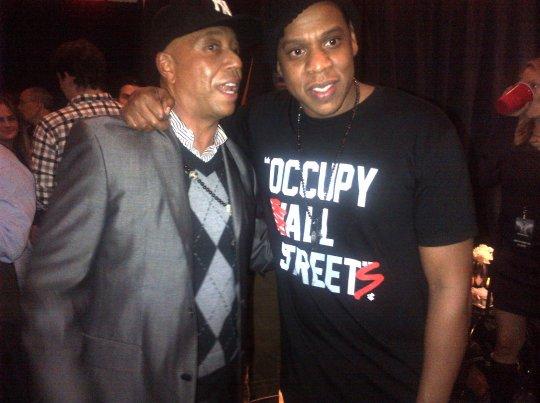
That’s a pretty neat finding, to be sure. What caught my eye was what followed, when the author’s write: “In the abstract condition, people’s underlying theory is revealed for what it is ─ incompatibilist” (p.16, emphasis mine). To continue to beat the point to death, the problem here is that the brain is not a single organ; it’s composed of different, functionally specific, information processing modules, and the output of these modules is going to depend on specific contexts. Thus, asking about what the underlying theory is makes the question ill-phrased from the start. So let’s jet over to the Occupy Wall Street movement that Jay-Z has recently decided to attempt to make some money on (money which he will not be using to support the movement, by the way):

For every 99 dollars he makes, you get none.

When people demand that the 1% “pay their fair share” of the taxes, what is the word “fair” supposed to refer to? Currently, the federal tax code is progressive (that is, if you make more money, the proportion of that money that is taxed goes up), and if fairness is truly the goal, you’d suspect these people should be lobbying for a flat tax, demanding that everyone – no matter how rich or poor – pay the same proportion of what they make. It goes without saying that many people seem to oppose this idea, which raises some red flags about their use of the word “fair”. Indeed, Pillutla and Murnighan (2003) make an excellent case for just how easy it is for people to manipulate the meaning of the concept to suit their own purposes in a given situation. I’ll let them explain:

“Arguments that an action, an outcome, or decisions are not fair, when uttered by a recipient, most often reflect a strategic use of fairness, even if this is neither acknowledged nor even perceived by the claimant…The logical extension of these arguments is that claims of fairness are really cheap talk, i.e., unverifiable, costless information, possibly representing ulterior motives” (p.258)

The concept of fairness, in that sense, is a lot like the concept of a true, single self; it’s a useful fiction that tends to be deployed strategically. It makes good sense to be a hypocrite when being a hypocrite is going to pay. Being logically consistent is not useful to you if it only ensures you give up benefits you could otherwise have and/or forces you to suffer loses you could avoid. The real trick to hypocrisy then, according to Pillutla and Murnighan, is to appear consistent to others. If your cover gets blown, the resulting loss of face is potentially costly, depending, of course, on the specific set of circumstances.

References: Pillutla, M.M. & Murnighan, J.K. (2003). Fairness in bargaining. Social Justice Research, 16, 241- 262

Proximately – Not Ultimately – Anonymous

As part of my recent reading for an upcoming research project, I’ve been poking around some of the literature on cooperation and punishment, specifically second- vs. third-party punishment. Let’s say you have three people: A, B, and X. Person A and B are in a classic Prisoner’s Dilemma; they can each opt to either cooperate or defect and receive payments according to their decisions. In the case of second-party punishment, person A or B can give up some of their payment to reduce the other player’s payment after the choices have been made. For instance, once the game was run, person A could then give up points, with each point they give up reducing the payment of B by 3 points. This is akin to someone flirting with your boyfriend or girlfriend and you then blowing up the offender’s car; sure, it cost you a little cash for the gas, bottle, rag, and lighter, but the losses suffered by the other party are far greater.

Not only does it serve them right, but it’s also a more romantic gesture than flowers.

Third-party punishment involves another person, X, who observes the interaction between A and B. While X is unaffected by the outcome of the interaction itself, they are then given the option to give up some payment of their own to reduce the payment of A or B. Essentially, person X would be Batman swinging in to deliver some street justice, even if X’s parents may not have been murdered in front of their eyes.

Classic economic rationality would predict that no one should ever give up any of their payment to punish another player if the game is a one-shot deal. Paying to punish other players would only ensure that the punisher walks away with less money than they would otherwise have. Of course, we do see punishment in these games from both second- and third-parties when the option is available (though second-parties punish far more than third-parties). The reasons second-party punishment evolved don’t appear terribly mysterious: games like these are rarely one-shot deals in real life, and punishment sends a clear signal that one is not to be shortchanged, encouraging future cooperation and avoiding future losses. The benefits to this in the long-term can overcome the short-term cost of the punishment, for if person A knows person B is unable or unwilling to punish transgressions, person A would be able to continuously take advantage of B. If I know that you won’t waste your time pursuing me for burning your car down – since it won’t bring your car back – there’s nothing to dissuade me from burning it a second or tenth time.

Third-party punishment poses a bit more of a puzzle, which brings us to a paper by Fehr and Fischbacher (2004), who appear to be arguing in favor of group selection (at the very least, they don’t seem to find the idea implausible, despite it being just that). Since third-parties aren’t affected by the behavior of the others directly, there’s less of a reason to get involved. Being Batman might seem glamorous, but I doubt many people would be willing to invest that much time and money – while incurring huge risks to their own life – to anonymously deliver a benefit to a stranger. One of the possible ways third-party punishment could have benefited the punisher, as the authors note, is through reputational benefits: person X punishes person A for behaving unfairly, signaling to others that X is a cooperator and a friend – who also shouldn’t be trifled with – and that kindness would be reciprocated in turn. In an attempt to control for these factors, Fehr and Fischbacer ran some one-shot economic games where all players were anonymous and there was no possibility of reciprocation. The authors seemed to imply that any punishment in these anonymous cases is ultimately driven by something other than reputational self-interest.

“We just had everyone wear one of these. Problem solved”

The real question is do playing these games in an anonymous, one-shot fashion actually control for these factors or remove them from consideration? I doubt that they fully do, and here’s an example why: Alexander and Fisher (2003) surveyed men and women about their sexual history in anonymous and (potentially) non-anonymous conditions. Men reported an average of 3.7 partners in the non-anonymous condition and 4.2 in the anonymous one; women reported averages of 2.6 and 3.4 respectively. So there’s some evidence that the anonymous conditions do help.

However, there was also a third condition where the participants were hooked up to a fake lie detector machine – though ‘real’ lie detector machines don’t actually detect lies – and here the numbers (for women) changed again: 4 for men, 4.4 for women. While men’s answers weren’t particularly different across the three conditions, women’s number of sexual partners rose from 2.6 to 3.4 to 4.4. This difference may not have reached statistical significance, but the pattern is unmistakable.

On paper, she assured us that she found him sexy, and said her decision had nothing to do with his money. Good enough for me.

What I’m getting at is that it should not just be taken for granted that telling someone they’re in an anonymous condition automatically makes people’s psychology behave as if no one is watching, nor does it suggest that moral sentiments could have arisen via group selection (it’s my intuition that truly anonymous one-shot conditions in our evolutionary history were probably rarely encountered, especially as far as punishment was concerned). Consider a few other examples: people don’t enjoy eating fudge in the shape of dog shit, drinking juice that has been in contact with a sterilized cockroach, holding rubber vomit in their mouth, eating soup from a never-used bedpan, or using sugar from a glass labeled “cyanide”, even if they labeled it themselves (Rozin, Millman, & Nemeroff 1986). Even though these people “know” that there’s no real reason to be disgusted by rubber, metal, fudge, or a label, their psychology still (partly) functions as if there was one.

I’ll leave you with one final example of how explicitly “knowing” something (i.e. this survey is anonymous; the sugar really isn’t cyanide) can alter the functioning of your psychology in some cases, to some degree, but not in all cases.

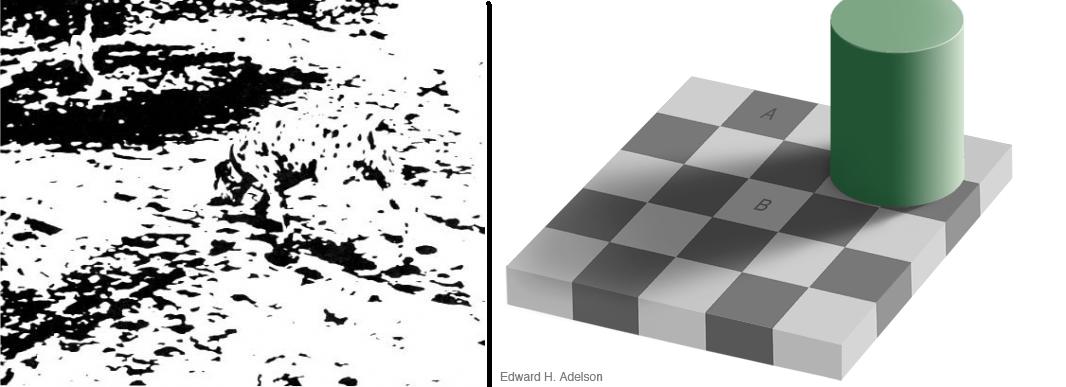
If I tell you you’re supposed to see a dalmatian in the left-hand picture, you’ll quickly see it and never be able to look at that picture again without automatically seeing the dog. If I told you that the squares labeled A and B are actually the same color in the right-hand picture, you’d probably not believe me at first. Then, when you cover up all of that picture except A and B and find out that they actually are the same color you’ll realize why people mistake me for Chris Angel from time to time.Also, when you are looking at the whole picture, you’ll never be able to see A and B as the same color, because that explicit knowledge doesn’t always filter down into other perceptual systems.

References: Alexander, M.G. & Fisher, T.D. (2003). Truth and consequences. Using the bogus pipeline to examine sex differences in self-reported sexuality. The Journal of Sex Research, 40, 27-35

Fehr, E. & Fischbacher, U. (2004). Third-party punishment and social norms. Evolution and Human Behavior, 25, 63-87

Rozin, P., Millman, L., & Nemeroff, C. (1986). Operation of the laws of sympathetic magic in disgust and other domains. Journal of Personality and Social Psychology, 50, 703-712

Excuses, Excuses, Excuses

I recently finished the latest book by Robert Trivers (2011), The Folly of Fools: The Logic of Deceit and Self-Deception in Human Life, which is an odd title considering how little of the book is devoted to the logic of the intended topic. A better title would probably have been Things Robert Trivers Finds Interesting. After straining to stay awake through most of the 337 tedious pages of the book, I can’t say I came away with any new insights or information on the subject of deception, though I did get the sense Trivers enjoys flirting with undergrads.

And who wouldn’t? It’s just one of the many, many benefits of getting tenure.

As Matt Ridley notes, Robert Kurzban (2010) also released a book not too long ago called Why Everyone (else) is a Hypocrite – which I can’t recommend highly enough – that made a solid case for why “self” based research is problematic in the first place. The mind isn’t a singular entity, but is rather a collection of different mental organs, each a functionally specific information processing mechanism. Any real mention of modularity is absent from Trivers’ book, much less an active appreciation of it. I’d hesitate to say Trivers takes any idea further (as Matt does); if anything, Trivers stalls and rolls slightly backwards. Another impression I got from reading the book is that I can expect an angry phone call from Trivers if he ever reads this.

I’d like to discuss the merits of your recent review of my book in a calm, academic fashion.

How might this false conception of a self effect thinking in other domains? One good example could be in the domain of morality. In this area, I get the sense the concept of the self has been tied heavily to moral culpability, where consciousness is king. Influences that are seen as originating outside the realm of conscious awareness are often used as attempts to exculpate various behaviors.

As an example, I’d offer up a paper by Sumithran et al (2011), examining how overweight people on diets often relapse and gain weight back after initial success at dropping some pounds. The authors measured various hormone levels in subject’s bodies that are known to influence hunger and related behaviors, like energy expenditure and food intake, finding that dieting leads to changes in these circulating hormone levels. This could be the reason, they argue, that many dieters don’t show long-term maintenance of weight loss. Fine. However, the authors lose me when they write this:

“…[A]n important finding of this study is that many of these alterations persist for 12 months after weight loss, even after the onset of weight regain, suggesting that the high rate of relapse among obese people who have lost weight has a strong physiological basis and is not simply the result of the voluntary resumption of old habits.” (p. 1602, emphasis mine)

Apparently, the authors find it interesting that they found a physiological basis for people not keeping the weight off, contrasting it with “voluntary” actions. My question would be, “What else would you even expect to find; a non-physiological basis?” After all, we are physical beings, so any changes in our thoughts or behaviors need to be the result of other physical changes. The implication seems to be that truly voluntary actions are supposed to be uninfluenced by physiology, while somehow having an influence on the behavior of the physical body.

“It’s not my choice, as I happen to have hormones”

This doesn’t seem to be a terribly uncommon thought process; while sometimes people actively deny any influences of biology on behavior out of fear of justifying it, or claim (correctly) that biological doesn’t justify behavior, those same people can very quickly accept behavior as being biologically based in the hopes of making it acceptable by saying “it’s not a choice”. That’s some interesting hypocrisy there. Did I mention there’s a very interesting – and a not so interesting – book that deals with that topic?

References: Kurzban, R. (2010). Why everyone (else) is a hypocrite: Evolution and the modular mind. Princeton, NJ: Princeton University Press.

Sumithran, P., Prendergast, L.A., Delbridge, E., Purcell, K., Shulks, A., Kriketos, A.K., & Proietto, J. (2011). Long-term persistence of hormonal adaptations to weight loss. The New England Journal of Medicine, 365, 1597-1604.

Trivers, R. (2011). The folly of fools: The logic of deceit and self-deception in human life. New York, NY: Basic Books. 

Why Are Plumbers So Sexist?

By now, most people have surely heard of the dreaded wage gap between men and women. If I am to believe what I have heard around the internet, women in the US earn about 77 cents for every dollar a man does, and – here’s the key part – this is because we live in a deeply sexist society that needs to be changed.

Oh yeah? Well my glass ceiling is still higher.

I could point out that the wage gap only reflects gross earnings, not things like hours worked, education, or profession, but those factors alone don’t explain the whole discrepancy; there’s still a couple cents left over. As for what percentage of the remaining is gap is due to sexism specifically, well, I can’t say. What we could say, with a reasonable degree of certainty is that there is a gap in gross earnings which can be divided up into explained and unexplained variance. What we cannot say is that the unexplained variance equals sexist discrimination.

Now before you decide to label me a sexist for daring to consider an alternative hypothesis, let’s consider some other gaps as presented by Susan Pinker (2008): In 1973, only 5% of lawyers in the US were women; in 2003 that number was 27%. That’s a pretty impressive gain, and we see a similar one for Aerospace engineers; up from 1% to 11% over the same time period. But what about plumbers? In 1973, women represented approximately 0% of the plumbers in the US; by 2003, women represented a mighty 1%. Why were women able to make such vast inroads in the fields of law and engineering, but somehow couldn’t break through the extremely sexist barriers put up by the field of plumbing?

“I unclogged that drain for you. Also, women shouldn’t be allowed to vote.”

Perhaps plumbers and plumbing culture are just vastly more sexist against women compared to lawyers. Then again, perhaps that huge gap between male and female plumbers reflects something else, such as women not being particularly interested in the idea of becoming a plumber. Pinker – not to be confused with her brother, Steven – makes the case for underlying differences in male and female psychology being an important factor in some of these gaps we see, from choice of employment to the pay gap. I feel it can probably help account for a hefty portion of that variance. It’s important to remember that when you see sex differences, like in the pay gap, you haven’t found direct evidence of sexism. For instance, in Michigan women now outnumber men in terms of earning all types of degrees, but this doesn’t mean colleges there are sexist against men.

So let’s forget about plumbing and focus on comedy. Someone happens to think there’s no difference between men and women in that area. Why, hello again Amanda. (I didn’t even notice who the author was until I was well into writing, it’s just a lucky coincidence that she’s consistently bad at science)

My posts have pictures with hilarious captions; your posts do not. Point: Men.

The idea of innate sex differences can be a touchy subject for some, and is no doubt responsible for part of the opposition towards evolutionary psychology (Geher, 2010). Marcotte thinks men and women are identical in the humor department, it would seem. Why does she think this? She reports that a study found 16 men and 16 women (I presume, from some college) were rated about equally when it came to how funny captions they came up with for a cartoon were. Despite this, 90% of people rated men as funnier than women, to which Amanda can only conclude “sexism did it”.

First of all, let me say that I’m happy to see Amanda has apparently gotten over her concerns about small, homogenous samples that she expressed about the hand grip research, at least temporarily; I suppose Amanda figures since the results sound nice, the work must be good enough to generalize to “men and women” everywhere.

Despite not knowing much about the research in the field of humor myself, the second point I’d like to make is that there’s probably a ceiling effect here; there’s only a certain range of possible captions to pre-drawn, pre-selected pictures that make sense and are funny. The claim was this helps “level the playing field”, much like only having 10 pound weights available can make differences between men and women in muscle mass seem irrelevant when recording how much they can lift (which would clearly mean men only lift more weight outside the lab because of sexism). Most people would agree there’s a lot more to humor than captioning pictures, but Amanda Marcotte is not most people.

Who’s got two thumbs and thinks captioning pictures is hilarious? This guy.

Did sexism play any role? Well, it seemed to. It’s reported that people tended to remember the funny captions as coming from men and unfunny ones coming from women, but since the current study appears to not be available to read, I can’t comment much further about that. I’m going to go ahead an guess that the effect wasn’t terribly large, let alone able to account for why 90% of people agreed that men were funnier, as there wasn’t much said about it other than “it exists”. Why it exists would be another question worth examining. Spoiler alert: Marcotte probably thinks it’s due to baseless sexism.

References: Geher, G. (2010). Evolution is not relevant to sex differences in humans because I want it that way! Evidence for the politicization of human evolutionary psychology. The Journal of the Evolutionary Studies Consortium, 2, 32-47

Pinker, S. (2008). The sexual paradox: Extreme men, gifted women, and the real gender gap. Ontario, Canada: Random House Press

Some People Watch Too Much Law And Order

Having watched a good deal of  Law & Order: Special Victims Unit, I get the sense that some viewers take away the message that just about every case of rape involves a stranger violently raping a woman, though this accounts for only a minority of rapes in the real world (Palmer, 1988). This may reflect the fact that women are themselves more fearful of being raped by a stranger than an acquaintance, as well as take more precautionary behaviors to guard against the former (Hickman & Muehlenhard, 1997). It is something of a mantra in our culture that rape is not about sex, but about violence – which is wrong, for the record (Palmer, 1988) – that probably also has a heavy contribution to the depictions of rape on shows like SVU. What makes these shows annoying – in addition to that heavily biased depiction of what rape is like – is that they normally also include some smug psychologist that apparently never progressed much beyond an introduction to psychology course – not unlike the writers, I’m sure – that gets called in to help out.

“Your killer was raping those women because of some deep-seated hatred towards his mother. Degree, please”

One person who may (metaphorically or actually) have watched too much Law & Order is Amanda Marcotte. She’s one of those “mad at evolutionary psychology without understanding what the hell she’s talking about” kind of people, and it’s my pleasure today to point out why she’s wrong at some length.

Since Marcotte doesn’t want to appear anti-science, she initially tries to co-opt the authority of two people only the “daringly stupid” would accuse of being anti-science: P.Z. Myers and Jerry Coyne. First, let me note that starting off with an explicit appeal to authority isn’t the best course of action for any debate. That said, I certainly wouldn’t accuse them of being anti-science, because that’s a daringly stupid label. People are not opposed to science in general; in fact, most people seem to love the idea of science. What people don’t seem like is when scientists reach an unpalatable conclusion.

Beginning with the first point, Marcotte expresses skepticism about the results of a study that showed women generated a stronger grip strength in response to reading a rape scenario relative to a control story, but only when they were in the ovulatory phase of their cycle and not taking hormonal birth control (Petralia & Gallup, 2002):

“Which is how I’m going to approach contesting this article by Jesse Bering at Slate about the supposed evidence that women evolved to fight back against rape … if they’re ovulating…Some of them failed to present the evidence that Bering suggests they have–the handgrip study was one where some researchers found no variation over a menstrual cycle.”

Let’s be clear: the hypothesis is not that women only evolved to fight back against rape if they’re ovulating; the claim is that women may have been selected to be better able to fight back if they’re ovulating, given the increased probability of conception and the resulting fitness costs. Fighting itself is generally not a costless act, and the conditions under which people are likely to fight should be expected to vary contingent on the potential costs and benefits. Women who do fight back are in fact more likely to stop a rape from being completed, but they also seem more likely to suffer physical injury (Ullman & Knight, 1993).

By “some researchers found no variation”, it’s not entirely clear what Marcotte is referring to (or rather, what Myers – whom she is parroting – is referring to), since she doesn’t reference anything. I assume she’s mentioning studies that found no variation across the menstrual cycle referenced by Petralia and Gallup that also didn’t involve any rape scenario story – the very thing that was hypothesized to be causing the effect. Comparing a study completely lacking an experimental manipulation to one with an experimental manipulation as evidence compromising the effect of the manipulation seems like a strange thing to do, probably because it’s a stupid thing to do.

“Who’s got time for actual replications? That sounds like work, and work isn’t fun. This should be close enough.”

Her next point is that one referenced in the very beginning: that rape is a violent crime, not a sexual one, even going so far as to say, “Rape, in this case, is just a certain kind of wife-beating.  It’s best understood as throwing a punch with your penis.” To quote Palmer quoting Hagen, “If violence is what the rapist is after, he’s not very good at it.” When it comes to the use of force in rape, the vast majority of times it’s used instrumentally – not excessively – if physical force is even involved at all. In this view, violence is the means to the end (sex), not the other way around. An example might clear this up a bit:

“The act of prostitution includes both a person giving money to another person and a sexual act. Does this mean that a man who goes to a female prostitute is motivated by a desire to give money to a woman?” (Thornhill & Palmer, 2000, p. 132)

I heard it’s not technically illegal if your motivation was to give her money and the sex was just instrumental

Marcotte’s final point would appear to be a stubborn misunderstanding of the difference between proximate and ultimate causation, as evidenced here:

“There’s also the weird side assumption that features prominently in many half-baked evolutionary theories, which is that sex is strictly about reproduction in a species that has homosexuality, contraception, and old people who get it on…that rapists get off not on the chance to plant their seed (some, after all, use condoms!)…”

I’m pretty sure there’s not a whole lot more to say about that, other than to point out it really does reinforce how little Marcotte knows about what she’s attempting to criticize. At this point in the field’s development, the only reason someone should make such a misguided mistake is near complete ignorance.

The only way this criticism could get any worse would be if Marcotte was foolish enough to imply evolutionary psychologists invoke genetic determinism and are attempting to give rapists a pass morally:

 ”…Bering’s article downplays the severity of rape. It suggests that there’s not much to be done about rape and that men are just programmed to do it… ”

Nailed it!

One would think, given her initial concerns about not wanting to come off as anti-science, Marcotte would have included more actual science in her post, but there really isn’t any to be found. There’s skepticism, ignorance, assertions, and moral outrage, but very little science. Perhaps it’s worth quoting Palmer and Thornhill (2003), quoting Coyne on the matter, since Coyne is an authority to Marcotte:

“It is true that in recent decades, the discussion of rape has been dominated by such notions [as rape is not about sex, but about violence and power], though one must remember that they originated not as scientific propositions, but as political slogans deemed necessary to reverse popular misconceptions about rape”

Would you look at that; Coyne seems to think Marcotte is wrong about the “not sex” thing too.

References: Hickman, S.E. & Muehlenhard, C.L. (1997). College women’s fears and precautionary behaviors relating to acquaintance rape and stranger rape. Psychology of Women Quarterly, 21, 527-547

Palmer, C.T. (1988). Twelve reasons why rape is not sexually motivated: A skeptical examination. The Journal of Sex Research, 25, 512-530

Palmer, C.T. & Thornhill, R. (2003) Straw men and fairy tales: Evaluating reactions to A Natural History of Rape. The Journal of Sex Research, 40, 249-255

Petralia, S.M. & Gallup Jr., G.G. (2002). Effects of a sexual assault scenario on handgrip strength across the menstrual cycle. Evolution and Human Behavior, 23, 3-10

Thornhill, R. & Palmer, C.T. (2000). A natural history of rape: Biological bases of sexual coercion. Cambridge, MA: MIT Press.

Ullman, S.E. & Knight, R.A. (1993). The efficacy of women’s resistance strategies in rape situations. Psychology of Women Quarterly, 17, 23-38.

A Scientific Visit To Palmdale

During my years as an undergraduate I made a couple of bad choices, one of which was deciding to minor in economics. None of the classes were particularly engaging – which might be the understatement of the century – and the assumptions made by economists were blatantly ill-suited for dealing with people, most notably the assumptions of perfect information and people being rational – whatever rational was supposed to mean. For a field that claims to dabble in human behavior and psychology, you’d think their assumptions about what people are like would be a touch more accurate, but since that would make the math messy, the idea was seemingly scrapped.

So imagine my surprise when I heard some economists had started to figure out that human psychology exists and should probably be taken seriously. Dan Ariely’s books were a breath of fresh air, reinforcing in me the notion that I had wasted my time in all those economics classes when I could have been doing something more worth my while, like taking classes biology. Or masturbating.


“Those classes weren’t interesting, so I had to take matters into my own hands”

Speaking of which, would you lie to a woman about whether you loved her in order to increase the chance that she’d have sex with you? If you’re a man, chances are your answer to that question depends on whether or not you’re currently masturbating (if you are, this blog must either be especially interesting or especially boring. Feel free to let me know which). In fact, your answers to a whole slew of sex related questions will probably depend on whether or not you’re giving yourself the ol’ down-low. Ariely and Loewenstein (2006) decided to examine how answers to these questions change by paying undergraduate males to answer a few questions while doing what they were going to be doing anyway.

Turns out the only thing more dismal than economics are the dating prospects of male math majors

The main purpose of the research was to examine the gap between answers to questions made in an unaroused state versus an aroused one across three categories: (1) how appealing sexual objects or activities were viewed, (2) willingness to engage in morally questionable behavior to have sex, and (3) willingness to engage in unsafe sex when aroused. What do the answers of those 35 male undergrads tell us? They tell us two things: the first is that – unsurprisingly – the answers change when people are horny, relative to when they are not; the second thing is that these answers tend to change substantially.

For the first category of how appealing certain sexual activities and objects are, of the 20 questions asked about, only three failed to become significantly more appealing: sex with a man, sex with the lights on, and spanking a sexual partner (though spanking was rated fairly highly to begin with). In fact, the only question to not see any increase was the one about having sex with the lights on. The five questions that saw the greater overall point increase (out of a total of 100) between the unaroused and aroused states where, in order: Would you find it exciting to have anal sex? (+31), Is just kissing frustrating? (+28), Would it be fun to tie up your sexual partner? (+28), Can you imagine having sex with a 50-year old woman? (+27), and Would you have a threesome with another man? (+25). Other questions included sex with a 12-year old girl (relatively 100% more appealing), sex with a 60-year old woman (about 230% more appealing), and getting sexually excited by an animal (about 170% more appealing, though still quite unappealing overall. It was second from the bottom, right above having sex with another man).

So what about questions of morally questionable behavior? There are only five, so I’ll rank order these in terms of percentage increase from unaroused to aroused: taking a date to a fancy restaurant to make her more likely to have sex (27% more likely); encouraging a date to drink (37% more likely); telling a woman you loved her to make her more likely to have sex (70% more likely); keep trying to have sex after a date says “no” (125% more likely); slipping a woman a drug (420% more likely). Interestingly, that order holds if you rank the behaviors in terms of their overall rated probability in the first place; the more coercive actions are less probable, but see the largest percentage increase.

“Well, the fancy dinner and drinks aren’t working. Is it time to start thinking about outright lying, or just skip right to the drugs?”

Finally, turning to matters of protection, the four questions regarding condoms all fall in the predicted direction: as men get aroused, they rate condoms as interfering with pleasure and spontaneity more, and say they’ll be less likely to use them with new partners or if they think the woman might change her mind when they went to get one.

Of course there are limitations here: these were only a few undergrads jerking it while answering questions. Surely, the first limitation is that the questions were probably a real buzz-kill. A second possible issue is that it’s not entirely clear how these stated preferences would actually translate to behavior in the more social world where men aren’t walking around with erections (most of the time, anyway), behaviors can carry real consequences, and reality differs from fantasy. That said, I’d wager we have every reason to think sexual arousal certainly has an effect on decision making, especially about condom use (since at this point many men probably already have erections in hand) and that one could even expect these effects to increase, depending on the perceived probability of having sex and the attractiveness of the other person.

How the effects of sexual arousal might tend to differ between men and women is certainly a question worth thinking about. I highly doubt we’d observe anything like the same pattern of answers for the questions asked about in the current survey (perhaps excluding the questions about condoms, though I can’t say at the moment). It’s an open-ended question as to whether the same methodology could even be effectively used, and I’d guess that it probably couldn’t be – or at least wouldn’t be nearly as effective.

References: Ariely, D. & Loewenstien G. (2006). The heat of the moment: The effect of sexual arousal on sexual decision making. Journal of Behavioral Decision Making, 19, 87-98

Are We The 99 Percent?

Amidst the protests of the Occupy Wall Street crowd, the refrain of “we are the 99 percent” seems to be thrown around like “devil horns” at any metal concert; it’s frequent, and it’s annoying. Without getting too much into personal politics, I will say I don’t appreciate a small group of people who presume to speak for much larger group of people, especially when the view points of that larger group are quite diverse.

A notoriously diverse group of people

Which is why it particularly irks me whenever I read any variant of the following thought: According to Evolutionary Psychology… 

When I was last grading papers for an undergraduate evolutionary psychology course, I can’t tell you how many times I saw that phrase in papers. Despite my frequent red-pen correctives, it was an error that persisted until the end of semester. Unfortunately, it’s not an isolated thought; if you type “Evolutionary psychology is” into google, you’ll notice one of the most frequent search results ends that phrase with “bullshit”. Go ahead and read over each article on the first page of results and their comments sections and count how many times that error is made. You’ll notice the error rate is somewhere between almost all the time to actually all the time. 

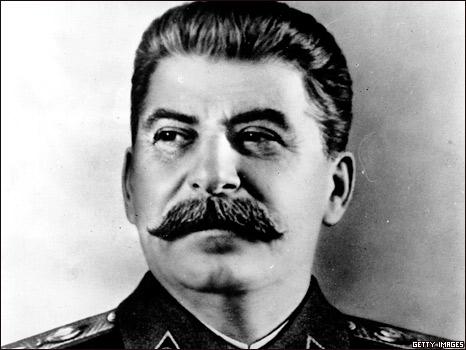
You’ll also notice that almost every page refers to this man. Behold the face of evil.

The very basic mistake that’s being made whenever the phrase is uttered is that evolutionary psychology is not a theory, and as such it makes no specific predictions. Rather, evolutionary psychology is a research framework that uses evolutionary theory to help both derive predictions and understand results concerning human psychology and behavior. If you were hoping for something a bit more sinister about oppression and hatred of people who aren’t white males, I’m afraid you’ll be disappointed. One of the downsides of this very basic mistake is that it leads some people to say – in a no doubt cocky tone – things like, “Is evolutionary psychology total utter and dangerous bullshit?” or, “Evolutionary Psychology is a load of fucking shit” all without actually discussing the underpinnings of the field (which is really a shame, as I’m sure these thoughtful and eloquent people would have a lot to add). As I mentioned last time, people don’t seem to have a problem with the use of adaptationist logic so long as it comes to the conclusion they’d prefer to hear.

Just imagine how well this one went over.

Much like Satoshi Kanazawa, the book pictured above generated a fierce amount of controversy for all the standard, muddle-headed reasons. Among other statements about why the book proved that evolutionary psychology is a bunch of misogynistic bullshit, one of the claims of the critics went something along the lines of “Thornhill and Palmer said rape was an adaptation”. What almost all the critics forgot to mention (or didn’t know) is that Palmer – one of the two authors – argued that rape was a byproduct. (Putting aside for minute the fact that the book was ended on the note that the case for adaptation or byproduct was left open…)

So Palmer’s views got (basically) ignored and he got lumped in with Thornhill through some misguided guilt-by-association. Similarly, almost every site that turned up on the “evolutionary psychology is bullshit” search – on top of blatantly misunderstanding the issue – attempts to make Kanazawa (and sometimes Thornhill) the face of what evolutionary psychology “says”. He is most definitely not the 99%, and evolutionary psychology as a framework is not the problem.

It can be hard to take critics seriously when they can’t demonstrate they know what it is they’re criticizing.

The Case Of The Female Orgasm: Bias In The Critiquing Of Science

The last post dealt with the moralistic outrage that some people feel towards a trait being labeled an adaptation or a byproduct, but I only skimmed the surface of the issue. Since it’s such an important point, I felt it would only be proper to expand it a bit further.

Because I crave pain and disappointment, I actually read every last comment on both articles. A reoccurring theme seen throughout the comments sections is that many people seem to feel female orgasm is obviously and adaptation and anyone who comes to the opposite conclusion is probably a sexist being mislead by a male-centered society that’s out to demean women. It’s at this point they’ll generally state female orgasm clearly has the function of [making women have more sex, drawing sperm into the reproductive tract, making women lay down to retain more sperm, reinforcing the pair bond, even - are you ready for this one - feeling good. That's right, it evolved for reasons that have nothing to do with reproduction], and why haven’t people figured that out? It’s all because those silly evolutionary psychologists are blinded by current cultural trends and institutions, whereas their critics presumably feel they are not similarly influenced.

“Orgasms feel good, therefore they evolved to feel good. Duh”

In case you’re curious, those possible functions have already all been explored. The only one that seems like it might – and I do stress might – have some traction is the sperm transport hypothesis, though it rests on some questionable data.

These are some pretty strong intuitions people seem to have about whether female orgasm is adaptive based upon very little evidence, if evidence is involved at all. Ironically, people who are so fond of saying, “evolutionary psychologists spin just-so stories” appear completely willing to accept even a possible scenario as clearly true (say, female orgasm encouraged women to have more sex) if it matches their view of how the world should be; female orgasm should be socially important, therefore female orgasm is evolutionarily important (an adaptation).

“If this didn’t have anything to do with reproduction, I’d probably have to stop doing it”

What I feel we do have at this point is the knowledge that people are not overtly hostile to an adaptationist research paradigm in all cases, but will tend to be when it doesn’t come to the right conclusions. For instance, it’d otherwise be odd that people calling the byproduct hypothesis “evolutionary psychology bullshit” are perfectly happy to advance their own evolutionary accounts for female orgasm. You see, where evolutionary psychologists are naive, their critics are informed and knowledgable, having cast off their cultural trappings and viewed the underlying essence of human nature. I’d point out that evolutionary psychologists also proposed many of those other possible functions in the first place, but that would just totally ruin the buzz the critics have going.

Perhaps this whole debate makes more sense were we to view it as people attempting to persuade each other about something, rather than attempting to discover some historical truth. In this case, it could be that female sexual satisfaction is important; in others it could be that rape is bad, that jealousy should be minimized, or that depression has some cognitive benefits, so depressed people should feel better about their depression, thus cheering up and losing that benefit (read respectively as: rape is not an adaptation, humans haven’t evolved for pair-bonding, and depression is adaptive).

Viewing these debates as attempts at persuasion might help explain why the criticisms that come from the upper levels of academia do not seem substantially different than the ones that come from your everyday internet commenter; the foundation of these debates might not be academic in the first place. It may also help to explain why people who even just suggest certain hypotheses are painted as villains and the same tired straw men are pulled out again and again.